People’s Democracy in Cuba: A vanguard political-economic system
$14.99
by Charles McKelvey



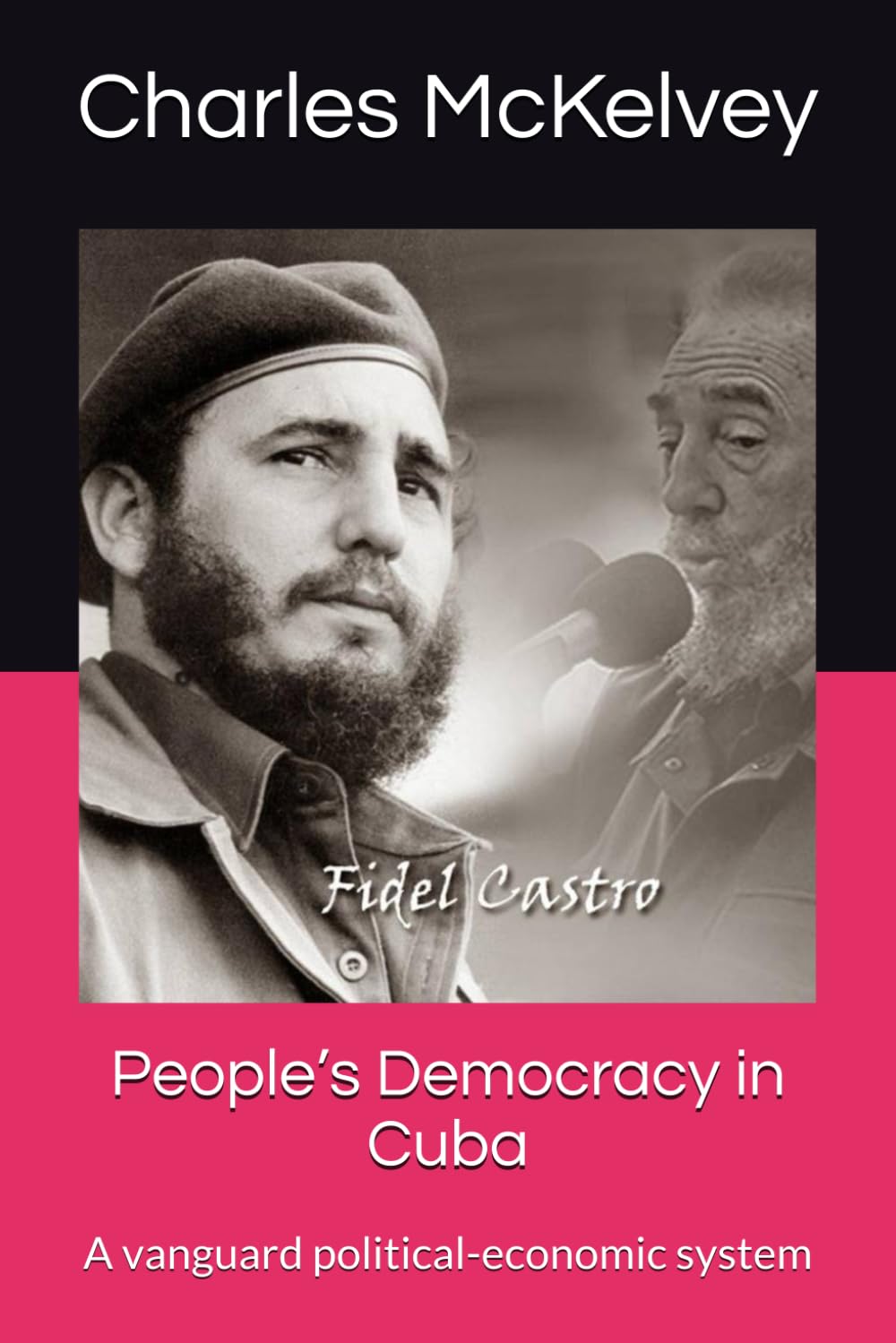
People's Democracy in Cuba: A vanguard political-economic system by Charles McKelvey describes the Cuban Revolution as a particular manifestation of the anti-colonial and anti-imperialist people's movements that have emerged since the last decade of the eighteenth century, which today are constructing a more just, sustainable, and democratic world. The book maintains that Fidel Castro was a leader with exceptional understanding and unlimited commitment to the people and the nation who played an indispensable role in guiding the nation on the necessary road. The book describes in detail Cuba's political system of people's democracy. It is a system of direct elections by the people of delegates to municipal assemblies, without the participation of political parties, and of elections by the municipal delegates of the deputies of the National Assembly of People's Power. Said Assembly is the highest political and legal authority of the nation, electing the President and approving the highest ministers of government. Mass organizations of workers (including professionals), women, students, small independent farmers, agricultural cooperativists, and neighborhoods are central to the political process. The mass organizations also have a system of direct and indirect elections rooted in the base, and they play constitutionally defined roles in the electoral process and in the legislative committees of the National Assembly. The book explains the role of the Communist Party of Cuba as a party that does not have the constitutional authority to decide. It educates, guides, recommends, and exhorts, and it has influence because of the high esteem in which it is held by the people. People's Democracy in Cuba includes a thorough chapter on Cuba's pragmatic approach to its socialist economy, in which the state plays an active role as steward of the economy. Although state ownership of economic enterprises predominates, the essence of the Cuban economic system is not state ownership of economic enterprises but state stewardship of a mixed economy with public and private sectors. There is space for small-scale private property and foreign ownership, as part of and in accordance with the development plan of the State. At the same time, the State actively looks for ways to increase production (as the people currently are demanding), utilizing work incentives through wage differentials, self-employment, and small and medium private enterprises, as well as seeking foreign investment in productivity in high priority areas. The book presents Cuban foreign policy as based on the principles of the United Nations and the Non-Aligned Movement. Cuba plays a world leadership role in affirming the fundamental principles of the anti-neocolonial movements of the Third World, such as the rights of nations to sovereignty, self-determination, non-interference in their affairs, and control of their economies and their natural resources. The Cuban state plays an active role in seeking to respond to the needs of the people with respect to health care, education, nutrition, culture, and sport. Cuba gives the highest priority to the needs of the people, and its commitment to these issues is central to its discourse about itself. However, Cuba approaches these issues with fiscal discipline, as far as is possible, believing that deficit spending on social programs contributes to inflation, which is damaging to the interests of the people. In the pursuit of this task, Cuba has given high priority to the development of science, particularly applied science that responds to the needs of the people and to the needs of underdeveloped nations. People's Democracy in Cuba concludes that Cuban socialism possesses a patriotic commitment to the entire people, seeking prosperity and equality, and rooted in modern universal moral values.