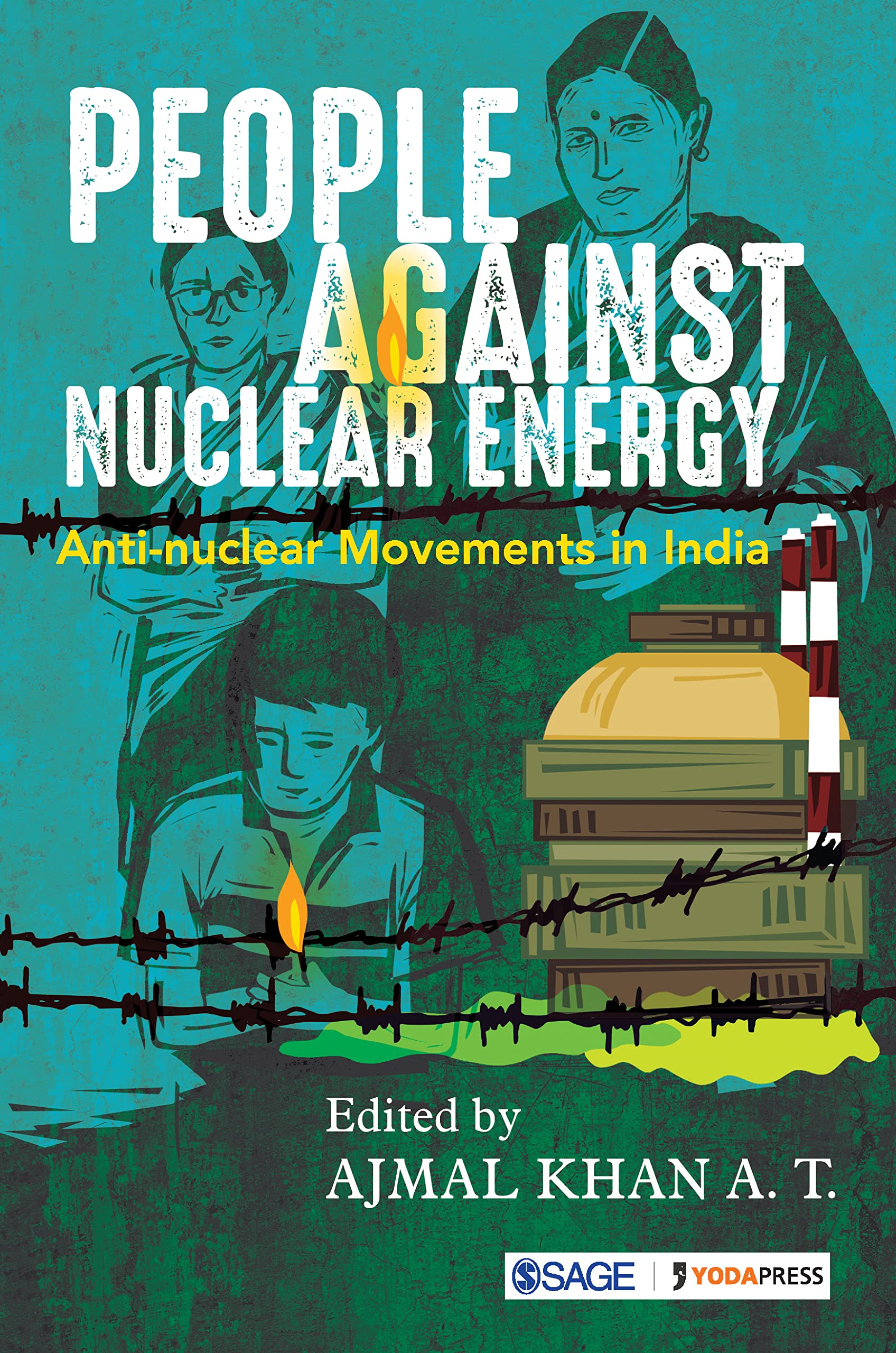



India, a leading nuclear power in South Asia, has long been promoting nuclear energy, particularly since climate change has been recognized as a global issue. However, little output of significance has been produced so far; what has emerged, instead, are numerous local protests at the sites where these power projects are being planned, proposed and established. The first people’s history of anti-nuclear movements in India, People Against Nuclear Energy: Anti-Nuclear Movements in India explores the trajectories of these projects and the protests against them. It covers five decades of protests spanning nine states of the country. This book, with chapters by both Indian and foreign scholars, attempts to understand these protest movements better by taking a closer look at the history and local contexts that have inspired them. Our world, its people and the resources we require share a delicate relationship, and that deep consequential intersection is where this text is positioned. Ajmal Khan A. T. is an interdisciplinary researcher specializing in issues of Environment, Development and Public Policy. He worked as Assistant Professor at the Centre for Development Practice, Ambedkar University, Delhi. Prior to that, he was affiliated to the Department of Environmental Studies, Ashoka University, Sonipat. He holds a Ph.D. in Development Studies from the Tata Institute of Social Sciences, Mumbai. He is a postdoctoral visiting fellow at SOAS, University of London. He has published his research in Economic and Political Weekly, International Area Studies Review, Critical Asian Studies among other journals.