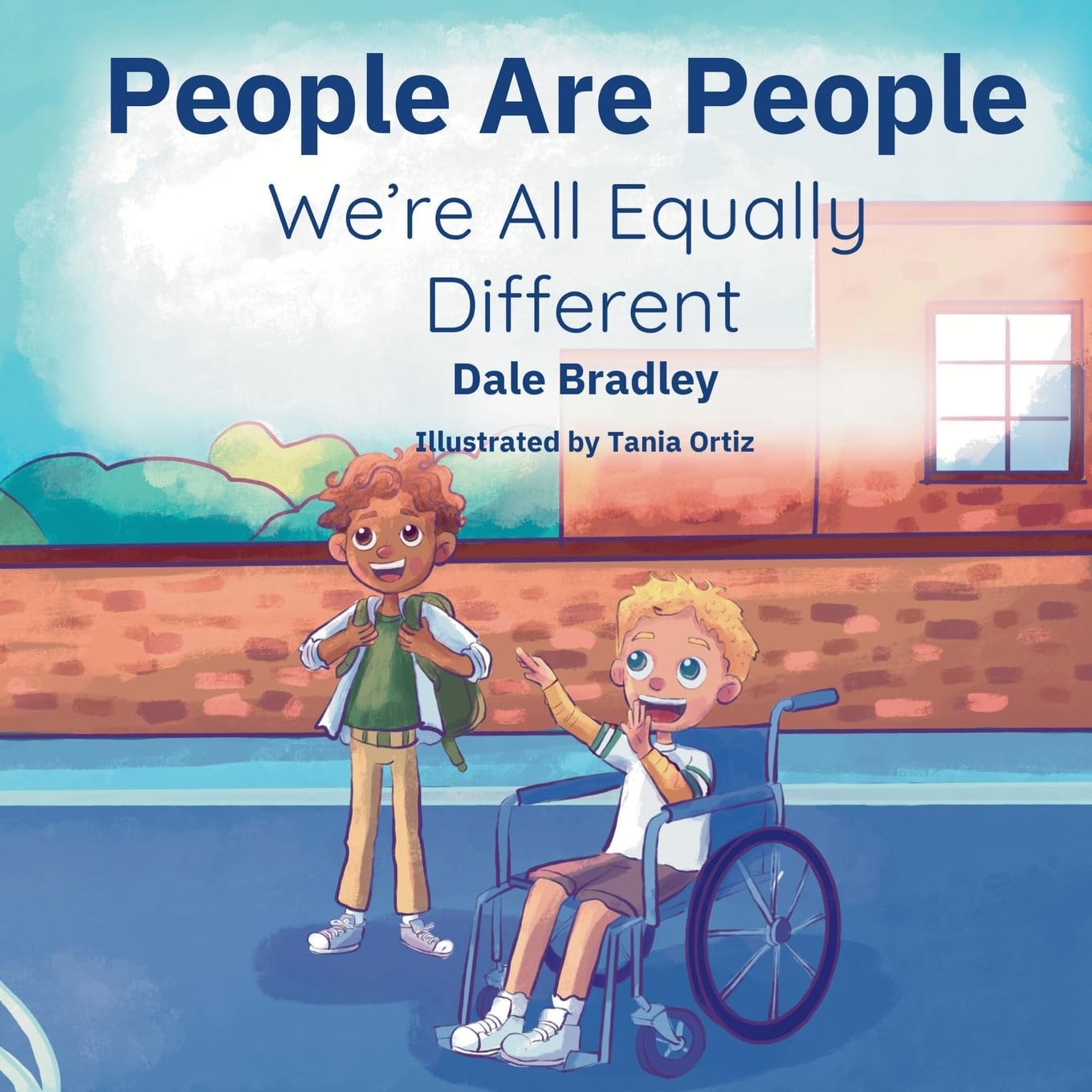



Discover the power of friendship and acceptance in People Are People: We're All Equally Different . Follow Sam, a spirited young boy in a wheelchair, as he embarks on a new adventure at Glenville Elementary. When he meets Oliver, a curious classmate unfamiliar with disabilities, their unlikely friendship blossoms. As Sam and Oliver navigate their differences, they learn valuable lessons about empathy, diversity, and the beauty of individuality. Through heartwarming encounters and shared experiences, they discover that true friendship knows no bounds. Perfect for children ages 6-12, this uplifting tale celebrates resilience, inclusivity, and the importance of embracing differences. Spark meaningful conversations about empathy and kindness with this inspiring story of acceptance. "I really enjoyed this book. It will keep your attention and is written in an upbeat manner while dealing with some important lessons for all of us! A feel good book!" --Rosalee Christy "I received the book People are People by Dale Bradley. This is a great book to share with kids that do not have a disability to show them that kids, and adults, with some disability is no different than they are. This is a must read for early grade school students".--Michael Riggenbach "This book is fantastic. Every elementary school should have a copy to read to the students. It is easy to read and understand. I can't wait to give it to my granddaughter"--Michelle Tracy "This is a fantastic book. Love the characters and the story line."--Rose Dietrich "This is a great book to teach children about disabilities and how we should treat each other!"--Vicki L Ayres "I love that this book shows that people who may have visual disabilities are people just like everyone else. It's a great book tonuse to build a stepping stone with kids. I look forward on sharing this with so many students!"--Anonymous "I enjoyed how the character explains how we are all different and that it's ok to ask questions if your curious. Great read"--Anonymous Dale Bradley's journey began when he was born prematurely, weighing only 2 pounds. His fragile body lacked necessary oxygen, resulting in brain damage and Cerebral Palsy (CP). The effects of CP vary depending on the severity of the damage. While some individuals may experience issues with one side of the body, speech, or balance, Dale's condition primarily affects his legs and balance.Individuals with CP are often not mentally delayed but may feel "trapped" in a body that does not function as it should. Dale has frequently observed parents scolding their children for staring instead of addressing their natural curiosity.Dale's book aims to educate both adults and children. When a child encounters someone who appears different, parents should not discourage staring; instead, they should encourage the child to ask questions. However, parents should teach that teasing or bullying others who may look different is unacceptable. People with disabilities may use crutches, wheelchairs, or braces, but they're just like everyone else.