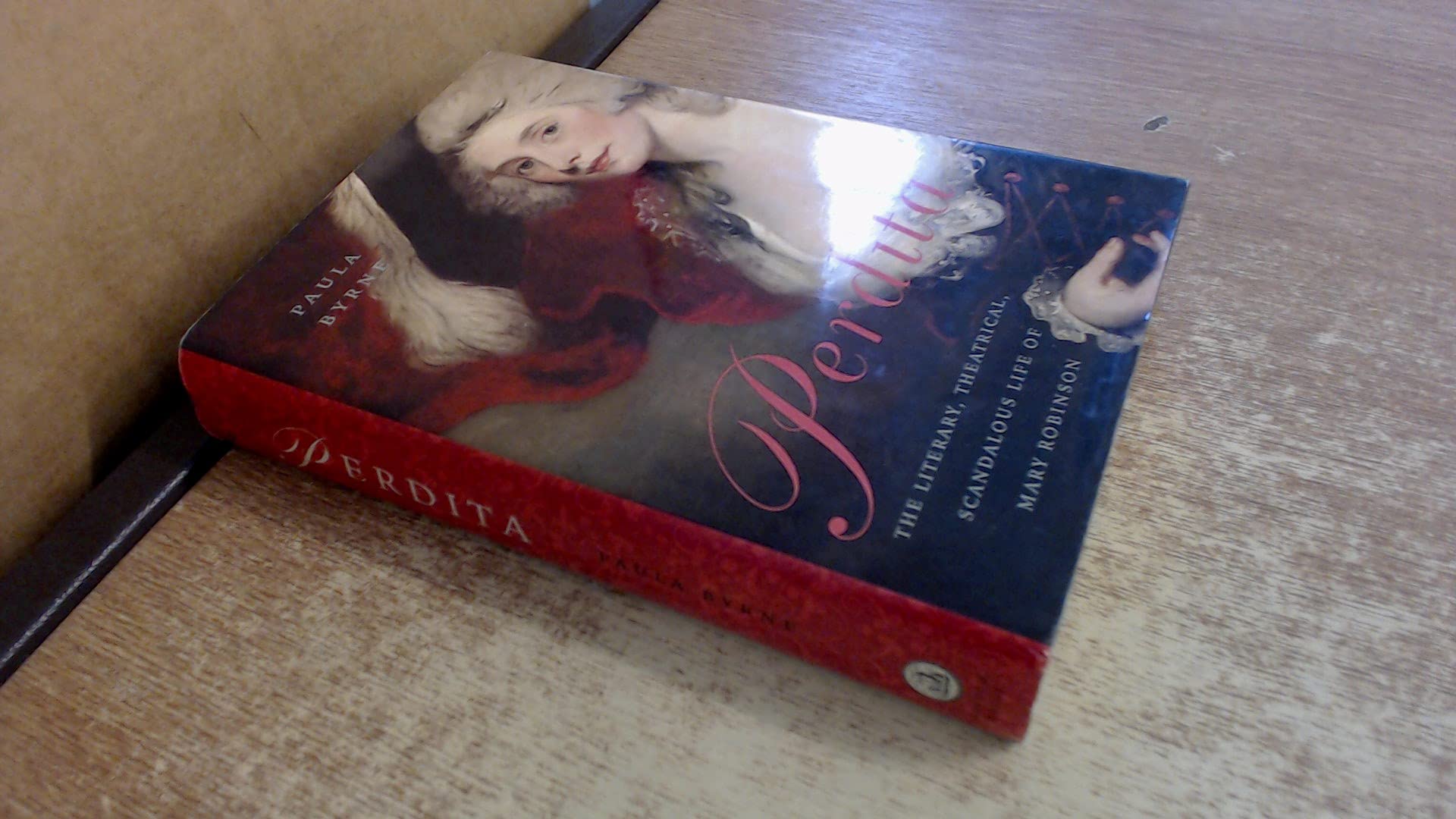



This thoroughly engaging and richly researched book presents a compelling portrait of Mary Robinson–darling of the London stage, mistress to the most powerful men in England, feminist thinker, and bestselling author, described by Samuel Taylor Coleridge as “a woman of undoubted genius.” One of the most flamboyant free spirits of the late eighteenth century, Mary Robinson led a life that was marked by reversals of fortune. After being abandoned by her merchant father, who left England to establish a fishery among the Canadian Eskimos, Mary was married, at age fifteen, to Thomas Robinson. His dissipation landed the couple and their baby in debtors’ prison, where Mary wrote her first book of poetry, gaining her the patronage of Georgiana, Duchess of Devonshire. On her release, Mary rose to become one of the London theater’s most alluring actresses, famously playing Perdita in The Winter’s Tale for a rapt audience that included the Prince of Wales, who fell madly in love with her. Never one to pass up an opportunity, she later used his ardent and numerous love letters as blackmail. After being struck down by paralysis, apparently following a miscarriage, she remade herself yet again, this time as a popular writer who was also admired by the leading intellectuals of the day. Filled with triumph and despair, and then triumph again, the amazing, multifaceted life of “Perdita” is marvelously captured in this stunning biography. “A remarkable woman and an exceptional biography.” – Amanda Foreman , author of Georgiana: Duchess of Devonshire “A fascinating, page-turning, and probably definitive biography of this intriguing woman.” – Emma Donoghue , author of Life Mask and Slammerkin “Like her sometime patron, Georgiana, Duchess of Devonshire, brilliant Mary Robinson flared like a comet through late eighteenth-century England’s elite society. Literary sleuth Paula Byrne has ransacked archives across the world to piece together the most complete account to date of this fascinating woman. Perdita is an absorbing study in chiaroscuro of a woman too beautiful and too complex for even Reynolds and Gainsborough to capture on canvas.” – Gillian Gill , author of Nightingales: The Extraordinary Upbringing and Curious Life of Miss Florence Nightingale “We seem to have an insatiable appetite for biographies of eighteenth century women. . . . A superbly researched and narrated life of a woman whose capacity for self-transformation, when combined with beauty, talent, wit, and passion suggest that she may be the most interesting of them all . . . a fine biographer has conjured up a dazzling personality and brought her, laughing, back to life.” – Miranda Seymour , Sunday Times (London) “A work of genuine scholarship . . . a masterly portrait of a remarkable woman.” – Sunday Telegraph (London) PAULA BYRNE has a Ph.D. from the University of Liverpool, where she is a research fellow in English literature. A regular contributor to The Times Literary Supplement , she lives in Warwickshire with her two young children and her husband, the critic and biographer Jonathan Bate. Perdita is her first book to be published in the U.S. Chapter 1 “during a tempestuous night” The very finest powers of intellect, and the proudest specimens of mental labour, have frequently appeared in the more contracted circles of provincial society. Bristol and Bath have each sent forth their sons and daughters of genius. —Mary Robinson, “Present State of the Manners, Society,etc. etc. of the Metropolis of England” Horace Walpole described the city of Bristol as “the dirtiest great shop I ever saw.” Second only to London in size, it was renowned for the industry and commercial prowess of its people. “The Bristolians,” it was said, “seem to live only to get and save money.”1 The streets and marketplaces were alive with crowds, prosperous gentlemen and ladies perambulated under the lime trees on College Green outside the minster, and seagulls circled in the air. A river cut through the center, carrying the ships that made the city one of the world’s leading centers of trade. Sugar was the chief import, but it was not unusual to find articles in the Bristol Journal announcing the arrival of slave ships en route from Africa to the New World. Sometimes slaves would be kept for domestic service: in the parish register of the church of Saint Augustine the Less one finds the baptism of a Negro named “Bristol.” Over the page is another entry: Polly—a variant of Mary—daughter of Nicholas and Hester Darby, baptized July 19, 1758.2 Nicholas Darby was a prominent member of the Society of Merchant Venturers, based at the Merchants’ Hall in King Street, an association of overseas traders that was at the heart of Bristol’s commercial life. The merchant community supported a vibrant culture: a major theater, concerts, assembly rooms, coffee houses, bookshops, and publishers. Bristol’s most famous literary son was born just five years before Mary. Thomas