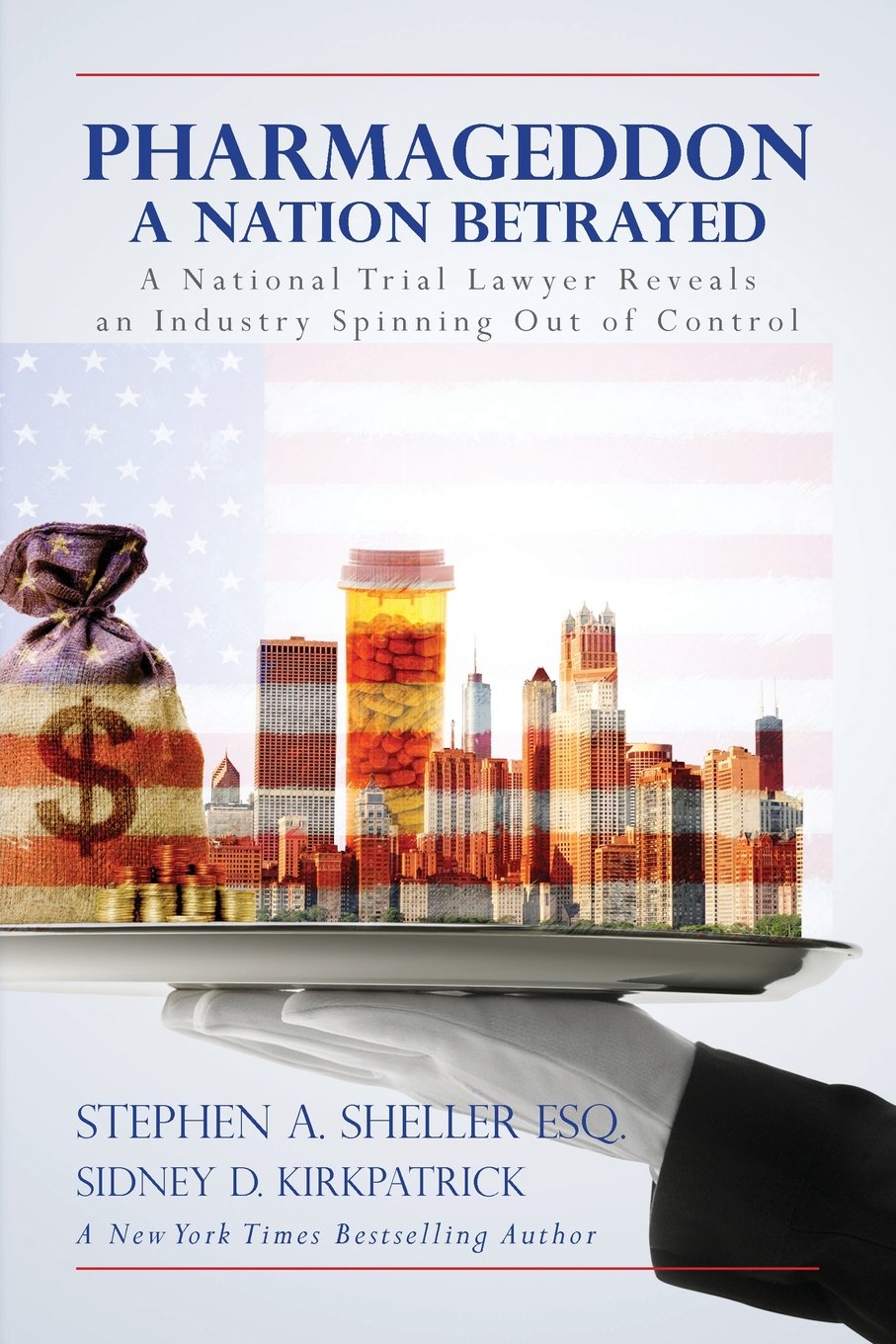
Pharmageddon: A Nation Betrayed: A National Trial Lawyer Reveals an Industry Spinning out of Control
$12.95
by Stephen A. Sheller Esq



We've heard the stories. Pharmaceutical companies failing to warn of side effects. Marketing drugs illegally. Whistleblowers bringing incriminating evidence of corporate machinations leading to huge verdicts and settlements. And in this true-legal thriller, it all started with butterfly ballots putting a presidential election on hold. Meet Stephen A. Sheller, an attorney whose career reads like an encyclopedia of the biggest legal cases of our time. Sheller fought tobacco companies and exposed fraud in their efforts to promote light cigarettes as safer than regular smokes, filed the first suit over the butterfly ballots in the controversial Bush v. Gore presidential election of 2000, and recovered a staggering $6.4 billion by going after pharmaceutical companies whose actions superseded patient safety. Pharmageddon: A Nation Betrayed is the inside story of Sheller’s fights to hold accountable powerful pharmaceutical companies for aggressively campaigning for their product’s distribution in spite of dangers and side effects many prescription drugs carry. From uncovering the devastating effects on children and elderly to defending all of our rights in an increasingly complex legal system, Sheller has uncovered greed and avarice displayed by these multi-billion dollar corporations. Discover what happens when a legal champion takes up a cause. A book offers a critique of the pharmaceutical industry from a lawyer who battled it. The currently contentious debate over health care has drawn the public’s attention to the pharmaceutical industry, a multibillion-dollar market that wields considerable influence over the political and medical communities. Sheller (Lawyering in Time and Saints and Evil Doers, 2015), an attorney with nearly a half-century of professional experience, spent a good deal of his career exposing Big Pharma’s more nefarious practices in court. For example, Eli Lilly marketed its “Prozac Weekly” pill by sending samples directly to candidate consumers, many of whom did not have a prescription for the drug, by accessing confidential medical information. Johnson & Johnson marketed a dangerous antipsychotic drug, Risperdal, to children with attention deficit disorder, some of whom were physically disfigured as a result. AstraZeneca illegally compensated physicians for prescribing another antipsychotic, Seroquel, a drug that the company considered marketing with cartoon characters inspired by Winnie the Pooh. Time and again, Sheller uncovered a pattern of behavior that prioritized profit over consumer safety, facilitated by a collusion between politicians, regulatory agencies, medical professionals, and pharmaceutical companies, leaving the public woefully vulnerable. Sheller and Kirkpatrick’s (True Tales from the Edgar Cayce Archives, 2015, etc.) book does double duty: it’s a research study of the pharmaceutical industry’s misdeeds and a memoir recounting Sheller’s legal combat with the biggest offenders. His cases relied heavily on the testimony of whistle-blowers, who are often too intimidated by the fear of reprisal to come forward. The work ends with a catalog of sensible policy fixes, which include the FDA’s dramatic overhaul and the establishment of independent clinical trials for experimental drugs. Despite Sheller’s many courtroom triumphs, he concludes on a less than sanguine note: “However much I would like to celebrate, I can’t claim victory. Newer and potentially more lethal pharmaceuticals enter the market each month, and the corporate titans with whom I do battle become ever more powerful and cunning.” The first chapter, which ultimately connects the voter fraud in the 2000 presidential election to a slackening of restrictions on Big Pharma, is far too digressive, and lingers too long on the minutiae of that particular legal contest. But the remainder of the book furnishes relentlessly meticulous analysis, producing an impressive marriage of investigative journalism, legal scholarship, and public policy. An unsettling, illuminating, and provocative discussion of a pressing political issue involving drug companies. Stephen A. Sheller, Esq., has been a passionate advocate for social justice for more than fifty years and a pioneer for national whistleblower lawsuits, championing consumer fraud litigation, filing the first legal challenge in Bush v. Gore , doggedly pursuing pharmaceutical company misconduct, and many more landmark cases. Sheller is also a sought-after voice in print and broadcast media as a thoughtful, reasonable commentator on legal issues. He and his wife are generous philanthropists and the founders of the Stephen and Sandra Sheller Center for Social Justice at Temple University. Sidney D. Kirkpatrick is a critically acclaimed New York Times best-selling author and award-winning documentary film director. The Smithsonian, National Archives, HBO, History Channel, Travel Channel, and, A&E Television networks have all featured his work. Biographical profiles of Kirk