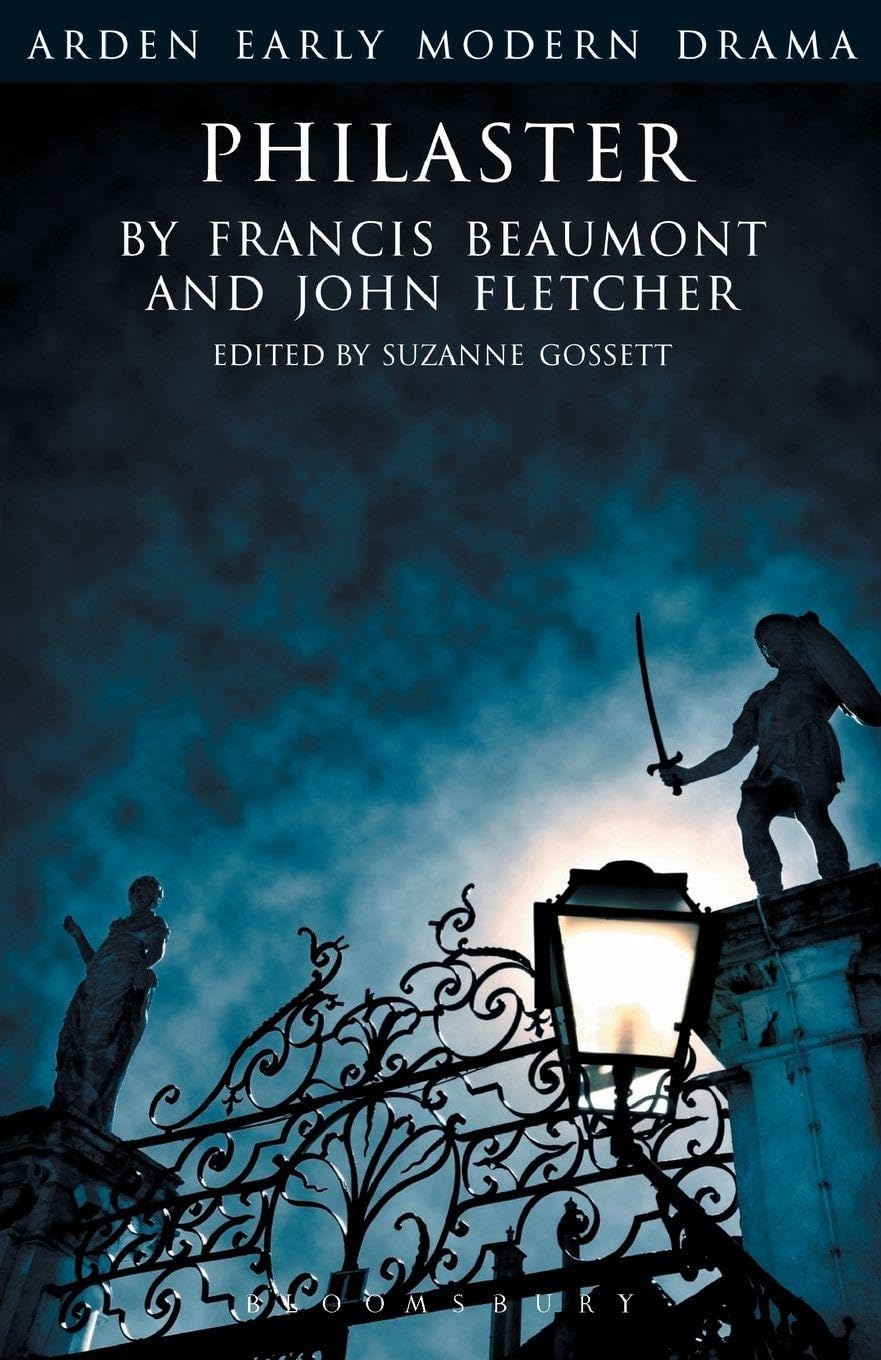



Philaster is a tragicomedy by Beaumont and Fletcher which has much in common with Shakespeare's late plays such as The Winter's Tale . Set in a fictionalised Sicily, it has the complex plot of love, disguise and the threat of death much loved by early modern theatre-goers. This edition provides an authoritative, modernised text by a leading scholar with detailed on-page commentary notes giving readers a deeper understanding of the play. The comprehensive, illustrated introduction discusses Philaster from a performance perspective as well as its relation to Shakespearean drama, and places it in its historical and critical contexts. The play is often taught on Shakespeare and Early Modern drama courses but only now is such a detailed, modern edition available for use by students and scholars. With its wealth of helpful and incisive commentary, this is the finest edition of the play available. The Arden Early Modern Drama series accompanies and complements the Arden Shakespeare Third Series, offering editions of non-Shakespearean Renaissance drama and Restoration drama from the period 1500-1700. Modelled on the Third Series in appearance and style Arden Early Modern Drama editions will offer high-quality textual scholarship and full annotation, together with an accessible, student-friendly introduction. “Beaumont and Fletcher's Philaster has been the revelation of the series so far - an immensely rich and enjoyable collaborative drama from 1609.” ― www.illuminationsmedia.co.uk (October 2009) “...textual discussions are hard to come by elsewhere, with most current scholarly work on the oeuvres and texts of Shakespeare's contemporaries taking place in journals and expensive monographs. To have it all in a series of affordable and accessible volumes is a great thing indeed.” ― Shakespeare Bookshop Newsletter (December 2009) “Fascinating reading” ― Times Literary Supplement, June 2010, on the Arden Early Modern Drama series Francis Beaumont (1584-1616) was an English playwright, mainly remembered for his successful collaboration with John Fletcher. Beaumont's most famous plays include The Woman Hater and The Knight of the Burning Pestle . He began to collaborate with Fletcher in about 1606-08, and their first success came in 1609 with Philaster , followed a year later by The Maid's Tragedy and A King and No King . Together, they wrote at least six plays; in a further seven or eight cases the attribution is probable but not certain. John Fletcher (1579-1625) was an English dramatist who collaborated with Francis Beaumont on at least six plays. They began working together in about 1607 and had their first success in 1609 with Philaster; or Love Lies Bleeding . After Beaumont's retirement in 1613, Fletcher became chief playwright for the King's Men; in addition to writing his own plays, he apparently collaborated with Shakespeare on three works: Two Noble Kinsmen , Henry VIII , and a lost play, The History of Cardenio . He also collaborated with Nathan Field, William Rowley and Philip Massinger , who succeeded him to the post of the King's Men's playwright in 1625. His own plays include the pastoral The Faithful Shepherdess (1608), the tragedy Bonduca (1613), and the comedies Wit Without Money (1614), The Wild Goose Chase (1621), and The Chances (1625), which was revived at the Chichester Festival Theatre in 1962. His work remained enormously popular until the end of the 17th century. Suzanne Gossett (Ph.D. Princeton) is Professor Emerita of English at Loyola University Chicago. She is a General Editor of Arden Early Modern Drama and has recently served as president of the Shakespeare Association of America. Gordon McMullan is a professor of English at King's College London, UK. John Jowett is Emeritus Professor at the Shakespeare Institute, University of Birmingham. Used Book in Good Condition