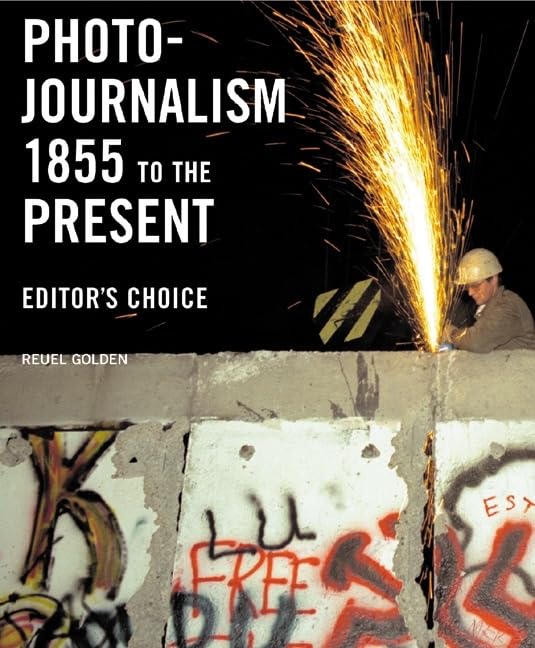



A compelling anthology of photojournalism from the nineteenth century to the present, profiling fifty–four masters of the field and reproducing their most stirring images. Featuring well over 200 memorable photographs! Ever since Roger Fenton inaugurated the genre by photographing the Crimean War in 1855, the worlds great photojournalists have used a variety of approaches to bear witness to their times. At one end of the photojournalistic spectrum are war photographers like Robert Capa and Larry Burrows, who capture the most extreme events of human existence as they happen; at the other are social documentarians like Lewis Hine and Sebastião Salgado, who step back from the single dramatic incident to cover in depth such economic and cultural issues as labor and migration. By compiling 250 of the most memorable images from photojournalism’s 150year history, Photojournalism 1855 to the Present: Editor’s Choice provides a fascinating introduction to the entire range of the field. Author Reuel Golden, a noted authority on photojournalism, selected the fifty–four photographers featured in this book based on their critical reputations and historical importance. For each photographer, Golden provides a portfolio of representative imagesmany reproduced at full-page sizeas well as a brief biography and an insightful critical commentary on his or her career. In these commentaries and in his informative introduction, Golden discusses the particular challenges of photojournalism, such as the relationship between photographer and subject, and the moral ramifications of aestheticizing human suffering. Yet perhaps most importantly, his text also encourages the reader to look closer and discover how well the photographs speak for themselves. From Frank Hurley’s groundbreaking World War I battlefield shots to Mary Ellen Mark’s stark portraits of American poverty and James Nachtwey’s haunting pictures of the September 11 attacks, the images in this book prove that even in our era of twentyfourhour videoon demand, the still photograph remains as powerful as ever. "In the age of citizen photos, [ Photojournalism ] shows that professional photography is still peerless." TIME Europe "An excellent title promising interest for history buffs, photography and art students alike." California Bookwatch (July 2006) "
the work of the world’s great photographers, capturing history, events, the famed and the unknown is all here in a brilliant collection enhanced by an excellent text
Anyone with an interest in photography will find this book invaluable and inspiring." BookViews.com Reuel Golden is a senior editor of the world’s biggest magazine for professional photographers, the New York based Photo District News. He is the author of Twentieth Century Photography. Excerpt from: Photojournalism 1855 to the Present: Editor's Choice Introduction The war in Iraq and its aftermath were relentlessly covered by thousands of television channels from all over the world. Journalists filed reports from burnout rooftops, from inside American tanks making their way toward Baghdad, from refugee camps. It was a big story, as war always is, and the 24hour news channels were anxious not to miss anythingyet invariably they did. From all the hours, days and weeks of moving footage, there is nothing that really lingers in the memory from this strange time. The television coverage was immediate, dramatic and neverending. It showed us a lot, but taught us very little. It is the still photographs of the conflict that are memorable. The famous image of a statue of Saddam Hussein being toppled over by a jubilant crowd was a powerful symbol of repression and subsequent liberation. On the flip side of that, there were the chilling images taken by an anonymous American soldier with a cheap digital camera of Iraqi prisoners being abused by their US captors in the hellhole of Abu Ghraib. When historians look back at this period and try to make sense of what happened, it is these images, as well as photographs taken by people such as Luc Delahaye, Tom Stoddart, Jerry Lampen, James Nachtwey and dozens of others, that will be used as evidence. Photojournalism’s Perspective These photojournalists and all the others featured in this book where the key witnesses to a series of events that together make up recent history. They are our eyes on the world. Great photojournalism witnesses events that we wouldn't necessarily see or be allowed to see, or even want to think about. At its most basic definition, photojournalism is the presentation of stories through photographsphotojournalists are journalists with cameras. Since the inception of the medium, when Roger Fenton photographed the Crimean War in the midnineteenth century, photojournalists have been preoccupied with photographing humanity at the extreme edge of existence. War, civil unrest, famine, disease, natural disasters, poverty, homelessness: these are