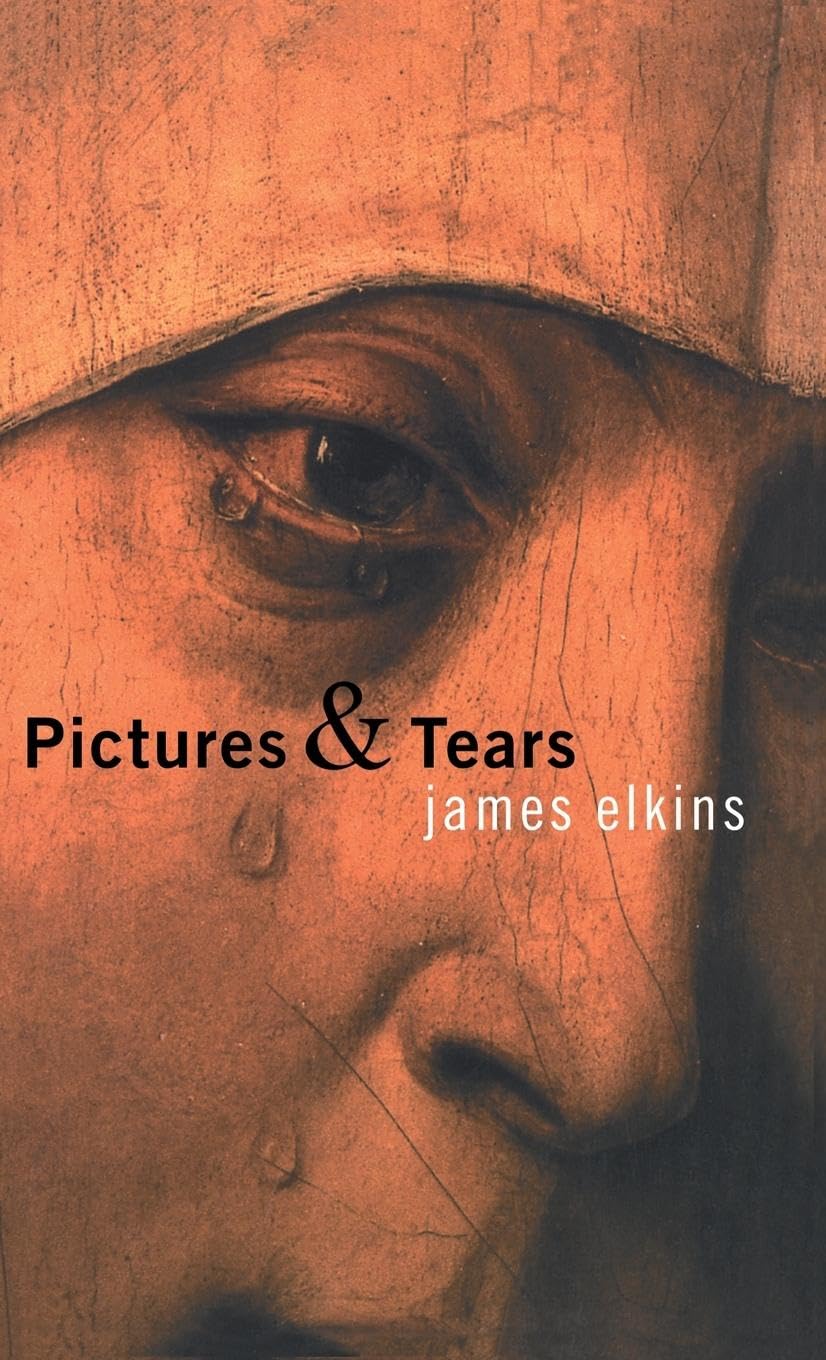
Pictures and Tears: A History of People Who Have Cried in Front of Paintings
$82.01
by James Elkins



Art Does art leave you cold? And is that what it's supposed to do? Or is a painting meant to move you to tears? Hemingway was reduced to tears in the midst of a drinking bout when a painting by James Thurber caught his eye. And what's bad about that? In Pictures and Tears, art historian James Elkins tells the story of paintings that have made people cry. Drawing upon anecdotes related to individual works of art, he provides a chronicle of how people have shown emotion before works of art in the past, and a meditation on the curious tearlessness with which most people approach art in the present. Deeply personal, Pictures and Tears is a history of emotion and vulnerability, and an inquiry into the nature of art. This book is a rare and invaluable treasure for people who love art. Also includes an 8-page color insert. A much different exploration of the meaning of painting is found in Elkins's Pictures and Tears. Elkins (Sch. of the Art Inst. of Chicago; What Painting Is) asks why some people cry in front of paintings. Using both historical sources and solicited examples, he spins out various generally unconvincing hypotheses. Admitting that he himself has never cried in front of a painting, Elkins fails to get to the heart of the matter. Noting that other forms of expression (theater, music, novels, film) are more likely to elicit tears, Elkins attempts to explain their absence in our own time as a peculiarity of the 20th century. The examples of contemporary tears that Elkins resents are largely self-selected (solicited through ads in various publications) and neither prove nor disprove his theories. A rambling and often obtuse style makes this already rather intangible topic even more slippery. Art Matters is recommended for academic and public libraries with a demand for art theory; Pictures and Tears is not recommended. Martin R. Kalfatovic, Smithsonian Inst. Libs., Washington, DC Copyright 2001 Reed Business Information, Inc. Why are some people moved to tears by paintings while others, including most art historians, remain dry-eyed? Elkins has been conducting a provocative and felicitous inquiry into how and what we see in a string of outstanding books, including How to Use Your Eyes [BKL N 1 00], and in preparation for his latest foray, he invited people who have cried in front of paintings to share their experiences. The 400 letters he received form the foundation for an enlightening analysis of the qualities in paintings that arouse the ultimate emotional response, but the most arresting facet of his unique investigation is his charting of the declining value society places on heartfelt reactions to art. Fluent in a great range of works, from Rothko's abstract canvases to a painting he loved as a boy, Bellini's Ecstasy of St. Francis , Elkins elucidates subtle concepts of pictorial time, presence, and absence; criticizes the bloodlessness of most art-history texts; and indicts the marketplace atmosphere of most museums. Prized by the Romantics in the not-so-distant past, art-inspired tears are disdained in our brittle, ironic milieu, a psychological and spiritual diminishment Elkins boldly and rightly decries. Donna Seaman Copyright © American Library Association. All rights reserved "...a provocative and felicitous inquiry... the most arresting facet of his unique investigation is his charting of the declining value society places on heartfelt reactions to art... Elkins elucidates subtle conceptions of pictoral time, presence, and absence; criticizes the bloodlessness of most art-history texts; and indicts the marketplace atmosphere of most museums. Prized by Romantics in the not-so-distant past, art-inspired tears are disdained in our brittle, ironic milieu, a psychological and spiritual diminishment Elkins boldly and rightly decries." -- Donna Seaman, Booklist "To cry in front of art is not a sign of weakness: it is the flexing of a truly aesthetic power. That is the truth we gain from James Elkins' admirably engaged and engaging book." -- Nigel Spivey, author of Enduring Creation "A history of weeping, a meditation on our deepest responses to art, and an ethnography of his own tribe of art historians, Pictures and Tears attempts to reclaim aesthetic experience from what Elkins calls 'the poison well' of art history and theory. I wish I could have read this book before I had written my own." -- Tom Lutz, author of Crying: The Natural and Cultural History of Tears "In the course of reading this book I found the following to be especially valuable: Eileen John's questioning of traditional propositional accounts of knowledge in "Art and Knowledge," Alan Goldman's defense of the much attacked concepts of aesthetic ewww.trs.nyc.ny.us.experience and attitude in "The Aesthetic," and Denis Dutton's listing of characteristics of art found in all cultures in "Aesthetic Universals." This is an immensely useful book that belongs in every college library and on the bookshelves of all serious st