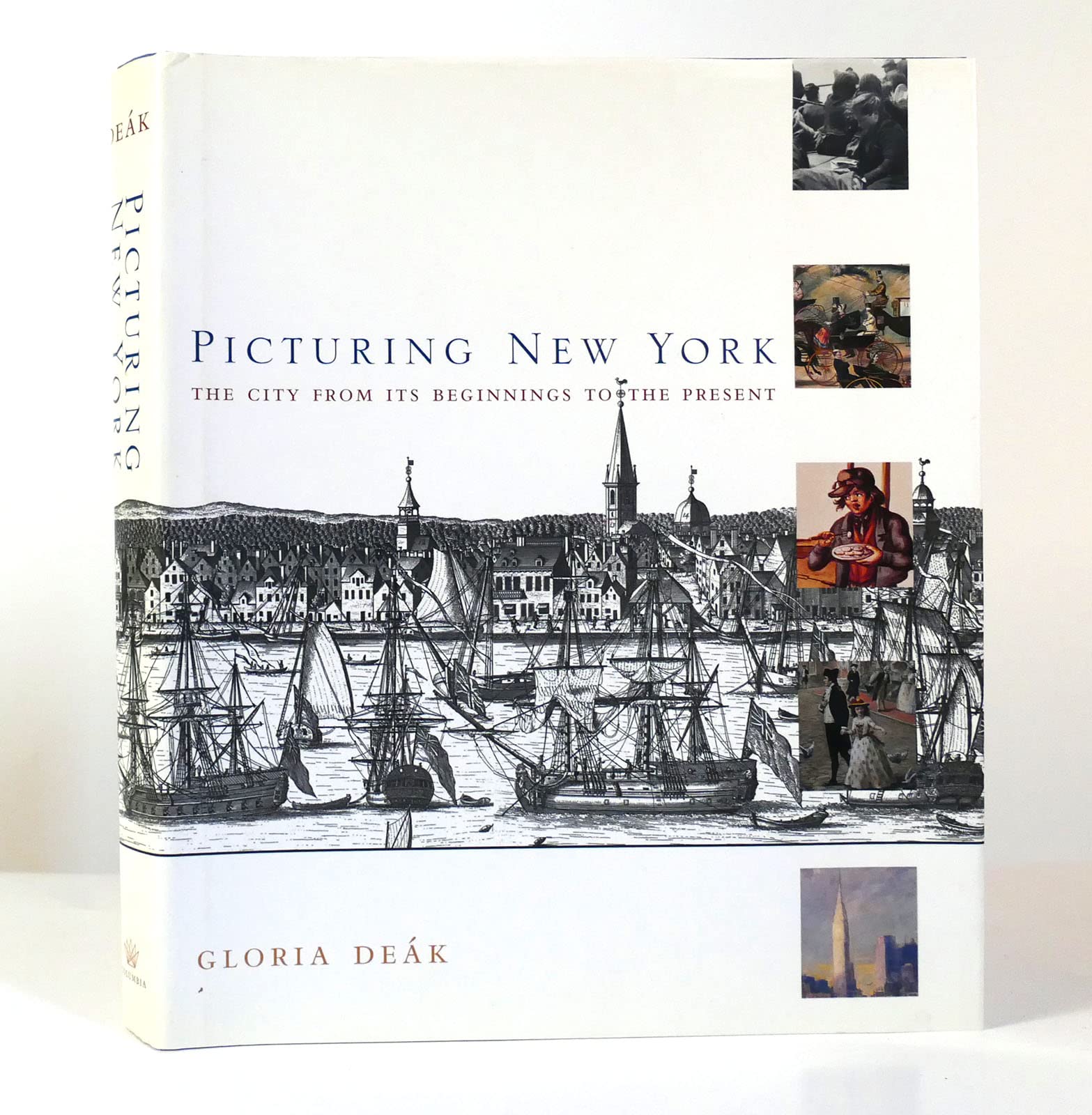



As every reader knows, New York defies any single attempt to take its measure. Here is a unique approach: a single-volume, thematically organized history of the city filled with prints, paintings, and photographs―many in full color―that make the book a feast for the eye. The book consists of fourteen mini-histories, each of which can be read independently of the others. The author explores the city's multiple birth (it was named and renamed five times, and was originally known as Angoulême, not as New Amsterdam as most people believe). Deák covers the religious pluralism the city enjoyed as a scruffy Atlantic trading post, the marketing and merchandising that propelled its development, and the rise of the arts, literature, architecture, and sports. Throughout, the author attempts to answer the beguiling question: Was New York unique from the beginning? Readers will find: The map recording the visit of the explorer Giovanni da Verrazzano to Manhattan Island, circa 1540 The print depicting the defensive barricade, built in 1653 by Dutch governor Peter Stuyvesant, which gave Wall Street its name Artists' renditions of a bucolic ninteenth-century Brooklyn―before bridges transformed it into an extension of the Manhattan megalopolis An 1892 planning sketch of the Grand Concourse, the Bronx's principal boulevard, intended to simulate the grandeur of Parisian roadways and ultimately to outclass Manhattan. Comments from observers as diverse as Alexis de Tocqueville, Frances Trollope, Fanny Kemble, Charles Dickens, Sarah Bernhardt, Leon Trotsky, Fernand Leger, and W. H. Auden create an immediate sense of time and place and animate an already lively work. De k, an independent scholar of American art and cultural affairs, has written an engaging history of New York City filled with prints, paintings, and vintage photographs that greatly enhance the text. While admitting that the city defies any single effort to take its measure, she has nevertheless succeeded in presenting a straightforward account of its progress from a scruffy Atlantic Coast trading post in the 17th century to a great metropolis at the turn of the millennium. Organized into 14 vignettes, as De k calls them, the book takes up the growth of the seaport, the development of manufacturing, and the expansion of banking, insurance, and stock trading. It depicts the city as the nation's center of the arts, theater, other popular entertainment, and publishing. Recommended for New York City collections in academic and larger public libraries.DHarry Frumerman, formerly with Hunter Coll., New York Copyright 2000 Reed Business Information, Inc. Unique among books telling the tale of New York, Gloria Deák's volume is a lively work that will delight reader's interested in the nation's largest city...Each section is generously illustrated with meaningful and important historical images, regardless of medium or place of origin. The result makes for wonderful reading...This is a most enjoyable book. ― Imprint An elegant combination of impressive illustration, perceptive text and spacious format gives this volume distinction.... Deák's knowledge of historical and pictorial resources is daunting. -- Peter Skinner ― ForeWord Magazine Gloria Deák is an independent scholar of American art and cultural affairs. Her writings include Picturing America (a two-volume work that won the 1990 ALA Award for Distinguished Scholarship), American Views: Prospects and Vistas, and Profiles of American Artists.