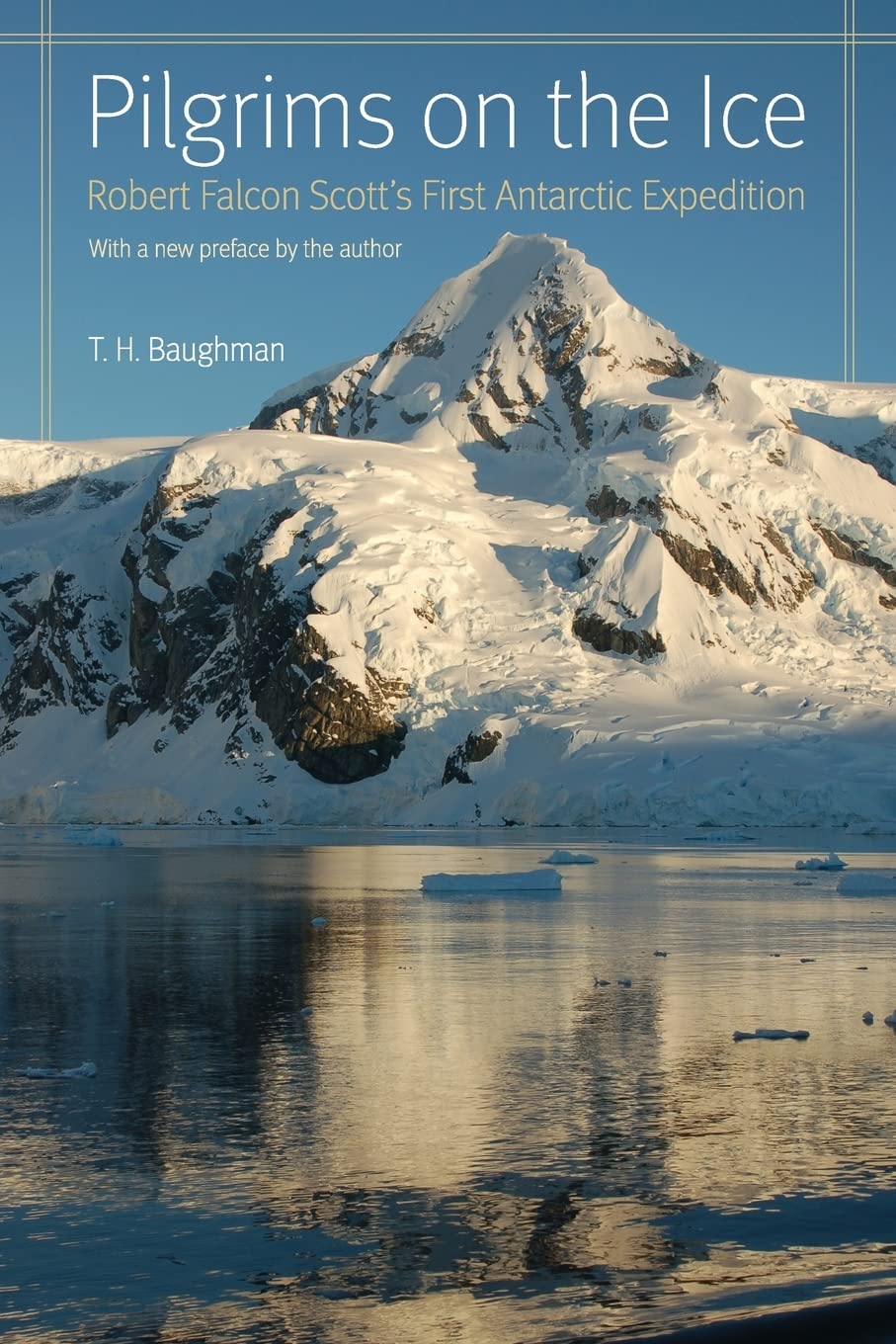
Pilgrims on the Ice: Robert Falcon Scott's First Antarctic Expedition
$17.16
by T. H. Baughman



Robert Falcon Scott’s 1901–4 expedition to the Antarctic was a landmark event in the history of Antarctic exploration, creating a sensation comparable to the Arctic efforts of the American Robert E. Peary. Scott’s initial expedition was also the first step toward the dramatic race to the South Pole in 1912, which resulted in the tragic deaths of Scott and his companions. Since then Scott’s reputation has vacillated between two extremes: Was he a martyred hero, the beau ideal of a brave and selfless explorer, or a bumbling fool whose mistakes killed him and his entire party? Pilgrims on the Ice goes beyond the personality of Scott to remove the first expedition from the shadow of the second, to study objectively its purpose, its composition, and its real accomplishments. This Bison Books edition includes a new preface by the author. "A long-needed, detailed assessment of Scott's first Antarctic venture. . . . This is essential reading: vivid, exciting-even well-read Antarctic aficionados will hasten to turn the pages to learn how Scott manages to free his ship from the ice and take it home in one piece."-Choice "Baughman presents the story concisely and clearly. He has worked extensively in the primary sources and brings out new evidence about the expedition and its participants. . . . Pilgrims on the Ice is a solid contribution to the history of Antarctic discovery."-E. Jeffrey Stann, The American Neptune: A Quarterly Journal of Maritime History and Arts "Here is a book full of interest which synthesises a remarkable variety of written records. It is a marvelous read and greatly increases our respect for a venture combining the strengths and weaknesses of both the nineteenth and twentieth centuries."-David E. Sugden, English Historical Review 0;A long-needed, detailed assessment of Scott7;s first Antarctic venture. . . . This is essential reading: vivid, exciting2;even well-read Antarctic aficionados will hasten to turn the pages to learn how Scott manages to free his ship from the ice and take it home in one piece.1;2; "Choice" 0;Baughman presents the story concisely and clearly. He has worked extensively in the primary sources and brings out new evidence about the expedition and its participants. . . . "Pilgrims on the Ice" is a solid contribution to the history of Antarctic discovery.1;2;E. Jeffrey Stann, "The American Neptune: A Quarterly Journal of Maritime History and Arts" 0;Here is a book full of interest which synthesises a remarkable variety of written records. It is a marvelous read and greatly increases our respect for a venture combining the strengths and weaknesses of both the nineteenth and twentieth centuries.1;2;David E. Sugden, "English Historical Review" Robert Falcon Scott's 1901-4 expedition to the Antarctic was a landmark event in the history of Antarctic exploration and created a sensation comparable to the Arctic efforts of the American Robert E. Peary. Scott's initial expedition was also the first step toward the dramatic race to the South Pole in 1912 that resulted in the tragic deaths of Scott and his companions. Since then Scott's reputation has vacillated between two extremes: Was he a martyred hero, the beau ideal of a brave and selfless explorer, or a bumbling fool whose mistakes killed him and his entire party? In this work, Antarctic historian T. H. Baughman goes beyond the personality of Scott to remove the first expedition from the shadow of the second, to study objectively its purpose, its composition, and its real accomplishments. T. H. Baughman is chair of the History Department at Benedictine College. He is the author of Before the Heroes Came: Antarctica in the 1890s (Nebraska 1993).