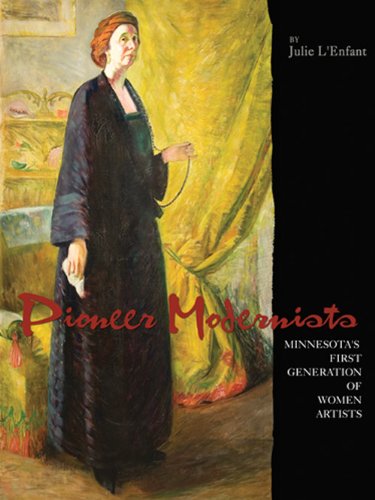



In the early twentieth century Frances Cranmer Greenman, Alice Hugy, Elsa Laubach Jemne, Clara Mairs, Evelyn Raymond, Jo Lutz Rollins, and Ada Wolfe established successful careers as artists in Minneapolis and Saint Paul.They played significant roles in the development of the art schools, galleries, and arts organizations that make the Twin Cities a major cultural center today. Yet their strong reputations were eclipsed mid-century by the rise of Abstract Expressionism and other male-dominated modernist movements. Drawing on unpublished papers, contemporaneous accounts, and interviews with their students, descendants, and collectors, Pioneer Modernists presents a new picture of their cosmopolitan art training, multi-faceted careers, and sometimes unconventional lives, set in the context of the tumultuous events of the twentieth century. It examines their workpaintings, prints, decorative work, and sculpturesin terms of its humanistic ideas, technical sophistication, and visual appeal. By relating this work to national and international art movements, Pioneer Modernists contributes to a new understanding of Modernism as richly diverse. This study grows out of a 2007 exhibition at the Minnesota Museum of American Art, ³In Her Own Right: Minnesota's First Generation of Women Artists.² It is enriched by numerous reproductions of works in public and private collections, many never before published. In the early twentieth century Frances Cranmer Greenman, Alice Hugy, Elsa Laubach Jemne, Clara Mairs, Evelyn Raymond, Jo Lutz Rollins, and Ada Wolfe established successful careers as artists in Minneapolis and Saint Paul.They played significant roles in the development of the art schools, galleries, and arts organizations that make the Twin Cities a major cultural center today. Yet their strong reputations were eclipsed mid-century by the rise of Abstract Expressionism and other male-dominated modernist movements. Drawing on unpublished papers, contemporaneous accounts, and interviews with their students, descendants, and collectors, Pioneer Modernists presents a new picture of their cosmopolitan art training, multi-faceted careers, and sometimes unconventional lives, set in the context of the tumultuous events of the twentieth century. It examines their work paintings, prints, decorative work, and sculptures in terms of its humanistic ideas, technical sophistication, and visual appeal. By relating this work to national and international art movements, Pioneer Modernists contributes to a new understanding of Modernism as richly diverse. This study grows out of a 2007 exhibition at the Minnesota Museum of American Art, ³In Her Own Right: Minnesota's First Generation of Women Artists.² It is enriched by numerous reproductions of works in public and private collections, many never before published. Julie L'Enfant is professor of art history and chair of the Liberal Arts department at the College of Visual Arts in Saint Paul, Minnesota. She has written about various artists and writers, including Dora Maar, Edith Wharton, and Virginia Woolf. Her previous books are The Dancers of Sycamore Street (St. Martin's Press, 1983), a novel; William Rossetti's Art Criticism: The Search for Truth in Victorian Art (University Press of America, 1999); and The Gag Family: German-Bohemian Artists in America (Afton Press, 2002). Used Book in Good Condition