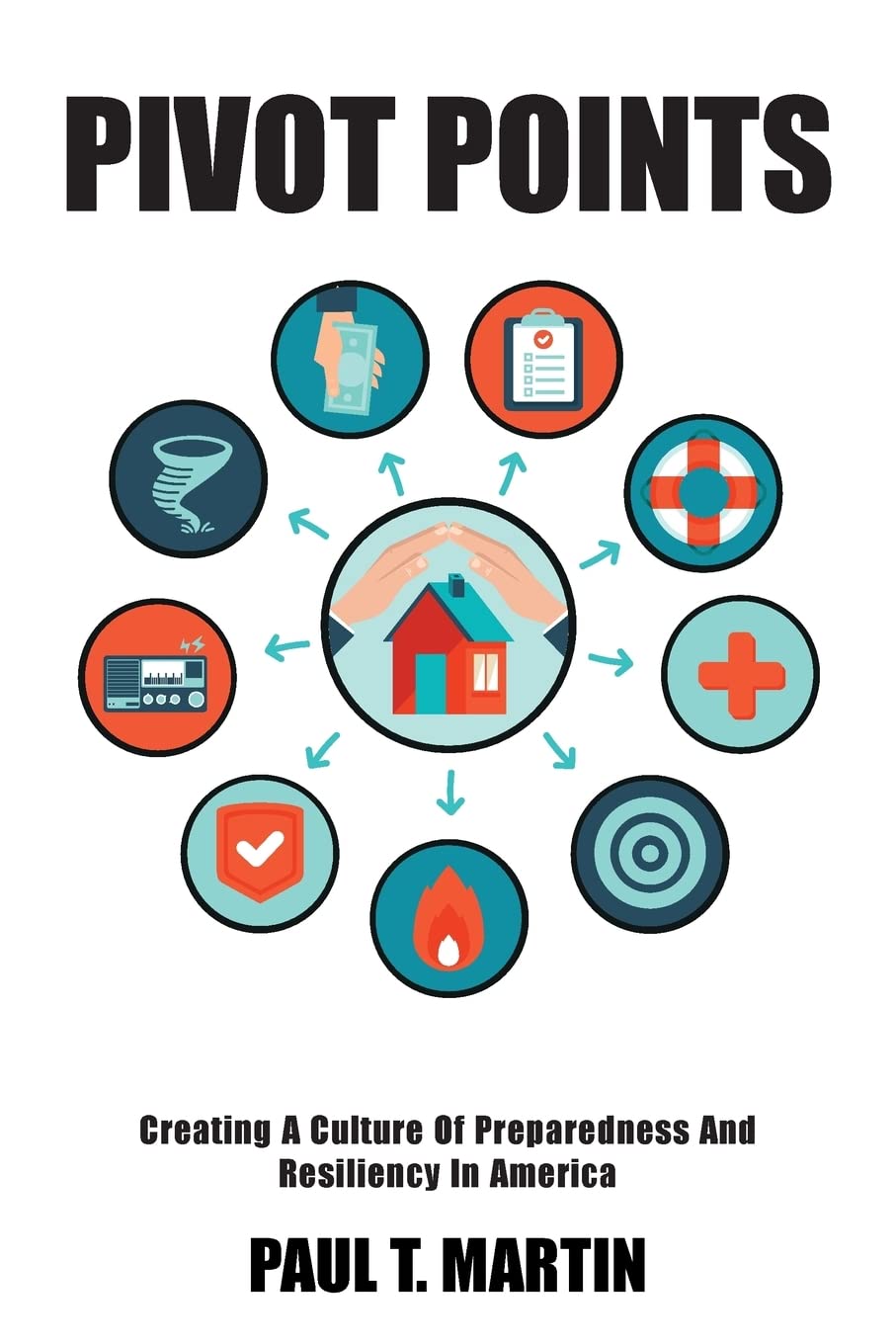
Pivot Points: Creating A Culture Of Preparedness And Resiliency In America
$11.25
by Paul T Martin



Too many Americans lack the know-how and provisions to adequately handle even a small disaster—be it man-made or natural. Meanwhile, the image of the disaster prepper as either paranoid or actively hoping for social disruption has become commonplace. It’s time to face the sad truth: the disaster preparedness movement in America has failed. In Pivot Points , experienced disaster “prepper” Paul T. Martin argues for a shift in how America views disaster preparation. Instead of their dismissing prepping as a hobby or the result of an overactive imagination, Martin challenges individuals, emergency management professionals, and community leaders to answer three vital questions: Do we need a culture of preparedness in America? - What should that culture look like? - How do we create that culture? Martin challenges readers to discover their “pivot points,” those sources of motivation for preparing both themselves and their communities for disaster. For some, motivations might center on family safety. For others, a sense of citizenship or religious beliefs might drive their preparedness. By exploring different pivot points, we create a more resilient, inclusive culture of preparedness, transforming the reader into an advocate for public safety and creating better preparation in private and public spheres. Paul Martin has taken the emotional and typical prepper hype out of the subjects of preparedness, and with this book, has moved the discussion to an objective, well-organized, circumferential look at preparedness in the United States. This treatise is a significant contribution to the subject of preparedness that everyone should appreciate. From every angle, Pivot Points begs the question, with all at play in our society, "Why are we not ready for some kind of chaos?" DAN STULTZ MD, FACP, FACHE, Internist and former President and CEO of Texas Hospital Association Over the past 40 years, the gun culture changed from a focus on hunting, to a focus on self-defense. Defensive shooting schools, tactical firearms manufacturing, and practical shooting competitions went from the fringe to the norm. That significant cultural shift occurred because gun rights activists were able to connect with a core American value: self-reliance. "I should be prepared to protect myself and my family" is not a fringe idea. The gun culture normalized ownership of AR-15s and concealed carry by fighting negative media stereotypes, and aggressively making the case to the broader culture that the benefits of lightweight semi auto rifles and handguns carried in public by law abiding citizens far outweighed the risks. Those things are no longer considered weird or scary by mainstream gun culture: they are considered the things every gun owner should do, even more important than having a bird hunting shotgun or deer rifle. Pivot Points describes the path ahead for the preparedness movement: changing the culture from thinking of "prepping" as something isolationist paranoids do, to something that every rational, well adjusted adult should do. The gun rights movement has shown that mainstream culture can embrace preparedness, and that cultural change has created a large audience that should be receptive to the next step. As a defensive firearms trainer, I've expanded my own program to address first aid, fire suppression, food storage and other preparedness issues, and those topics have been well received by armed citizens. I encourage all armed citizens and particularly those in the firearms industry to read this book and become part of another wave of cultural change. KARL REHN, Lead Instructor, KR Training, Texas LTC instructor, NRA Training Counselor I just finished reading "Pivot Points: Creating a Culture of Preparedness and Resiliency in America," and I really enjoyed it. I have been a Firefighter for 31 years and I can really relate to a lot of information in this book. Throughout the years, I have become a big believer that everyone needs to learn how be accountable for their own well-being (safety, health, finance, etc.). After reading Pivot Points, I feel even stronger about it. We are very vulnerable as humans because of the world we live in. Disasters seem to be happening more frequently these days, and we all need to wake up and realize that our safety as well as the safety of our families, neighbors,friends, is very important. We must all realize that we are just one disaster or incident away from having a MAJOR change in our lives. Pivot Points allows us to realize that even though we have no control over disasters or serious incidents, we can limit their impacts by being as prepared as possible when these do occur. This book provides us many good examples like knowing and looking out for your neighbors, having situational awareness of your surroundings, and even learning new skills that can help us prepare for incidents that can impact our lives. I really enjoyed the Chapter "On Citizenship" which provides us Thir