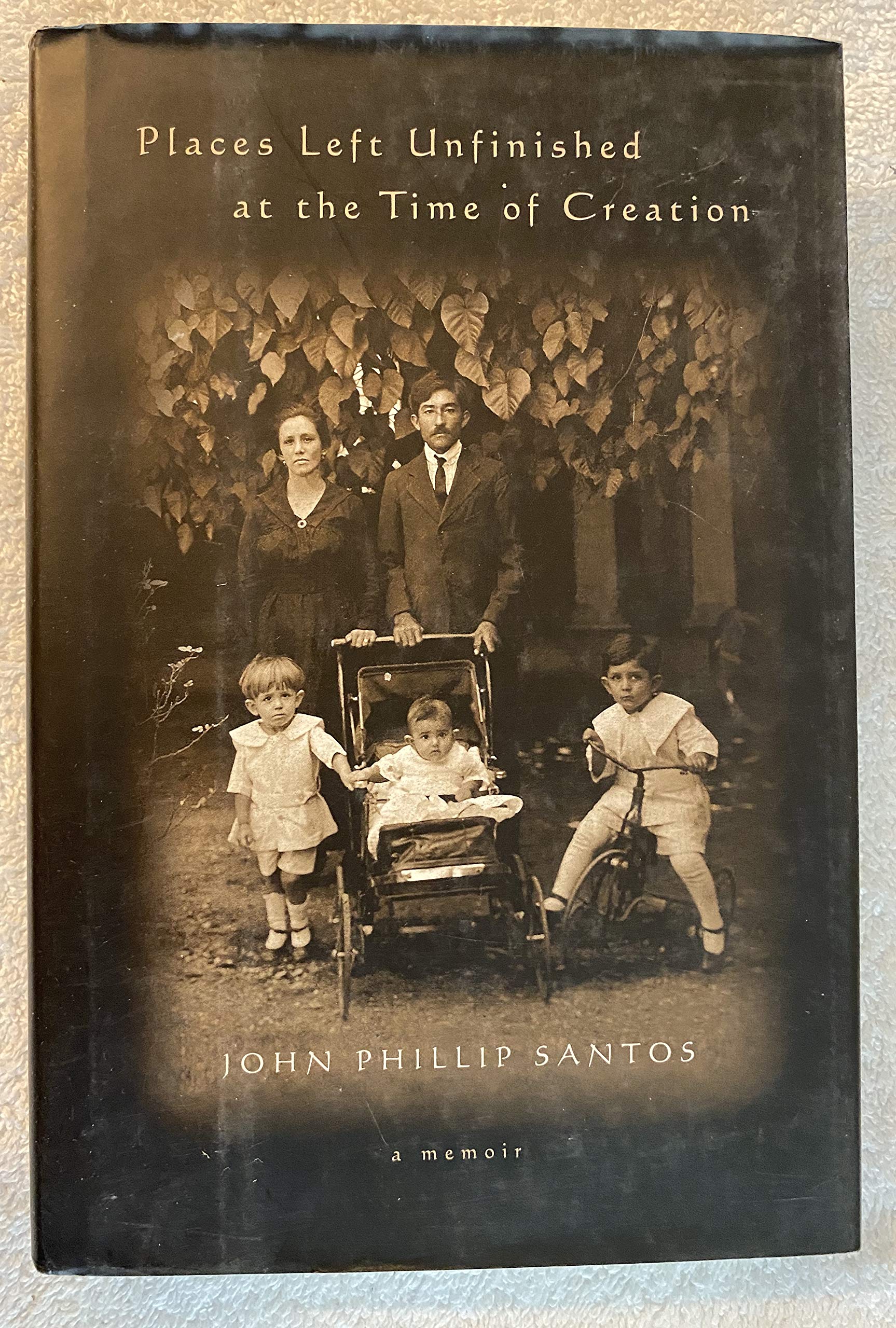



An evocative memoir of growing up in San Antonio, Texas, along the Mexican border interweaves family reminiscences with the history of Texas and Mexico to chronicle the story of one Mexican family and its rich blend of Mayan, Aztecan, Spanish, and American heritage. 20,000 first printing. Tour. Mexican American journalist John Phillip Santos's lyrical and loving memoir explores his family's history in magnificent prose touched with the singing cadences of his Spanish-language heritage yet vibrant with the energy of American English. It's a combination utterly suited to his native San Antonio, where las viejitas --the little old ladies of the Garcia and Santos families--ruled over their children and grandchildren with the toughness and grandeur of the Mexico they left during the revolution of 1914. "Poised between those ancient Indio origins from the south ... and our Mestizo future in the north," these new Texans made Mexico live for their descendants in the magical stories and folkloric practices of an older culture. Yet there was also a sense of secrets kept and cherished possessions left behind, of people who had traveled far and traveled light. The "wind of story" was also "a wind of forgetting," and as Santos probes his heritage, he comes to understand that "it is okay to move on and forget." Nonetheless, this is a book that restores to memory the drama not just of a single family but of an entire people whose past is more closely entwined with that of the United States than some Americans care to remember. Santos depicts them with care and dignity. --Wendy Smith As remembering is to Jews, forgetting is to Mexicans. In a remarkable, bittersweet, and often tragic memoir, Santos, a journalist, television writer and producer, and the first Mexican American Rhodes scholar, attempts to reverse this cultural generalization by reflecting on the early years he spent in San Antonio and Mexico, traveling the paths his family followed between two cultures. Always at the center of tales told by his aunts and uncles is the suicide of his paternal grandfather in 1939. In seeking to unravel the tragedy, Santos carries us through years of cultural mixing in the city that was "an umbilical tether to a past that otherwise seemed to be disintegrating, memory by memory." Much of his story is of poverty, yet rich portrayals of Mex-Tex life also provide a perspective too often forgotten by sociologists, historians, and writers who dwell on acculturation. This is an important book, both as memoir and because it helps us grasp the history of a people who are an integral part of the national identity. Highly recommended for academic and larger public libraries. -ABoyd Childress, Auburn Univ. Lib., AL Copyright 1999 Reed Business Information, Inc. More meditation than chronological memoir, this lyrical account of a Mexican American writer's search for himself is rooted in his family's uprootedness, their move in this century from northern Mexico to southern Texas, then from the barrio to the suburbs, and then outward to New York City and across the world. Whether he is talking about the Alamo history he was taught in his San Antonio school (no lessons about the Indians, no mention of the Spanish and the Mexicans who had first built the city), or about his experience as a Rhodes scholar in Oxford, or about his search for the conqueror Cortes ("the grandfather no Mexican wants to admit to"), Santos is always circling back obsessively to his own extended family lore, "an unstoppable carousel of stories," those shared and remembered in garages, kitchens, and backyards, and also those secrets determinedly forgotten. Many Americans will find themselves in the narrative of upheaval and migration; they will recognize the difference between labored nostalgia and heartfelt loss. Hazel Rochman A moving, intellectually powerful memoir of Mexican-American life. Born in San Antonio in 1957, Santos, a journalist and television documentary producer, grew up in an extended family whose elder members remembered a Texas that had not yet become anglicized. Through their eyes, Santos revisits that time, looking deeply into the Mexican past as a way of informing the present. We may be latter-day Mexicanos, he writes, transplanted into another millennium in el Norte, but we are still connected to the old story, arent we? Answering his own question, he continues, that connection is rapidly dying with the loss of the old generation, and with what he considers to be a cultural habit of selective forgetting, for there is pain enough in the present to go around. Resisting that habit, Santos writes evocatively of his childhood in la Tierra de Viejitas, the land of the little old ladies in whose custody family memories resided. He reconstructs the old San Antonio of daylong movie matinees and weekend barbecues, of visits by relatives from both sides of the border, of the quotidian life of men and women who considered themselves exiles but who refused