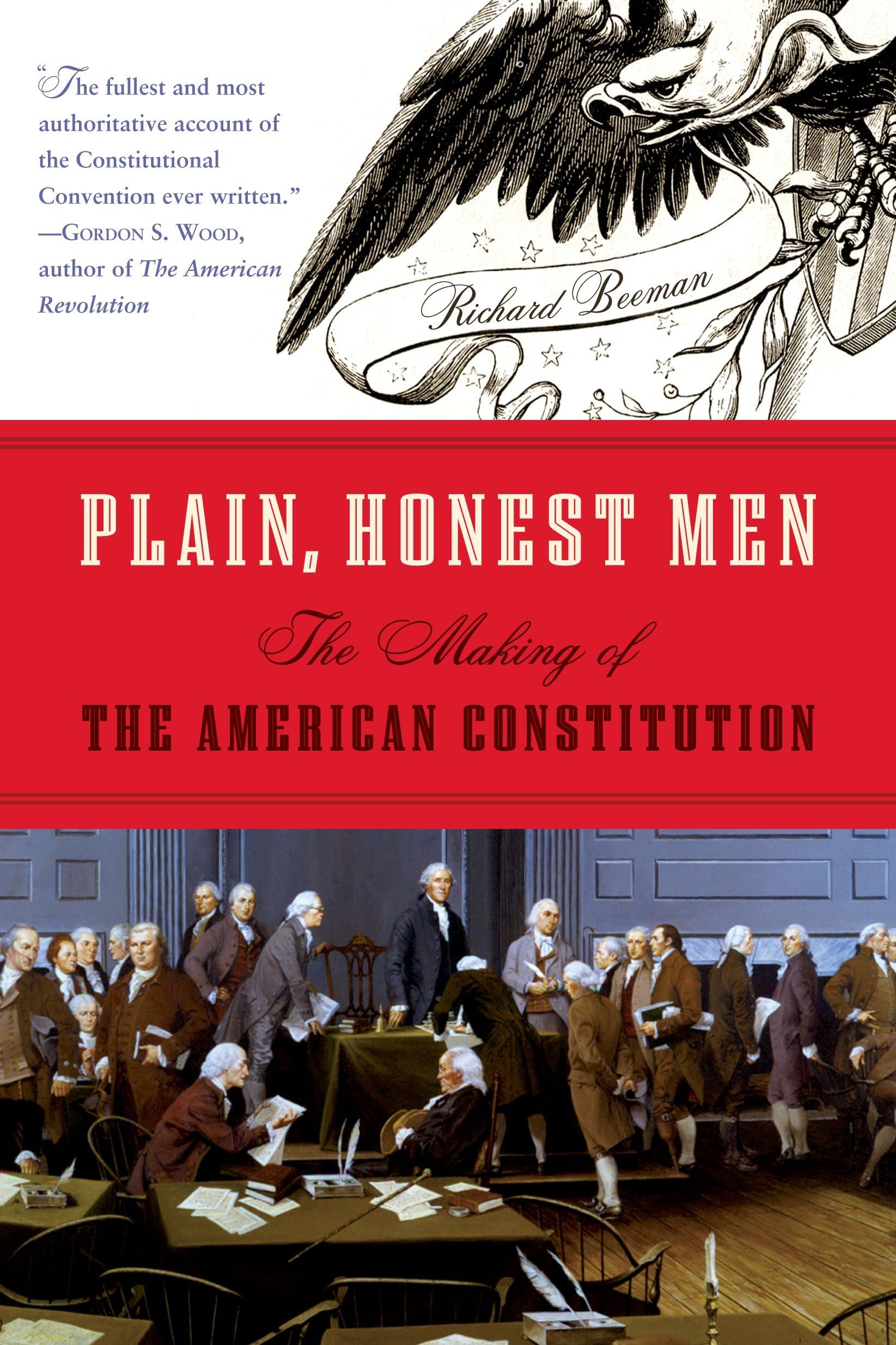



In May 1787, in an atmosphere of crisis, delegates met in Philadelphia to design a radically new form of government. Distinguished historian Richard Beeman captures as never before the dynamic of the debate and the characters of the men who labored that historic summer. Virtually all of the issues in dispute—the extent of presidential power, the nature of federalism, and, most explosive of all, the role of slavery—have continued to provoke conflict throughout our nation's history. This unprecedented book takes readers behind the scenes to show how the world's most enduring constitution was forged through conflict, compromise, and fragile consensus. As Gouverneur Morris, delegate of Pennsylvania, noted: "While some have boasted it as a work from Heaven, others have given it a less righteous origin. I have many reasons to believe that it is the work of plain, honest men." "In sprightly, engaging prose and with a sure, steady scholarly hand, Rick Beeman has given us a vivid account of the most vital chapter of our early history: the making of the Constitution. This is a terrific book."—Jon Meacham, author of American Lion "Beeman eschews the heroic version of the story in favor of a hard-eyed narrative that in no way diminishes the Framers' achievement. . . . In a motion-by-motion, day-by-day, debate-by-debate fashion, he re-creates the [delegates'] hard bargaining. . . . Masterfully told American history for the scholar and general reader alike."— Kirkus Reviews , starred review "While some have boasted it as a work from Heaven, others have given it a less righteous origin. I have many reasons to believe that it is the work of plain, honest men."—Gouverneur Morris "Authoritative and readable . . . Beeman's work is distiguished by a gently judicious tone that allows us to appreciate, and draw some lessons from, the delicate balances that emerged out of that passion-filled Philadelphia crucible." —Walter Isaacson, The New York Times Book Review "The fullest and most authoritative account of the Constitutional Convention ever written." – Gordon S. Wood, author of The Radicalism of the American Revolution "Engrossing . . . This minute-by-minute account introduces us to a world, and time, where everything was at stake."— Chicago Tribune, editor's choice "A stunning achievement . . . easily the best and most comprehensive treatment of its subject ever written."— Weekly Standard Richard Beeman is a professor of history at the University of Pennsylvania and the author of five previous books on the history of revolutionary America; his biography of Patrick Henry was a finalist for the National Book Award. He has received awards from, among others, the Rockefeller Foundation and the National Endowment for the Humanities, and he has served as Harmsworth Professor of American History at Oxford University. He also serves as a trustee and vice-chair of the Distinguished Scholars Panel of the National Constitution Center. Richard Beeman lives in Philadelphia. CHAPTER ONE THE CRISIS it was a blustery Saturday morning on March 15, 1783, and patches of snow still flecked the ground. General George Washington strode up a long hill toward a rocky promontory at the American army encampment seven miles southwest of Newburgh, New York. He was about to face the greatest personal challenge of his career. He was uncharacteristically nervous and uncertain, roiled by sensations of anger, frustration, and inadequacy. He had led his army to a brilliant victory over the British at Yorktown some seventeen months earlier. Yet the soldiers at Newburgh remained in the field, languishing, while peace negotiations dragged on in Paris. His troops had not been paid for many months, and the Continental Congress’s promises of a generous pension seemed as empty as the coffers of the bankrupt Confederation government. To make matters worse, a cabal of American army officers, angry over the failure of the continental government to make good on its promises, had decided to take matters into their own hands. Five days earlier, Major John Armstrong, aide-de-camp to the commander at Newburgh, General Horatio Gates (Washington’s longtime rival), circulated an “address” to the soldiers, urging them to cease their meek supplications to an uncaring Congress and, if necessary, to throw off Washington’s leadership and redress their grievances by force of arms. In a letter to his former aide-de-camp and protégé Alexander Hamilton, Washington expressed his fear that the disgruntled soldiers might throw “themselves into a gulph of Civil Horror.” Yet at the same time he had deep sympathy for their plight. Indeed, Hamilton had been gently nudging his mentor to throw in his lot with the discontented soldiers. As he approached his destination, Washington faced a painful choice: to remain loyal to his long-suffering troops or to honor the rule of law. America’s ambitious experiment in liberty had seemed full of promise seven years earlier