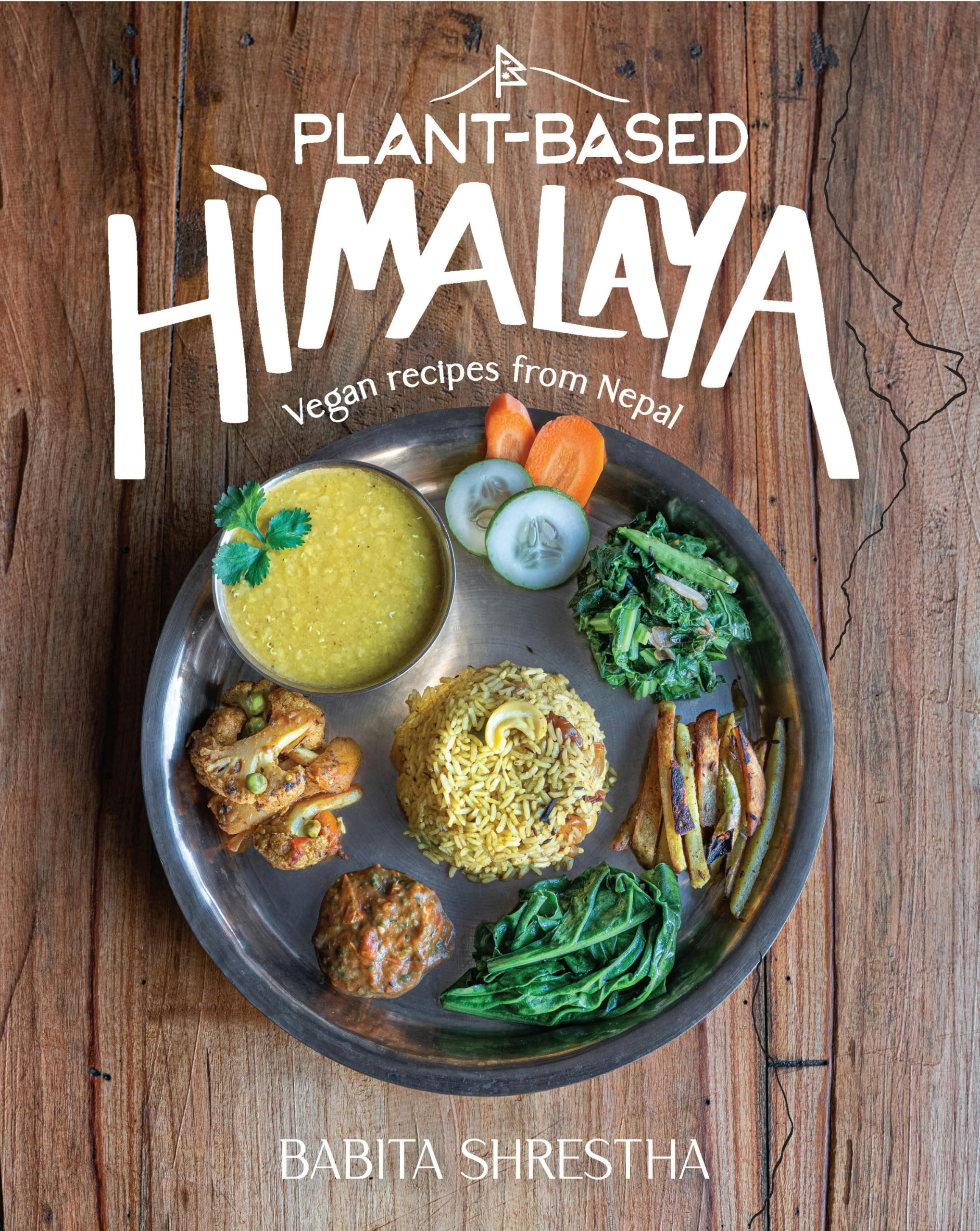



The art of healthy cooking is all about loving yourself and spreading that love to those around you. It's even better when you can cook a delicious meal and also help protect the environment. In Plant-Based Himalaya , Nepalese author Babita Shrestha shares 38 vegan recipes from her home country that she has been cooking and eating since she was very young, including mouthwatering grains, dal, curries, greens, sauces, and desserts. In addition to food, Shrestha introduces her beloved Nepal along with her personal goals for a plant-based diet: decreasing mass production and consumption of unhealthy processed food in plastic packaging. Featuring 250 beautiful full-color photos, Plant-Based Himalaya is designed to inspire you to cook and eat exquisitely vegan home-style Nepali cuisine. Make it exceptional, and share it with your loved ones! "A very useful book for those who want to cook Nepali food with beautiful photography of Nepali food and culture."―Sunil Ulak, Historian & Photographer, Nepal "Bring Nepal into your kitchen with Babita's wonderful cookbook, Plant-Based Himalaya . In addition to fabulous recipes that will satisfy vegans and non-vegans alike, this book also provides a glimpse into the pristine landscapes, ancient architecture, rich culture, and generous people of Nepal."―Anne-Marie Bonneau, author of The Zero-Waste Chef, Plant-Forward Recipes for a Sustainable Kitchen and Planet "Babita has cooked many special meals for my family. Her passion for food comes through in the pages of this stunning book. Beautifully written and photographed, it is one you will go back to time and time again."―Lucy A. VanMeter, Judge, Fayette County, Kentucky "Plant-based eating is a healthy alternative for you and our planet. But even if you don't cook, you'll want this beautiful book on your table. (Or it would make a perfect gift!)"―Subakka.bookstuff Babita Shrestha is the creative mind behind Vegan Nepal (vegannepal.net). After becoming vegan in 2016, she grew even more passionate about cooking delicious and healthy plant-based meals. Born in Nepal's Bara district, Shrestha is a chef, photographer, graphic designer, and filmmaker with a BFA in graphic design from St. Cloud State University, Minnesota. She splits her time between Lexington, Kentucky, and Nepal. Nepal is an ancient country of pristine landscapes in Southeast Asia, situated between India, Tibet, and China. Due to its wide range of geographical features, it is richly endowed with agro-biodiversity. Nepal is also a melting pot of various cultures, every group having individual traditions and cuisines. The majority of Nepali citizens are directly involved in some form of agriculture. Although modern farming has been implemented in many places, some prefer to use ancient food-growing techniques that can be highly labor-intensive. For the last several decades, farmers in Nepal have started using more chemical fertilizers and pesticides, with the goal of producing more crops per year. However, organic methods are still favored by most of the locals, especially when farming to feed themselves and their families. I love that it is so easy to find fresh, seasonal, homegrown, farm-to-table vegetables and other produce all year round in Nepal. The Himalayan region of Nepal covers about 15% of the country's total land area. It also has the smallest population of the three regions due to the cold weather and lower concentration of farmland. Himalaya comprises over 200 peaks that stand over 6,000 meters and includes the highest point in the world, Sagarmatha (now known as Mt. Everest). People of Sherpa descent are the indigenous ethnic group of this zone. This mountainous region of Himalaya is one of the most popular tourist attractions of Nepal, and yet most of it continues to remain unexplored and uninhabited because of extreme geographical features and harsh climate. Home to some of the most beautiful and rare animals in the world, this region is also blessed with exotic flora not found anywhere else on this earth. KWATI Mixed Beans Kwati (sprouted nine-bean soup) is an auspicious Newari dish. It is prepared during the full moon and during the celebration of Janai Purnima, a Hindu festival when Brahman priests change their sacred threads. "Kwa" means hot and "ti" means soup in the Newari language. The spectrum of mixed beans blends to create a truly distinct flavor, paralleling the confluence of diverse cultures that embody Nepal. SERVES ~ 4 COOK TIME ~ 30 minutes INGREDIENTS Kwati bean: 2 cups Red onion: 2 small Tomato: 9 small SPICES Sunflower oil: 2 tbsp Cumin seed: 1 tsp Cumin powder: 1 tbsp Turmeric: tsp Bay leaf: 2 leaves Garlic: 5 cloves Ginger: 4 slices Cardamom: 6 cloves Clove: 4 buds Cinnamon: tsp Fresh green chili: 3 medium Cilantro: cup Salt: 1 tsp STEPS 1. Wash mixed beans and soak overnight in 4 cups of water. Drain the water next day and put the beans in a cheesecloth or breathable cotton cloth. You can leave them on the counterto