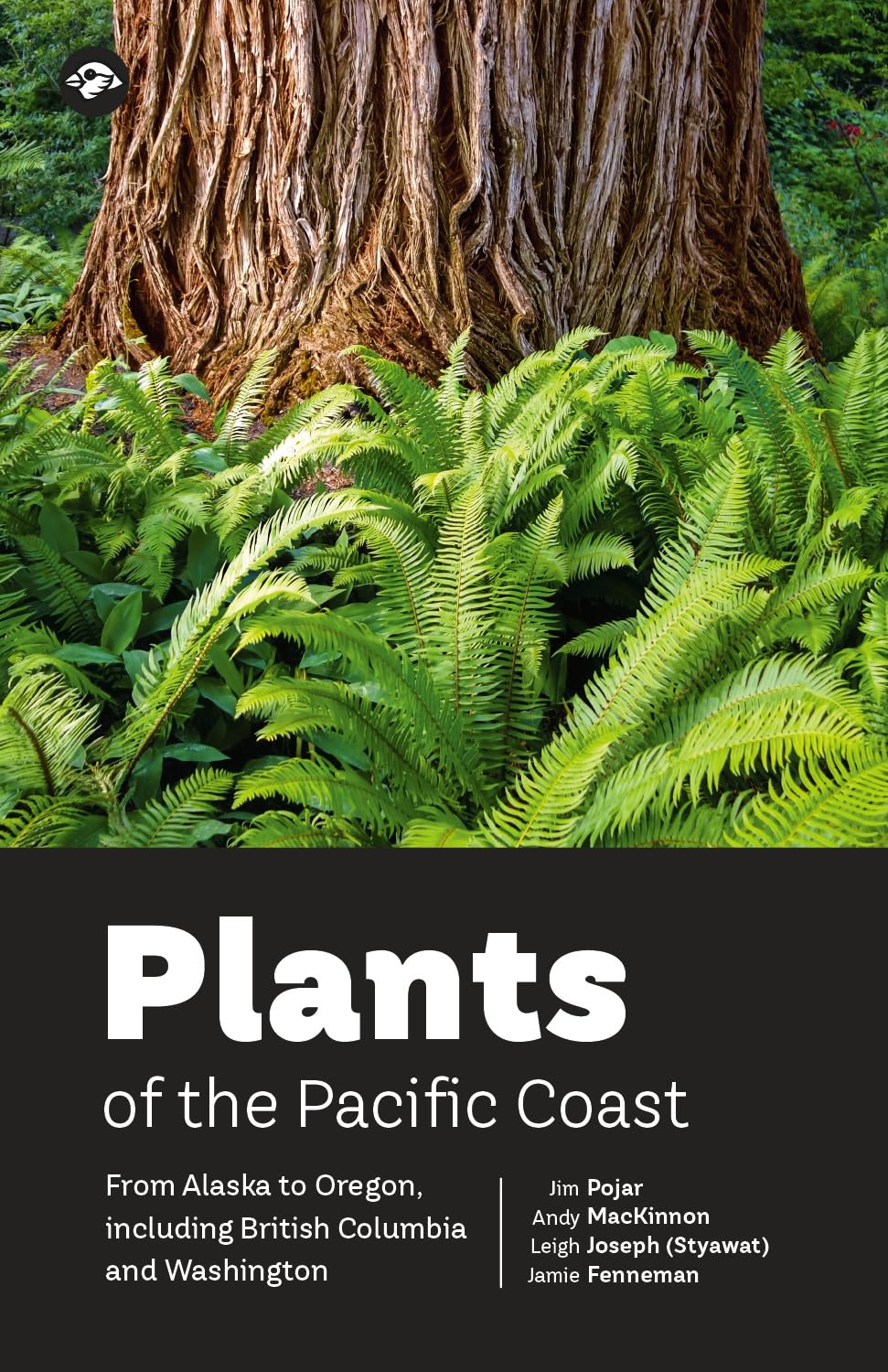



This long-awaited successor to the bestselling Plants of Coastal British Columbia and the Pacific Northwest features over 700 trees, shrubs, wildflowers, ferns, horsetails and lycopods of the north Pacific coast of North America. The region, stretching from southeast Alaska to northwest Oregon, is characterized by humid forests, imposing mountains, muscular rivers, serene and stormy seas, and myriad islands, beaches, wetlands, and meadows. Authors Jim Pojar and Andy MacKinnon, field botanists and forest ecologists who each have 50 years of experience in the region, are joined for this brand-new, fully updated field guide by two younger colleagues: ethnobotanist Styawat/Leigh Joseph, of the Skwxwú7mesh (Squamish) Nation, and plant taxonomist Jamie Fenneman. This user-friendly book focuses on the vascular plants―their identification, description, ecology, and traditional uses―of the coastal ecosystems of northwest North America. It describes the plants of the region’s temperate rainforests, dry-belt lowland forests, cool subalpine forests, and non-forested habitats from tidewater to alpine, including some common introduced species. The species descriptions are packed with colour photos, range maps, and illustrations. Plants of the Pacific Coast is organized by life form so that species that resemble one another appear in the same group. Within the major sections―Trees, Shrubs, Wildflowers, Aquatics, Graminoids (grasses and grass-like plants), Ferns and Relatives―plants are organized by family. The field guide’s opening section includes an introduction to the region’s physical environment; a description of its plant cover; an overview of regional biodiversity, ecological resilience, and climate change; and an exploration of regional ethnobotany, with insights into Indigenous plant knowledge, uses, and ecosystem management. This comprehensive guide includes up-to-date taxonomy, keys, hundreds of colour photos, ethnobotanical essays, and engaging notes. It will appeal to anyone interested in the region’s rich and diverse plant life. "I am an outdoor person living on an island in the Salish Sea and I found this book fascinating. I love all the photos and the maps identifying the places where each plant is found. There is a useful key at the beginning of each section to help find the appropriate plant description. There are great leaf structure diagrams too. Included in descriptions are warnings for poisonous plants as well as how to distinguish the particular plant from similar looking ones... This is a very useful book for anyone who spends time outdoors in the Pacific Northwest coastal areas. You'll be introduced to vegetation from coastline to forest, from trees to common weeds."―Joan Nienhuis, Book Woman Joan Jim Pojar is a botanist, senior ecologist, and forester who has worked for the BC Ecological Reserves Program, the BC Forest Service, and the Canadian Parks and Wilderness Society-Yukon. He is the author or co-author of eight books, including Alpine Plants of British Columbia, Alberta and Northwest North America . Andy MacKinnon is a forest ecologist and a retired Professional Forester and Professional Biologist. He worked for the BC Forest Service for three decades, mostly on the BC coast. With Jim Pojar, he has co-taught forest ecology field courses in Bamfield and on Haida Gwaii. He is the co-author of nine books, including Mushrooms of British Columbia . Jamie Fenneman is a botanist and biodiversity specialist with more than 30 years of experience studying the flora of British Columbia. He has worked as an ecologist and botanist in several Canadian provinces and US states and specializes in plant taxonomy, ecological inventories, rare species surveys, and mitigation strategies for rare plants and animals. Leigh Joseph (Styawat) is an ethnobotanist, assistant professor at Simon Fraser University, and entrepreneur from the Sḵwx̱wú7mesh First Nation. She has worked extensively with Sḵwx̱wú7mesh and other First Nations communities on Indigenous knowledge renewal and building land-based connections by working with culturally important plants.