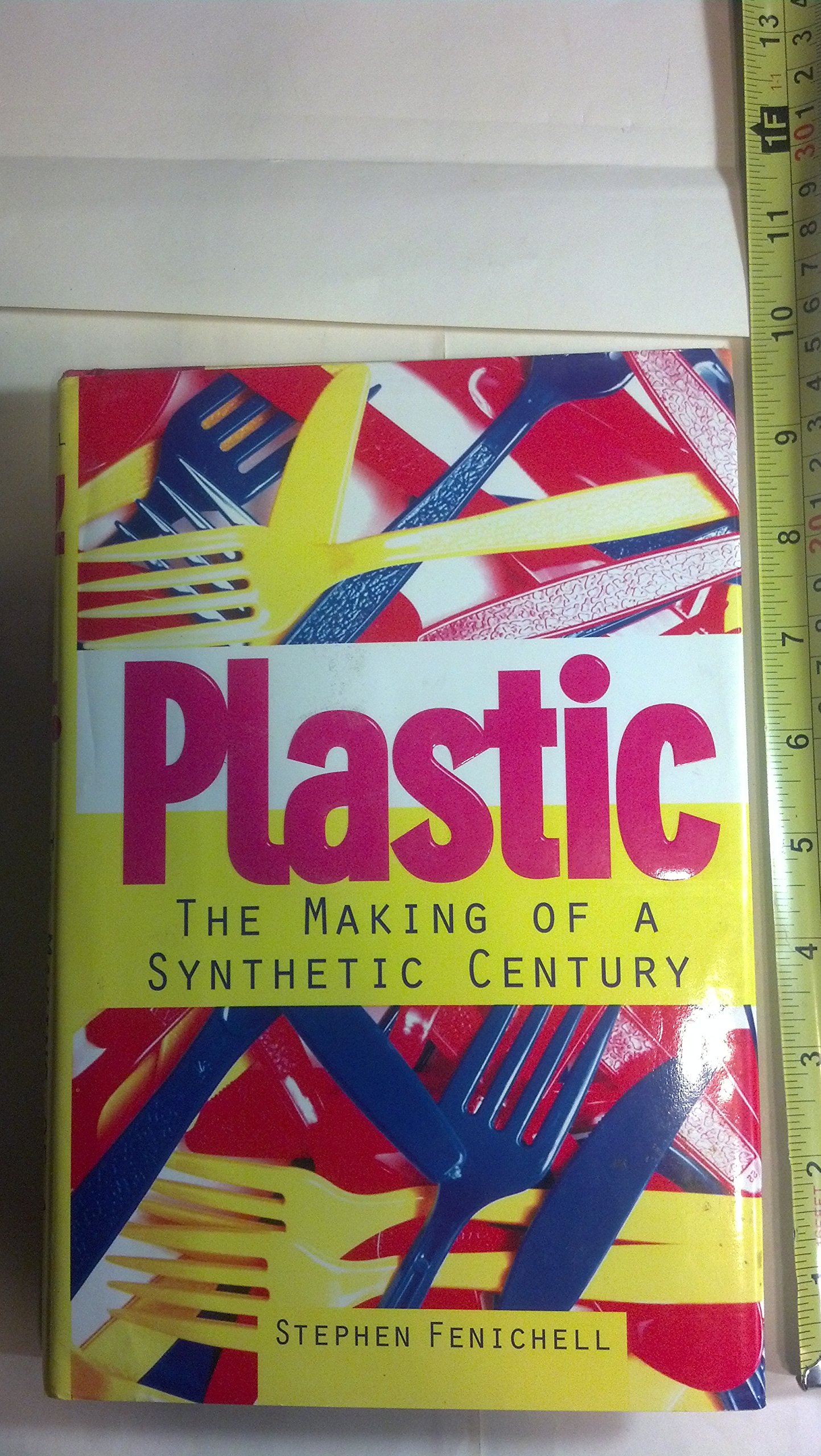



In Plastic: The Making of a Synthetic Century, Stephen Fenichell takes a fresh, irreverent look at the substance we all love to hate. The book moves from the early astonishment at such inventions as celluloid film and waterproof clothing; to the nylon-stocking riots after World War II; to the revolutionary, yet practical, proliferation of Tupperware in the '50s. Fenichell's sweeping assessment of the social and economic revolutions brought on by plastic extends from the sublime to the absurd, the beautiful to the mundane, demonstrating how scientists, artists, politicians, and the buying public have all molded, and also been molded by, plastic. Perhaps Dustin Hoffman should have paid attention to that unsolicited investment advice in "The Graduate." Plastics really are the future. Indeed these smooth oil-based synthetic polymers, available in a spectrum from rainbow-colored through raindrop transparent, are already so ubiquitous in our lives that we barely notice them. Expertly and entertainingly, Stephen Fenichell draws our attention to these shape-shifting substances; he tells us the names (do you know your polypropylene from your butadiene?), and the social history and cultural legacy of a diverse family of materials that has been given a bad rap--or maybe "wrap" is the word. In this history of plastic from the mid-19th century to the present, freelance writer Fenichell includes information on the use of plastics in industry (both in peace and war), the arts, popular culture, and fashion. Apparently for the sake of popular appeal, the author provides a chatty rather than analytical treatment, lacking documentation and being generally pro-plastic in tone. He makes some reference to the negative aspects of the industry, but the breezy writing style precludes his dealing with such issues thoroughly. Although his book has some use as a broad overview of the subject, a better choice would be Jeffrey L. Meikle's American Plastic: A Cultural History (Rutgers Univ., 1995). Not enthusiastically recommended.?Leigh Darbee, Indiana Historical Society, Indianapolis Copyright 1996 Reed Business Information, Inc. Beginning with a quote from the classic 1967 movie The Graduate , in which the hero is urged to seek a great future in "plastics," Fenichell reviews the history of polyethylene, the plastic used for everything from dry cleaning bags to tethers on a space shuttle. A polymer whose molecules are all oriented in the same direction, it has one of the highest strength-to-weight ratios of any material on earth, and the author considers plastic the defining medium of the twentieth century. It now provides material prerequisite for information storage and retrieval, analog and digital, and for a myriad of other uses in modern technology. Plastic initially got little respect in the U.S. It was looked down upon as a cheap substitute exemplified by the fashion of leisure suits, and it wasn't until 1979 (the so-called age of plastic) when global volume of plastics production outstripped that of steel. Plastic gained public acceptance in the 1980s with the plastic artificial heart. The author takes us through the environmental problems with plastic until the development of biodegradable properties and shows us the danger it posed until toxins were eliminated. Mary Whaley A wooden attempt to do for plastic what Daniel Yergin did for oil. From nylon to Kevlar to Lucite to Silly Putty, Fenichell (Other People's Money, 1985) tries to provide an encyclopedic catalogue of the development and cultural impact of a material that has more incarnations than a Hindu deity (although, despite his general thoroughness, he omits such minor frissons as Haskelite). Developed during the golden age of chemistry, when dedicated amateurs bumbled about in makeshift labs seeking substitutes for silk, rubber, even ivory billiard balls, most early, cellulose- based plastics were the result of fortuitous accidents, usually spills, fires, or mistakes. Haphazard discovery yielded to invention when the amateurs were replaced by teams of industrial chemists on the payrolls of giant chemical corporations such as Du Pont and I.G. Farben (which, as Fenichell details, collaborated extensively with the Nazis). Huge profits were made as product after product rolled out of the research labs. Sometimes, as with Silly Putty, it was years before anyone could think of a use for the new materials. With the debut in 1939 of nylon, the first all- synthetic fiber, plastics began to take a strange hold on the American imagination, inducing a kind of kitschy madness in which hygiene and similitude were paramount. Fenichell has dug up a number of fascinating and revealing tidbits, and his account has a certain quirky appeal. But it is poorly organized and repetitive, as he jumps from material to material (it would have worked better as an encyclopedia). Even for a lay audience, the chemistry is very skimpy, and except for some awkward interpolations, Fenichell tends to