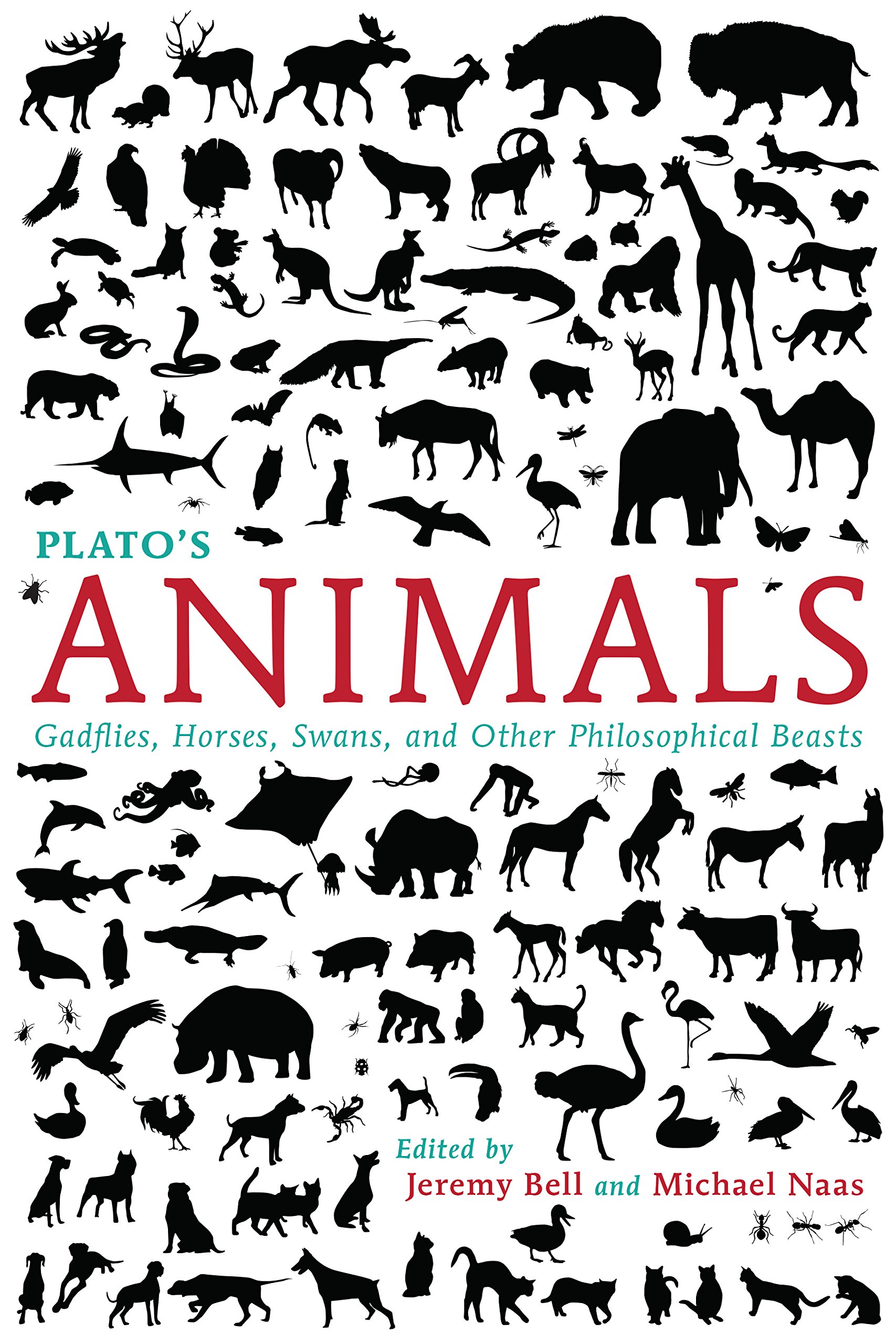
Plato's Animals: Gadflies, Horses, Swans, and Other Philosophical Beasts (Studies in Continental Thought)
$32.00
by Jeremy Bell



Plato's Animals examines the crucial role played by animal images, metaphors, allusions, and analogies in Plato's Dialogues. These fourteen lively essays demonstrate that the gadflies, snakes, stingrays, swans, dogs, horses, and other animals that populate Plato's work are not just rhetorical embellishments. Animals are central to Plato's understanding of the hierarchy between animals, humans, and gods and are crucial to his ideas about education, sexuality, politics, aesthetics, the afterlife, the nature of the soul, and philosophy itself. The volume includes a comprehensive annotated index to Plato's bestiary in both Greek and English. "Remarkable.33.2 2016"― Polis "Plato's Animals is a strong volume of beautifully written paeans to postmodern themes found in premodern thought."― Notre Dame Philosophical Reviews "Shows readers of Plato that he remains significant to issues currently pursued in Continental thought and especially in relation to Derrida and Heidegger."―Robert Metcalf, University of Colorado, Denver "A unique and intriguing point of entry into the dialogues and a variety of concerns from metaphysics and epistemology to ethics, politics, and aesthetics."―Eric Sanday, University of Kentucky "Will provide fertile ground for future work in this area."―Jill Gordon, author of Plato's Erotic World: From Cosmic Origins to Human Death Will provide fertile ground for future work in this area. -- Jill Gordon Jeremy Bell is Postdoctoral Research Fellow at the Fox Center for Humanistic Inquiry at Emory University. Michael Naas is Professor of Philosophy at DePaul University. He is author of Miracle and Machine: Jacques Derrida and the Two Sources of Religion, Science, and the Media and Derrida From Now On . Plato's Animals Gadflies, Horses, Swans, and Other Philosophical Beasts By Jeremy Bell, Michael Naas Indiana University Press Copyright © 2015 Indiana University Press All rights reserved. ISBN: 978-0-253-01617-1 Contents Editors' Introduction: Plato's Menagerie, 1, Part I. The Animal of Fable and Myth, 1 Making Music with Aesop's Fables in the Phaedo / Heidi Northwood, 13, 2 "Talk to the Animals": On the Myth of Cronos in the Statesman /David Farrell Krell, 27, Part II. Socrates as mudps and narke, 3 American Gadfly: Plato and the Problem of Metaphor/Michael Naas, 43, 4 Till Human Voices Wake Us and We Drown: The Aporia-fish in the Meno / Thomas Thorp, 60, Part III. The Socratic Animal as Truth-Teller and Provocateur, 5 We the Bird-Catchers: Receiving the Truth in the Phaedo and the Apology / S. Montgomery Ewegen, 79, 6 The Dog on the Fly / H. Peter Steeves, 96, Part IV. The Political Animal, 7 Taming Horses and Desires: Plato's Politics of Care / Jeremy Bell, 115, 8 Who Let the Dogs Out? Tracking the Philosophical Life among the Wolves and Dogs of the Republic / Christopher P. Long, 131, Part V. The (En)gendered Animal, 9 The City of Sows and Sexual Differentiation in the Republic /Marina McCoy, 149, 10 Animality and Sexual Difference in the Timaeus / Sara Brill, 161, Part VI. The Philosophical Animal, 11 Animal Sacrifice in Plato's Later Methodology / Holly Moore, 179, 12 The Animals That Therefore We Were? Aristophanes's Double-Creatures and the Question of Origins /Drew A. Hyland, 193, Part VII. Animals and the Afterlife, 13 Animals and Angels: The Myth of Life as a Whole in Republic 10 / Claudia Baracchi, 209, 14 Of Beasts and Heroes: The Promiscuity of Humans and Animals in the Myth of Er / Francisco J. Gonzalez, 225, List of Contributors, 247, Plato's Animals Index, 249, Name and Subject Index, 257, CHAPTER 1 Making Music with Aesop's Fables in the Phaedo Heidi Northwood At the beginning of the Phaedo, Socrates contemplates the relationship between pain and pleasure after having been released from the shackles that had bound his legs: "'What a strange thing, my friends, that seems to be which men call pleasure! How wonderfully it is related to that which seems to be its opposite, pain, in that they will not both come to a man at the same time, and yet if he pursues the one and captures it he is generally obliged to take the other also, as if the two were joined together in one head'" (Phaedo 60b). This makes him think of Aesop: "'And I think,' he said, 'if Aesop had thought of them, he would have made a fable telling how they were at war and god wished to reconcile them, and when he could not do that, he fastened their heads together, and for that reason, when one of them comes to anyone, the other follows after. Just so it seems that in my case, after pain was in my leg on account of the fetter, pleasure appears to have come following after'" (60c). Here Cebes interrupts Socrates, having remembered that Evenus had asked him to find out why Socrates had been composing poems—"metrical versions of Aesop's fables [TEXT NOT REPRODUCIBLE IN ASCII] and the hymn to Apollo"—while awaiting his execution in jail (60d). Socrates