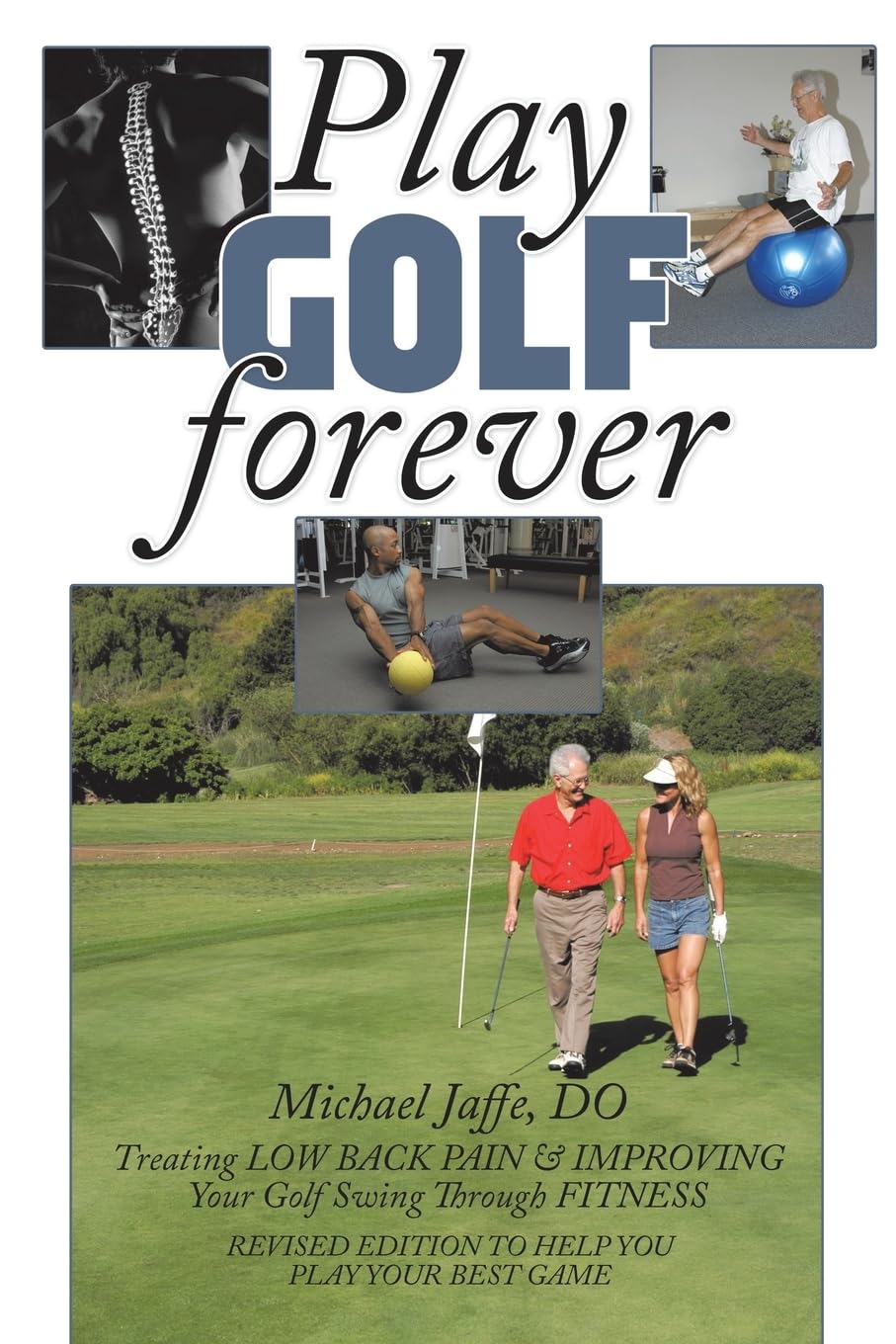
Play Golf Forever: Treating LOW BACK PAIN & IMPROVING Your Golf Swing Through FITNESS
$14.99
by Michael Jaffe DO DO



THE FIRST BOOK OF ITS KIND off ering the program developed by Dr. Jaff e at Kaiser Permanente’s Low Back Pain Clinic in San Diego to tone and treat low back muscles stressed by golf. Describing the causes, necessary testing, proper posture control, and various medical treatments for low back pain, this book helps you take control and win back your golf game! Th e Functional training and core strengthening exercises taught in this book not only treat and prevent low back pain but also help improve your swing and athletic abilities. Th rough step-by-step instructions with detailed photographs, you will learn exercises for the home or gym, stretches on the tee, and proper technique for improving your swing--a winning combination for improving your game and life. PLAY GOLF FOREVER Treating Low Back Pain & Improving Your Golf Swing Through Fitness By Michael Jaffe Brian Tarcy Ron Brizzie AuthorHouse Copyright © 2010 Michael Jaffe All right reserved. ISBN: 978-1-4389-8831-3 Contents Introduction.......................................................................ixPART I: THE BACK...................................................................11 Understanding Lower Back Pain....................................................32 Deciding to See a Doctor.........................................................173 Finding the Right Treatment......................................................25PART II: THE GAME OF GOLF..........................................................374 Examining Why Golfers Get Lower Back Pain........................................395 Analyzing the Golf Swing in Pieces...............................................51PART III: THE PROGRAM..............................................................716 Examining How Muscles and Nerves Work............................................737 Back Basics: Posture and Body Mechanics..........................................798 Get Ready: Getting Started and Finding the Correct Equipment.....................919 Using Functional Training to Change Your Life....................................10110 Using Functional Training to Change Your Life: Low Impact.......................13911 Stretching on the First Tee.....................................................15112 Conclusion: Motion Is Life......................................................163Bibliography.......................................................................169Glossary...........................................................................173Index..............................................................................181 Chapter One Understanding Low Back Pain (LBP) When I first met Julia in my office, her obvious athleticism contrasted with her chronic low back pain (LBP). It seemed wrong. She was in great shape. Everyone gets occasional LBP, but Julia's developed into a chronic condition that had lasted for years by the time she came to see me. A "back specialist" diagnosed her with bulging and degenerative disks and told her to limit her activities. Initially, Julia's back pain appeared only when she engaged in physical activity. But when she limited her activities, her problems worsened. She became sedentary, gained 15 pounds, and suffered continuous pain. Her job as a pathologist required that she sit at a microscope for nine hours each day, making the situation worse. Plus, the rest she was prescribed compounded her problem. When Julia learned the core-strengthening program taught in this book and put it to use, her pain finally began to subside. It took time-six weeks of squat exercises-but by the time I saw her again, she had already lost five pounds and felt much better. Julia's case proved again to me what I already knew-that there are many types of back pain, and even those who are in great shape can get LBP. Being in shape and having your core muscles in shape are sometimes different things. Seeing Health We express ourselves with our bones and our muscles. We don't express ourselves through our internal organs. You don't often hear someone say, "You have a nice spleen." We express ourselves through motion. Eighty-five percent of the neurological and sensory input that goes from your body to your brain comes from your musculoskeletal system of bones, joints, tendons, ligaments, and muscles. Only 15 percent come from your internal organs. This expression of motion comes across to others in little ways and big ways all the time in your life. When you challenge yourself, such as on a golf course, the expression is exaggerated. The way you move says a lot about you. Think about it. When a healthy person walks into a room, you can tell the difference immediately between that person and one who is out of shape. Being able to execute movements with optimum speed, precision, style, and grace is an attractive trait. The person who walks into a room with their head held up has style. You can see it, as oppo