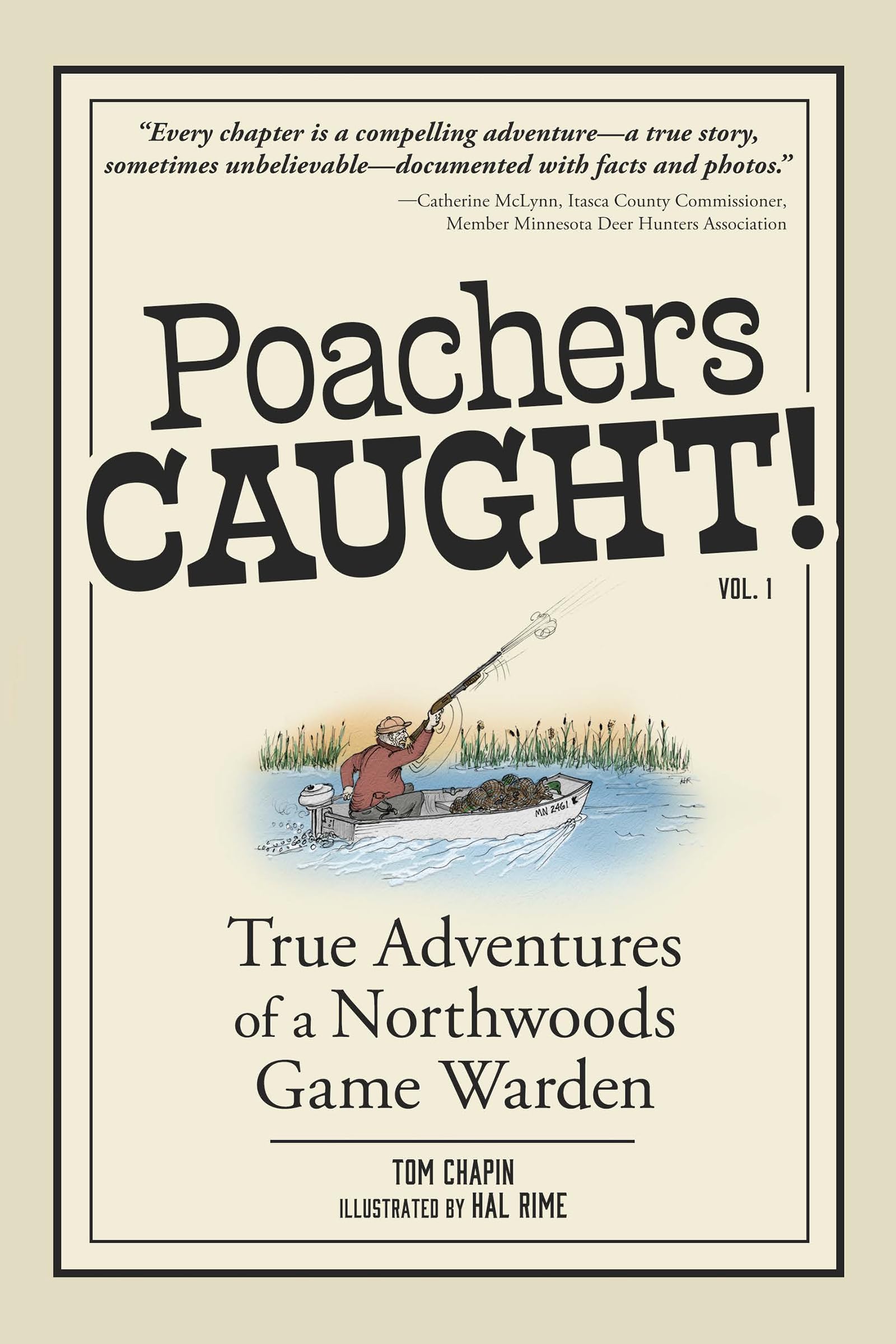



Read this collection of illegal hunting and fishing stories, which prove that life as a game warden is surprisingly dangerous and thrilling. Two conservation officers attempt to chase down a motorboat in their canoe. A married couple illegally catches more than 60,000 crappies over a 12-year span. A duo of poachers run over Tom Chapin’s motorbike—and nearly kill him in the process. As a Minnesota game warden for 29 years, Tom investigated hundreds of harrowing and exhilarating cases. In Poachers Caught!, he shares 36 of his most memorable ones with you. Throughout his career, Tom meticulously wrote daily reports and was a stickler for taking photographs to enhance his records. So the stories recounted here are as realistic and factual as possible. From the vividly detailed capture of illegal night hunters to the deconstruction of major fish poaching operations, Poachers Caught! allows you to experience each riveting encounter as if you were there. The tales of true crime are action-packed, shocking, and wildly entertaining. They appeal to anyone with an interest in hunting, fishing, and law enforcement, as well as anyone who’s concerned about the protection of our natural resources. Tom’s writing serves as a tool for educating people about poaching and for promoting ethics in nature. It also yields a heightened appreciation for the wildlife officers who protect our fish and wildlife resources. Tom says, “I always believed a game warden’s job should focus on this one concern: providing an equal playing field for all who purchase a hunting or fishing license.” “Two things become clear after reading Tom Chapin’s book. He knows how to tell a story, and you wouldn’t have wanted him on your case if you were a poacher.” — Sam Cook , Duluth News Tribune “Every chapter is a compelling adventure—a true story—sometimes unbelievable—documented with facts and photos. Tom promotes a high ethical standard for all sportsmen and sportswomen.” — Catherine McLynn , Itasca County Commissioner Tom Chapin is a native of Hibbing, Minnesota. He earned his bachelor’s degree in zoology in 1972 from the University of Minnesota, Duluth, after a two-year tour in the US Army. Most of his 29-year career as a natural resource conservation officer was spent in the Grand Rapids, Minnesota, district, where he also served as area supervisor for seven years. Chief among the honors he received include the 1978 Itasca County Law Enforcement Officer of the Year and the 1985 Minnesota Conservation Officer of the Year. Tom has also served as adjunct faculty, teaching law enforcement courses at Itasca and Hibbing Community Colleges. The author’s campaigning and testimony prompted the Minnesota State Legislature to enact a gross over-limit law. Known as the “Chapin Bill,” this law became effective March 1, 2003. It increased penalties, including the loss of hunting and fishing privileges, for violators who take large quantities of game and fish. Throughout his career as a game warden, Tom took hundreds of photographs documenting illegal activities. These photos were an integral part of his group presentations, which have both educated and entertained audiences interested in natural resources issues. Tom and his wife, Sandy, raised daughters Colleen, Anita, and Beth in Grand Rapids, where Tom retired from public service. The Pike Pat-Down Information received from the public in relation to game and fish violations is sporadic at best. The mindset that prevents a person from going that extra step and reporting what he or she has witnessed or strongly suspected is nothing new in the chronicles of law enforcement. People plain and simple don’t want to get involved after an illegal act has been observed or information has been acquired through friends or relatives. It takes a tremendous effort for a witness to move from discussing the event to actually picking up a phone and reporting a crime. There are many reasons for this indifference. It ranges from common fear to distrust of the law enforcement community in maintaining anonymity to just being branded as a stool pigeon. This is especially true in game and fish enforcement. Although most sportspeople’s hearts are in the right place and they value justice, there seems to be a wall of comradeship that is difficult to break down. So when a call comes in that appears to expose an ongoing breach of the law, it’s taken very seriously by all conservation officers and immediately becomes a top priority. One such concerned citizen picked up a phone one hot Friday afternoon in July and relayed the fact that five fishermen in two vehicles were heading south out of state with a lot of fish. One was towing a U-Haul trailer. He thought we might be interested in checking them out. From the inflection in his voice, the anonymous caller seemed to be having a difficult time with his emotions and hung up quickly after declaring that the parties in question left 15 minutes ago. It was only about a 20-minute drive