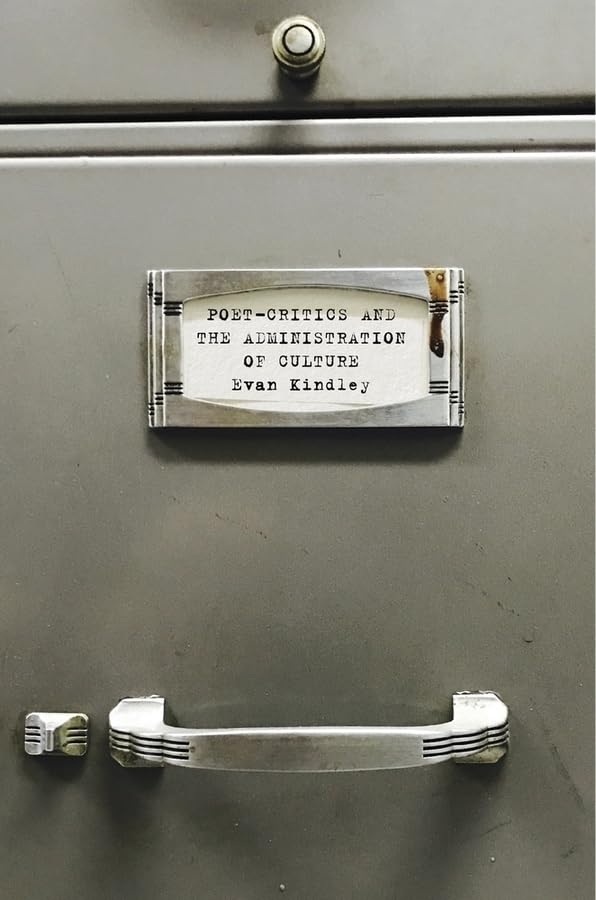



The period between 1920 and 1950 saw an epochal shift in the American cultural economy. The shocks of the 1929 market crash and the Second World War decimated much of the support for high modernist literature, and writers who had relied on wealthy benefactors were forced to find new protectors from the depredations of the free market. Private foundations, universities, and government organizations began to fund the arts, and in this environment writers were increasingly obliged to become critics, elucidating and justifying their work to an audience of elite administrators. In Poet-Critics and the Administration of Culture , Evan Kindley recognizes the major role modernist poet-critics played in the transition from aristocratic patronage to technocratic cultural administration. Poet-critics developed extensive ties to a network of bureaucratic institutions and established dual artistic and intellectual identities to appeal to the kind of audiences and entities that might support their work. Kindley focuses on Anglo-American poet-critics including T. S. Eliot, Marianne Moore, W. H. Auden, Archibald MacLeish, Sterling A. Brown, and R. P. Blackmur. These artists grappled with the task of being “village explainers” (as Gertrude Stein described Ezra Pound) and legitimizing literature for public funding and consumption. Modernism, Kindley shows, created a different form of labor for writers to perform and gave them an unprecedented say over the administration of contemporary culture. The consequences for our understanding of poetry and its place in our culture are still felt widely today. “With the stories of a handful of prominent modernist poet-critics, [Kindley] traces the shift in culture from the private stewardship of artists to their employment by academic institutions between the 1920s and ’50s…What Kindley’s excellent and thorough history shows us is that, more than anything else, writers have found a way to navigate the gap between the cultural importance of their work and a market that does not wish to fund it. Kindley has an innate understanding of the uncomfortable relationships between artists and the power structures that simultaneously bolster and diminish their projects. For all their individual difficulties and peculiarities, the historical figures who feature prominently in this story are treated, rightly, as people who wanted what was best for their art. Poet-Critics and the Administration of Culture reminds us that the systems that support writers did not change by themselves. Writers changed them, and if they see fit, maybe, they could change them again.” ― Bradley Babendir , Los Angeles Review of Books “The importance of a distinctive set of critical arguments to Modernism has long been acknowledged. Kindley offers a fresh perspective by concentrating on the quite specific ways in which Modernist poet-critics came to find institutional berths―largely, but by no means exclusively, in university literature departments.” ― Ross Wilson , Times Literary Supplement “It’s an insightful history, composed with an elegance of thought…Kindley fully inhabits the contingency of the past, using a handful of well-known poet-critic personas to tell the story of how contemporary poetry has become so wedded to the university… Poet-Critics and the Administration of Culture is an inventive and fascinating history with a value beyond its relevance to our present intellectual situation.” ― Scott Beauchamp , New Criterion “Illuminating…[Kindley’s] book is an insightful look at a period in American culture when modernists went from being ‘bohemians, charged with clarifying byzantine avant-garde practices,’ to ‘civil servants, charged with reinforcing the ideals and institutions of American democracy.’” ― Publishers Weekly “We’ve seen a lot of attention to institutions of literature in the past few years, and Evan Kindley’s new study belongs near the top of that crop. Rather than telling us where we are today, how good we have it, or how bad things can get, Kindley uses a wonderfully mixed toolbag―close analysis of poems and essays, attention to ephemera, literary history and social theory―to tell us how we got here. Kindley shows why poets who were also critics and editors (and who defined themselves that way) became both lodestars, and inflection points, as three generations of U.S. modernism moved from aristocratic patronage (and little magazines) into philanthropy and the academic (and more little magazines). Readers will be rewarded not just with a story about institutions, told in clear, careful, and attractive prose, but also with respectful attention to the still-underrated Sterling Brown, with one of the best things I’ve read in a long while on Marianne Moore, and―not least―with models for this kind of work.” ― Steph Burt, author of The Poem Is You: 60 Contemporary American Poems and How to Read Them “A smart, original, compelling contribution to American literary history. The quarter ce