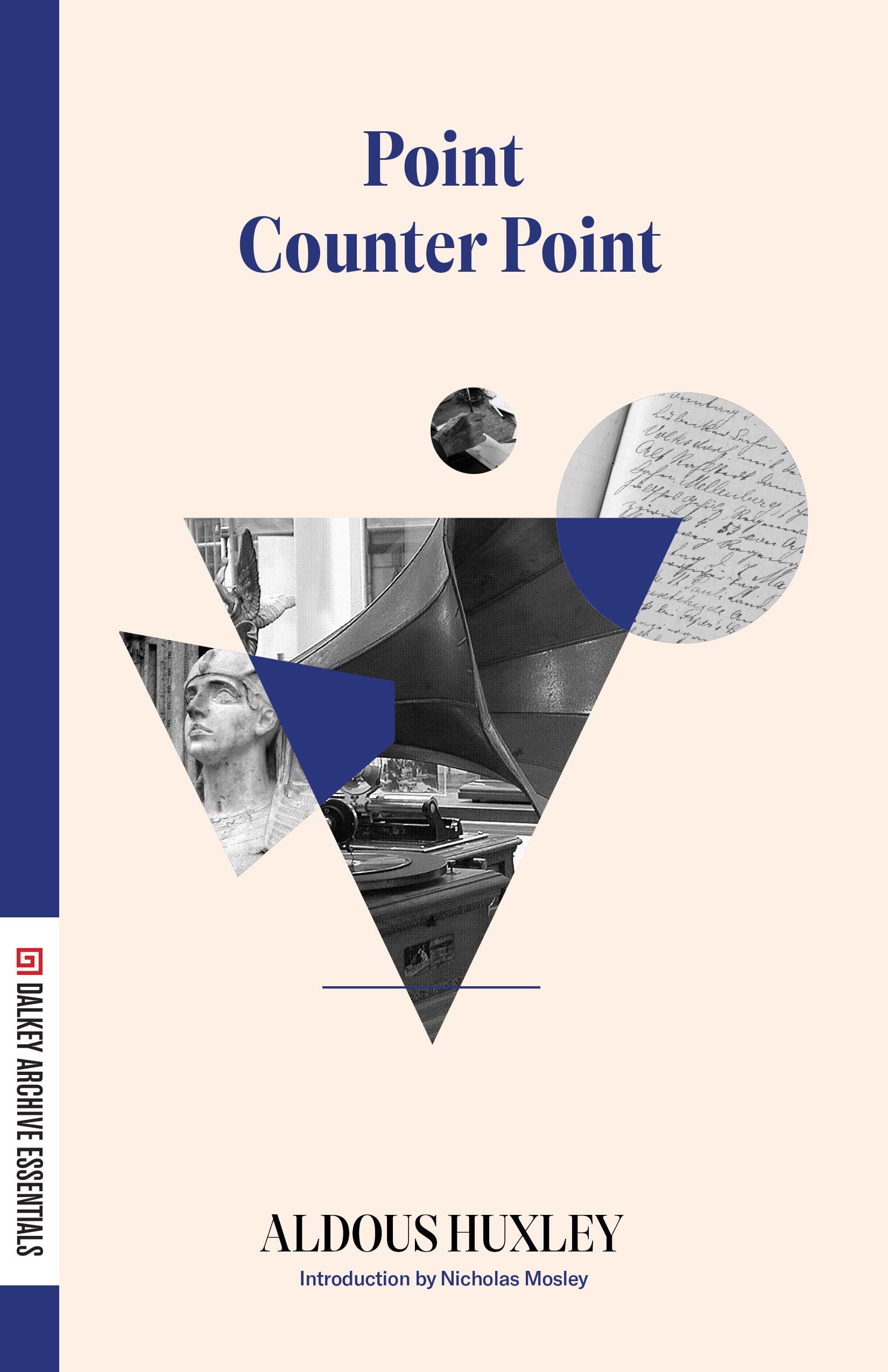



Aldous Huxley's lifelong concern with the dichotomy between passion and reason finds its fullest expression both thematically and formally in his masterpiece Point Counter Point . By presenting a vision of life in which diverse aspects of experience are observed simultaneously, Huxley characterizes the symptoms of "the disease of modern man' in the manner of a composer—themes and characters are repeated, altered slightly, and played off one another in a tone that is at once critical and sympathetic. First published in 1928, Huxley's satiric view of intellectual life in the '20s is populated with characters based on such celebrities of the time as D. H. Lawrence, Katherine Mansfield, Sir Oswald Mosley, Nancy Cunard, and John Middleton Murray, as well as Huxley himself. A major work of the twentieth century and a monument of literary modernism, this edition includes an introduction by acclaimed novelist Nicholas Mosley (author of Hopeful Monsters and the son of Sir Oswald Mosley). Along with Brave New World (written a few years later), Point Counter Point is Huxley's most concentrated attack on the scientific attitude and its effect on modern culture. “The aim of this book is not idle amusement for the sophisticated, but a grasping of the intellectual Zeitgeist and a biting criticism of it. . . . Point Counter Point is the most powerful and vitriolic indictment of the intellectual world we have had in years.”— New York Times “ Point Counter Point is the modem Vanity Fair , and Mr. Huxley is the Thackeray de nos jours . . . . It might have been said in its own day that Vanity Fair was the richest novel in substance and the most comprehensive that had appeared in English. The same thing might be said today of Point Counter Point .” —New Republic “Unflagging in its spirits and unflagging in its intelligence, throughout more than four hundred pages it vindicates Mr. Huxley’s right to be considered the most able of contemporary satirists and the most perfect representative of the mood which he describes.”— New York Herald Tribune Aldous Huxley (1894-1963) was an English writer who spent the latter part of his life in the United States. Though best known for Brave New World , he also wrote countless works of fiction, non-fiction, poetry and essays. A humanist, pacifist and satirist, he wrote novels and other works that functioned as critiques of social norms and ideals. Aldous Huxley is often considered a leader of modern thought and one of the most important literary and philosophical voices of the twentieth century. CHAPTER I "You won’t be late?” There was anxiety in Marjorie Carling’s voice, there was something like entreaty. "No, I won’t be late,” said Walter, unhappily and guiltily certain that he would be. Her voice annoyed him. It drawled a little, it was too refined—even in misery. “Not later than midnight.” She might have reminded him of the time when he never went out in the evenings without her. She might have done so; but she wouldn’t; it was against her principles; she didn’t want to force his love in any way. “Well, call it one. You know what these parties are.” But as a matter of fact, she didn’t know, for the good reason that, not being his wife, she wasn’t invited to them. She had left her husband to live with Walter Bidlake; and Carling, who had Christian scruples, was feebly a sadist and wanted to take his revenge, refused to divorce her. It was two years now, since they had begun to live together. Only two years; and now, already, he had ceased to love her, he had begun to love someone else. The sin was losing its only excuse, the social discomfort its sole palliation. And she was with child. “Half-past twelve,” she implored, though she knew that her importunity would only annoy him, only make him love her the less. But she could not prevent herself from speaking; she loved him too much, she was too agonizingly jealous. The words broke out in spite of her principles. It would have been better for her and perhaps for Walter, too, if she had had fewer principles and given her feelings the violent expression they demanded. But she had been well brought up in habits of the strictest self-control. Only the uneducated, she knew made “scenes.” An imploring “Half-past twelve, Walter,” was all that managed to break through her principles. Too weak to move him, the feeble outburst would only annoy. She knew it, and yet she could not hold her tongue. “If I can possibly manage it.” (There; she had done it. There was exasperation in his tone.) “But I can’t guarantee it; don’t expect me too certainly.” For of course, he was thinking (with Lucy Tantamount’s image unexorcisably haunting him), it certainly wouldn’t be half-past twelve. He gave the final touches to his white tie. From the mirror her face looked out at him, close beside his own. It was a pale face and so thin that the down-thrown light of the electric lamp hanging above them made a shadow in the hollows below the cheek-bones. He