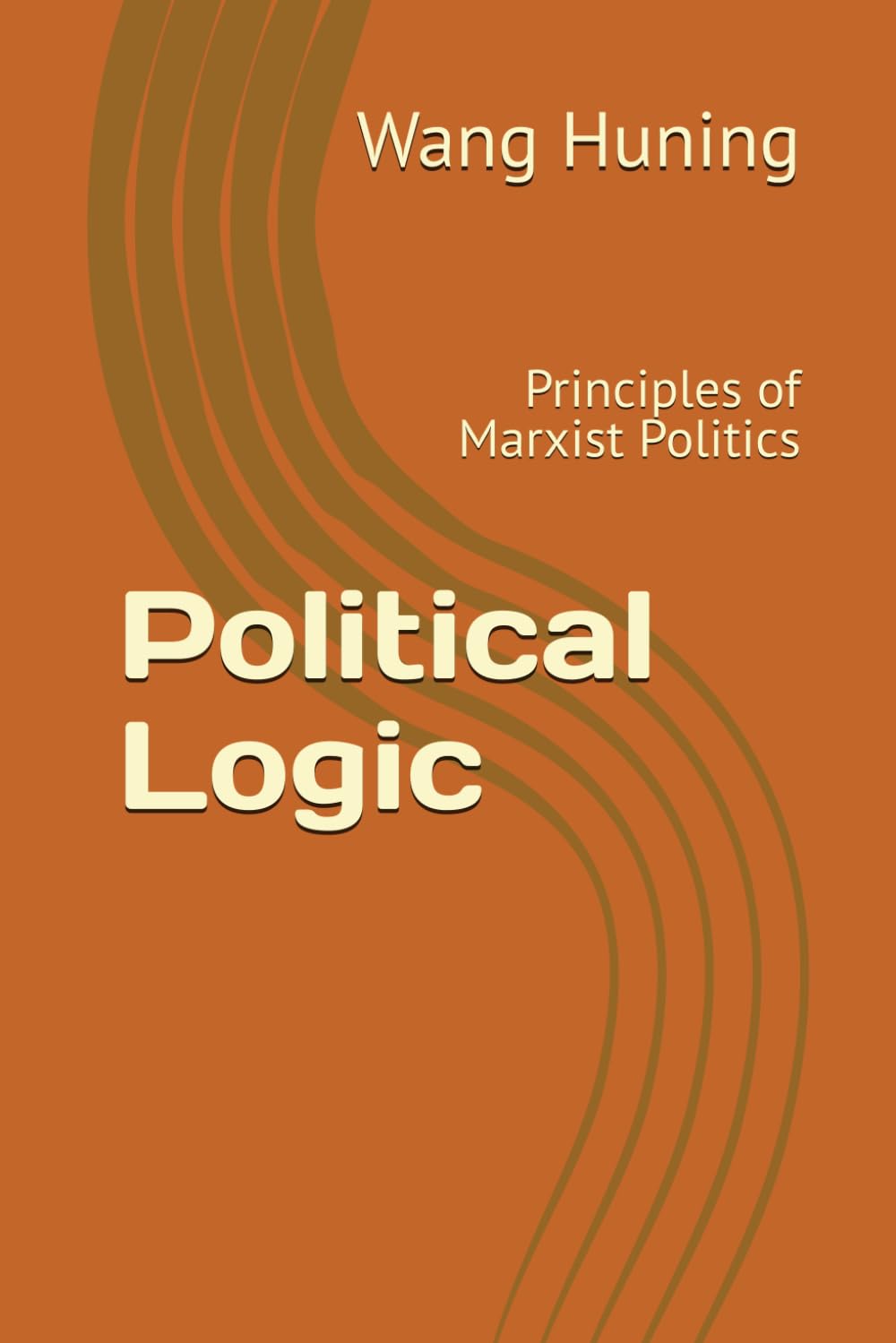



Dive into the theoretical bedrock of the Chinese Communist Party's governance with "Political Logic: Principles of Marxist Political Science," a seminal work by Wang Huning, widely considered the chief ideologue of the CCP. This book sets out to establish a principled and systematic theoretical framework drawn directly from the analyses of classical Marxist writers, addressing a crucial need to systematize their fundamental viewpoints within Chinese political science. "Political Logic" meticulously expounds upon core Marxist tenets, providing an authoritative guide to the party's worldview: The Primacy of Economics in Politics: Politics is the concentrated expression of economics, profoundly rooted in social economic movements and class relations. The economic base determines the political superstructure, which in turn reacts upon it, establishing society as a "living, developing organism". - Class and Struggle: The book defines class distinctions based on people's position in social production, presenting class struggle, centered on political power, as the driving force of social development. - The Nature of the State: The state is understood as a product of irreconcilable class contradictions and a tool of class dictatorship. While serving as organized violence to maintain ruling class interests, it also performs essential social management functions and possesses relative autonomy. Political power originates from economic power and is fundamentally a form of class rule. - Democracy and Dictatorship: Political democracy is essentially class rule, evolving from a democracy of the minority in exploitative states to a new type of democracy for the majority under proletarian rule. - Proletarian Revolution and the Future State: The text outlines the necessity of the proletarian revolution to smash the bourgeois state apparatus and establish the dictatorship of the proletariat. This dictatorship is viewed as a transitional stage toward the eventual extinction of the state in a future classless communist society. - The Role of the Party: The proletarian party is positioned as the vanguard, leading the masses to overthrow the bourgeoisie, organize economic construction, and develop this new type of democracy and dictatorship, with a strong emphasis on political struggle and democratic centralism. - Interconnectedness of Global Politics: It addresses the national question as intrinsically linked to the class question, viewing national oppression as a tool of bourgeois rule that undermines international proletarian unity. The book also covers the universality and particularity of political development, the dialectical unity of continuous revolution and revolutionary development stages, and how international politics is shaped by epochal characteristics, portraying war and peace as continuations of politics. Wang Huning's unique access and importance within the CCP are unparalleled. He has served as a key theoretical architect under three consecutive paramount leaders of China—a feat rarely seen in Chinese politics. As Director of the Central Policy Research Office (CPRO) from 2002 to 2020—the longest tenure in that position—Wang was instrumental in shaping the Party's most significant ideological concepts, including: Jiang Zemin's "Three Represents" - Hu Jintao's "Scientific Outlook on Development" and "Harmonious Society" - Xi Jinping's "Xi Jinping Thought", "Chinese-style modernization", the "Chinese Dream", and the "Belt and Road Initiative" "Political Logic" is more than an academic work; it is an indispensable blueprint for understanding the ideological foundations, strategic thinking, and long-term political direction of modern China, authored by one of its most critical and enduring political minds. A must-read for anyone seeking profound insight into the intellectual currents shaping one of the world's most powerful nations.