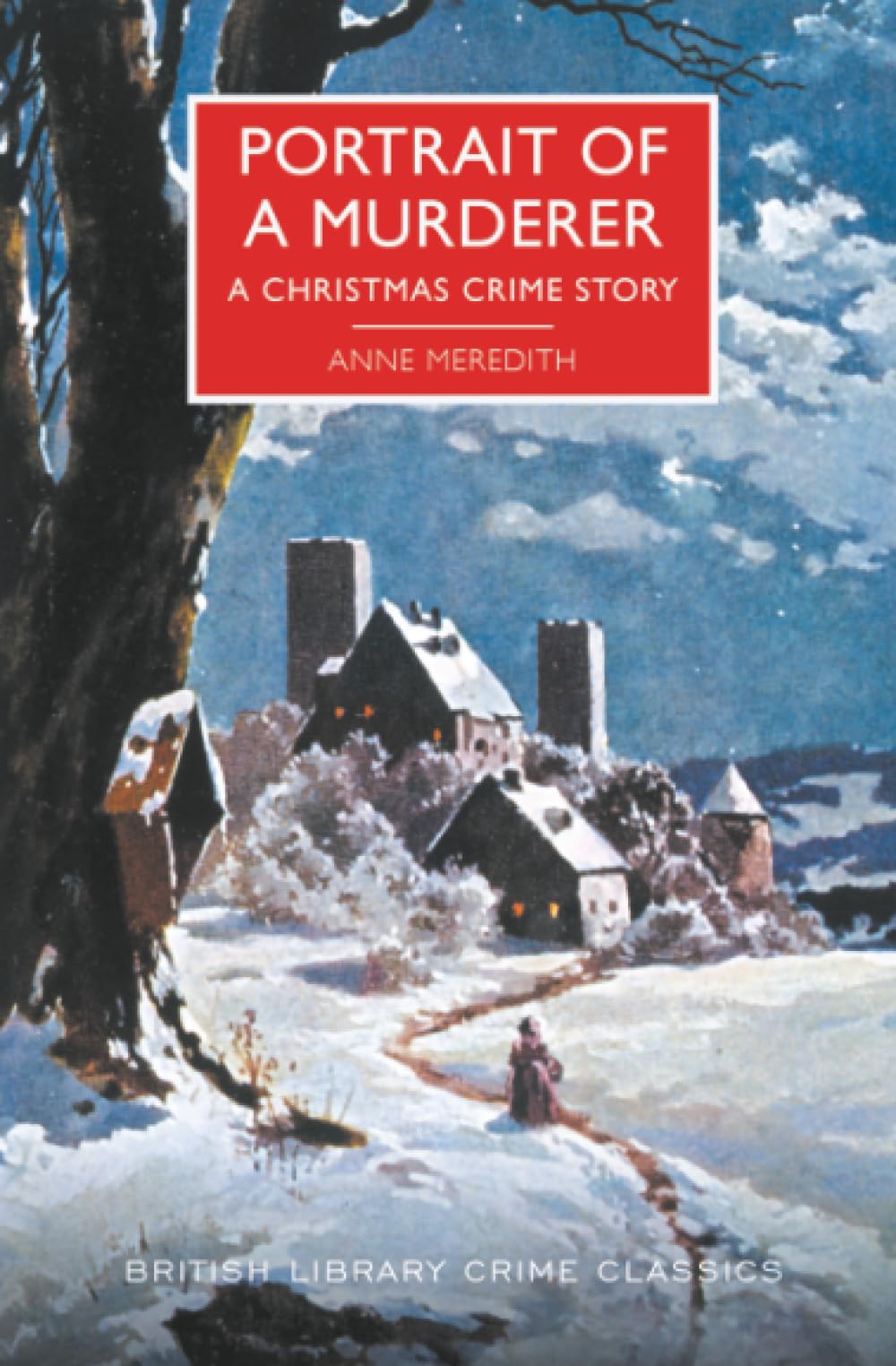
Portrait of a Murderer: A Christmas Crime Story (British Library Crime Classics)
$13.97
by Anne Meredith



Mystery crime fiction written in the Golden Age of Murder "Golden age fans will be enthralled." ― Publishers Weekly STARRED review 'Adrian Gray was born in May 1862 and met his death through violence, at the hands of one of his own children, at Christmas, 1931.' Thus begins a classic crime novel published in 1933 that has been too long neglected―until now. It is a riveting portrait of the psychology of a murderer. Each December, Adrian Gray invites his extended family to stay at his lonely house, Kings Poplars. None of Gray's six surviving children is fond of him; several have cause to wish him dead. The family gathers on Christmas Eve―and by the following morning, their wish has been granted. This fascinating and unusual novel tells the story of what happened that dark Christmas night; and what the murderer did next. ...it would be hard to improve on this opening sentence: 'Adrian Gray was born in May 1862 and met his death through violence, at the hands of one of his own children, at Christmas, 1931.' A great setup developed with a heartless sense of purpose...-- " Kirkus Reviews " Psychological depth enables Meredith to maintain engagement even after the killer's identity is disclosed, and she effectively shifts points of view, incorporating that of the murderer in the crime's aftermath and that of a character who may hold the key to achieving justice. Simple prose conveys personality in just a few words. Golden age fans will be enthralled. (starred review) -- " Publishers Weekly " Those who are interested in the history of the crime genre, especially in its British form, should find Portrait of a Murderer a welcome addition to their library. I would also recommend it to anyone collecting the many 'un-merry Christmas' crime novels.-- " Popular Culture Association " ANNE MEREDITH was the pseudonym of Lucy Beatrice Malleson (1899–1973), who is best known as the author of the Arthur Crook series of detective novels published under the name of Anthony Gilbert. She was a highly esteemed writer of crime fiction and a member of the elite Detection Club, but the 'Anne Meredith' books have long been unavailable. Portrait of a Murderer A Christmas Crime Story By Anne Meredith Poisoned Pen Press Copyright © 2018 Poisoned Pen Press All rights reserved. ISBN: 978-1-4642-0904-8 Contents Introduction, 1, Part I: Christmas Eve, 5, Part II: The Journal of Hildebrand Gray, 49, Part III: Christmas Day, 85, Part IV: Aftermath of a Crime, 125, Part V: The Verdict of You All, 167, Part VI: Witness for the Defence, 191, Part VII: The Answer, 219, Epilogue, 243, CHAPTER 1 Christmas Eve 1. Adrian Adrian Gray was born in May 1862 and met his death through violence, at the hands of one of his own children, at Christmas, 1931. The crime was instantaneous and unpremeditated, and the murderer was left staring from the weapon on the table to the dead man in the shadow of the tapestry curtains, not apprehensive, not yet afraid, but incredulous and dumb. 2. The Grays At the time of his death Gray was in his seventieth year, and had six children living. There had been a seventh, who died as a child, and so long ago that the younger ones scarcely remembered his existence. Only when the bitterness and futility of his parenthood pressed upon the ageing man with a greater sense of weariness than usual did Gray wonder whether the young Philip might not have grown up to be a solace and companion to him. But these moods occurred seldom, and for the most part he, like his children, forgot the little son who had died thirty years ago. It was his habit at Christmas-time to invite all his relatives to spend the season at his lonely house at King's Poplars. The wife of one and the husbands of two of them made their numbers up to nine, while Mrs. Alastair Gray, the dead man's mother, an old lady of ninety, brought the party up to eleven. There was, in addition, a number of servants, both male and female. As was shown at the inquest, Gray was on good terms with none of his children, while more than one had good reason to wish him out of their path. His eldest son, Richard, was at this time a man of two-and-forty, ambitious, dogged, and fierce to achieve his objective, which was place and reputation. He was childless, a fact that greatly distressed and humiliated him, was well known in political life, and had a few years earlier obtained a knighthood. He had been for many years married to Laura Arkwright, a notable woman in society. Gray's eldest daughter, Amy, his only unmarried child, kept his house for him, and was a shrewd and shrewish woman of forty, small, sharp-featured, with reddish hair and thin lips and hands. His second daughter, Olivia, was married to Eustace Moore, the unscrupulous but intelligent financier into whose hands Gray had allowed the larger portion of his capital to pass. The dead Philip had come next, and after him Isobel, who had made a brilliant but, as it turned out, disastro