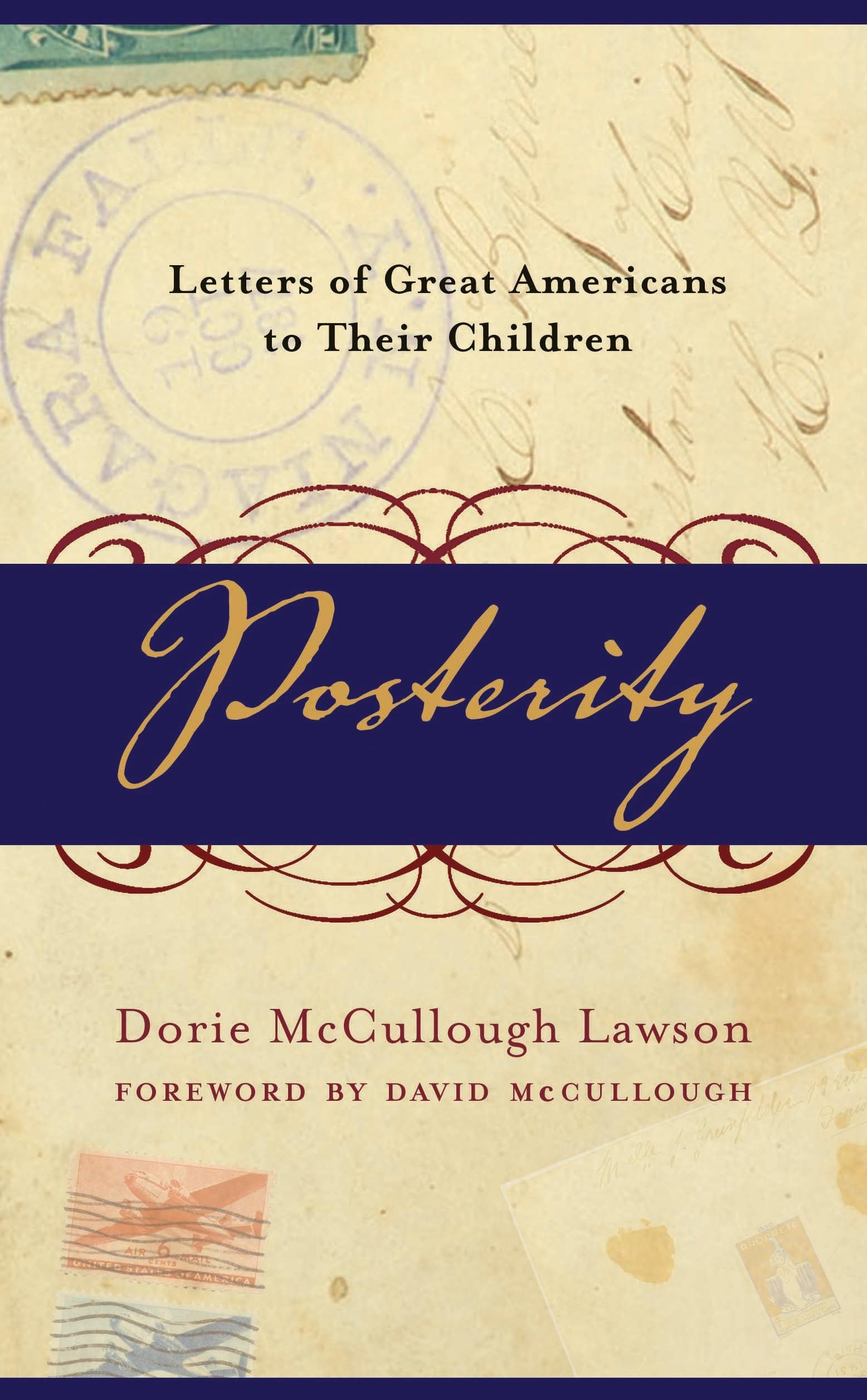



An elegantly designed, beautifully composed volume of personal letters from famous American men and women that celebrates the American Experience and illuminates the rich history of some of America’s most storied families. Posterity is at once an epistolary chronicle of America and a fascinating glimpse into the hearts and minds of some of history’s most admired figures and storied families. Spanning more than three centuries, these letters contain enduring lessons—in life, love, character and compassion—that will surprise and enlighten. Included here are letters from Thomas Jefferson to his daughter, warning her of the evils of debt; General Patton on D-Day to his son, a cadet at West Point, about what it means to be a good soldier; W.E.B. Du Bois to his daughter about character beneath the color of skin; Oscar Hammerstein about why, after all his success, he doesn’t stop working; Woody Guthrie, writing from a New Jersey asylum, to nine-year-old Arlo about universal human frailty; Eleanor Roosevelt chastising her grown son for his Christmas plans; and Groucho Marx as a dog to his twenty-five-year-old son. Here are renowned Americans in their own words and in their own times, seen as they were seen by their children. Here are our great Americans as mothers and fathers. “Each letter has a distinct tone, from congratulatory to scolding, which shines a light on one facet of each great American’s personality. A one-of-a-kind collection.” — Library Journal “Years ago, parents wrote to their children letters of instruction about duty, industry, propriety—a ritual that has largely disappeared from American life, and this book reminds us of why we should be sorry about it.” — Pittsburgh Post-Gazette Dorie McCullough Lawson graduated from Middlebury College, where she majored in history. She works and lives in Rockport, Maine with her husband and three children. This is her first book. William Henry Seward to William Henry Seward, Jr. "How good and virtuous and just ought we to be and how thankful to God that we have blessings secured by the virtue and sufferings of our ancestors." One of the most important political figures of the mid-nineteenth century, William Henry Seward was governor of New York, then senator, then secretary of state under Abraham Lincoln. As a leading voice in the condemnation of slavery, it was he who delivered the courageous line on the floor of the Senate evoking a "higher law." Later, in 1867, it was Seward, the ever devoted proponent of American expansion and progress, who secured the purchase of Alaska for the United States. With thick, disheveled hair and a prominent nose, Seward, according to Henry Adams, looked like a "wise macaw." Charming and relaxed, he was a welcomed guest and a favorite among the Washington hostesses. In the fall of 1848, he was running for the first time for a seat in the United States Senate. He campaigned in his home state, New York, and traveled about the East Coast speaking on behalf of the Republican Party. Here, with his characteristic broad sense of time, William Seward, the grandson of a Revolutionary War colonel, writes to his son Willie, a nine-year-old boy at home with persistent eye troubles. [October 7, 1848] Wilmington in the State of Delaware, Monday My dear Boy I am very much obliged to you for your letter which gives me much interesting information. I will try to procure in New York a filter which will purify the water of the new pump. I have been at many places in Pennsylvania where I wished that you were strong enough to be with me. When you grow strong enough I shall want you to travel with me. I saw on the banks of the Schuylkill, Valley Forge the place where General Washington had his camp during one of the most severe winters which occurred during the American Revolution. His camp extended four miles long with two entrenchments in front and high mountains on the one side and a deep creek on the other. From the mountain in rear he could see with his spy glass the British army in Philadelphia seventy miles off. He was almost destitute of ammunition to protect himself. The Congress was not able to supply him with money, the army was in deplorable want of bread and meat clothes and shoes. They suffered exceedingly. The poor horses and dogs died of hunger and diarrhea and death extended to the men, a dozen were buried in a day and in one place, scarcely beneath the frost in the surface of the ground. The farmer now often turns up the bones of the lost men when plowing his fields. Mrs. Washington was a good woman, she spent the winter in the camp and she served and consoled the sick and dying. It was by such sacrifice that Liberty was obtained for the American people. How good and virtuous and just ought we to be and how thankful to God that we have blessings secured by the virtue and sufferings of our ancestors. I hope you will get Peter Parley's history of the Revolution and ask Ma to read to you the account of the R