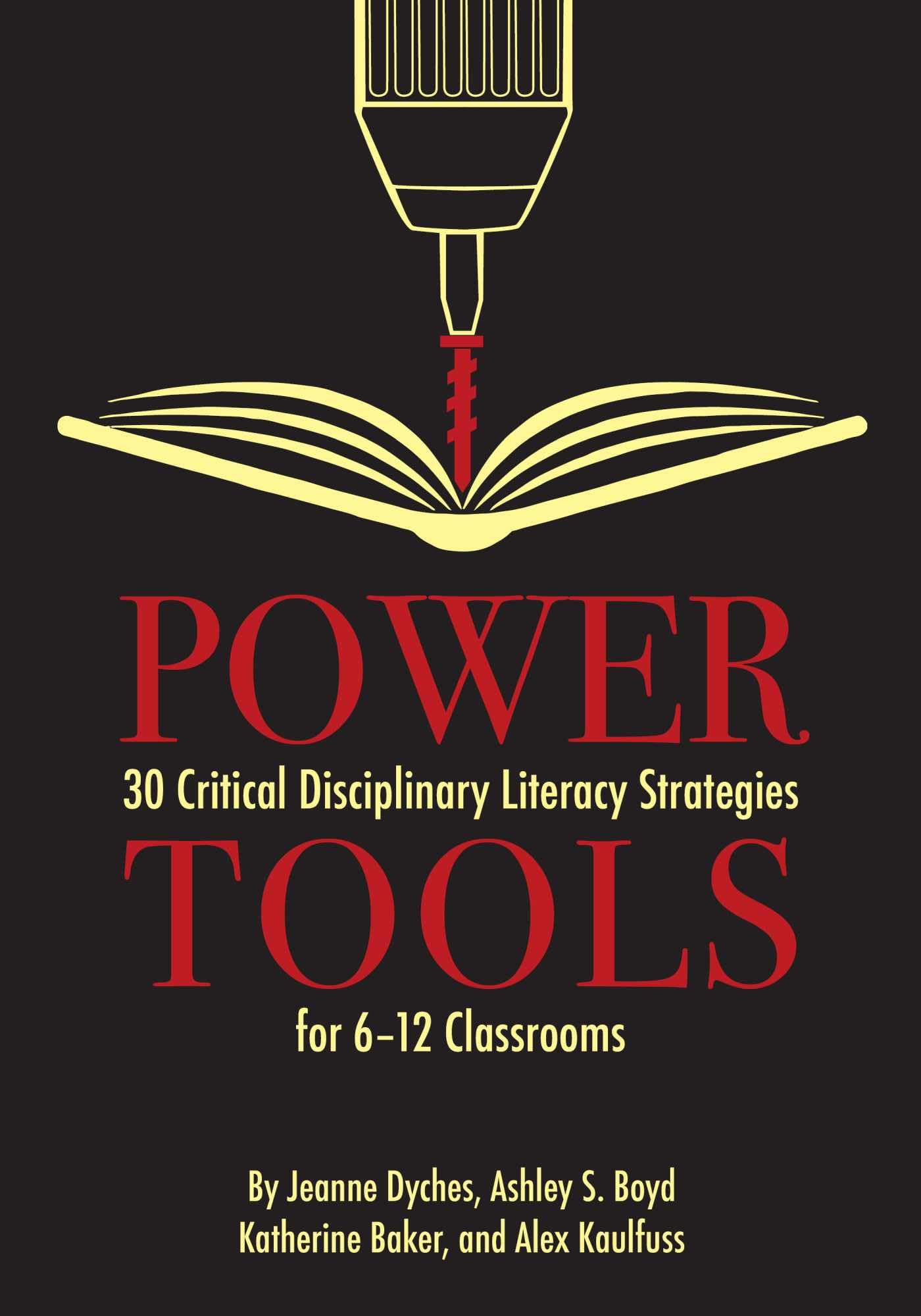
Power Tools: 30 Critical Disciplinary Literacy Strategies for 6-12 Classrooms
$37.95
by Jeanne Dyches



Virtually all national standards now require students and teachers to understand the particulars of disciplinary literacy. But recently emerging scholarship suggests that disciplinary literacy is, by itself, an incomplete and potentially problematic approach to secondary literacy instruction. By asking students to “think like” or even “be like” experts, students may receive implicit messaging about whose knowledge is―and isn’t―valued. Critical disciplinary literacy (CDL) creates space for, and highlights connections between, critical literacies and disciplinary literacies. CDL acknowledges disciplines as unique communities with their own specialized (and often exclusionary) skills, norms, practices, and discourses, but deviates from conventional applications of disciplinary literacy by responding to the ways in which power systems and the analytic skills needed to understand them work differently based on the disciplines at hand. A CDL instructional approach acknowledges that applying the critical literacy skills of “reading the word and the world” to understand the power dynamics of vaccine distributions requires a different skill set and strategy approach than looking at textual representations of masculinity in Romeo and Juliet . Written by a team of educators with over 70 combined years of classroom experience, Power Tools: 30 Critical Disciplinary Literacy Strategies for 6–12 Classrooms offers readers research-based, multidisciplinary, ready-to-implement disciplinary literacy strategies from critical literacy lenses. The book sets itself apart from other strategy textbooks by offering creative strategy implementation that calls attention to power systems. Educators can learn, for example, how they might employ read-alouds to explore the global refugee crisis, or use the exit ticket strategy to help students reflect on the relationship between race and COVID statistics/experiences. Power Tools: 30 Critical Disciplinary Literacy Strategies for 6–12 Classrooms provides standards-aligned lessons that both challenge and extend traditional engagement practices to build a more just world. Each chapter includes: An overview of each strategy, situated within the research of best practices; - Two disciplinary examples for each CDL strategy (e.g., an example of a CDL think-aloud in seventh grade math and tenth grade ELA classroom). Chapters provide resources such as examples of student work, discussion prompts, dialogue between teacher and students, and reprintables; - Ideas for addressing resistance to CDL instruction. Preservice and in-service teachers, as well as teacher educators and researchers, looking to do and support justice-oriented work in disciplinary spaces will find value in the book. Power Tools is an ideal text to implement in courses such as Disciplinary Literacy, Secondary Literacy, Content Area Literacy, Methods/Strategies for Teaching Social Justice, Multicultural Education, ELA methods, Science methods, Social Studies methods, and Mathematics methods. "There is huge value in seeing how well known strategies can be used for incorporating a critical literacy orientation across disciplines. The explanations and examples provided for each strategy are detailed enough for teachers to use with their students and clear enough for teachers to embrace as inspiration for their own critical practice." -- Hilary Janks, PhD, Professor Emerita, University of the Witwatersrand "This book presents a trove of research-based strategies that teachers can use to promote thoughtful, productive engagement with texts, helping students learn to read carefully, critically, purposefully, and with an informed skepticism across genres and content areas. With powerful examples and accessible descriptions for each strategy, the book is an exceptionally practical and timely resource for anyone interested in disciplinary literacy instruction." -- Zhihui Fang, PhD, University of Florida "'But how do we do this?!' Too often, educators are provided the what and why of justice-oriented practices without the requisite direction for incorporating these practices into their own instruction. Power Tools offers a robust response to this always-apt question through its presentation of critical disciplinary literacy. Opening the book with a succinct explanation of concepts, purpose, and audience, the authors make a clear argument for the implementation of critical disciplinary literacy in content area classrooms, borne out by the specific strategies and subject-specific examples that follow. This book puts the power of justice-oriented work in teachers’ hands and, with its guidance, teachers have the power to enact it in their classrooms." -- Melanie Shoffner, PhD "There is huge value in seeing how well known strategies can be used for incorporating a critical literacy orientation across disciplines. The explanations and examples provided for each strategy are detailed enough for teachers to use with their students