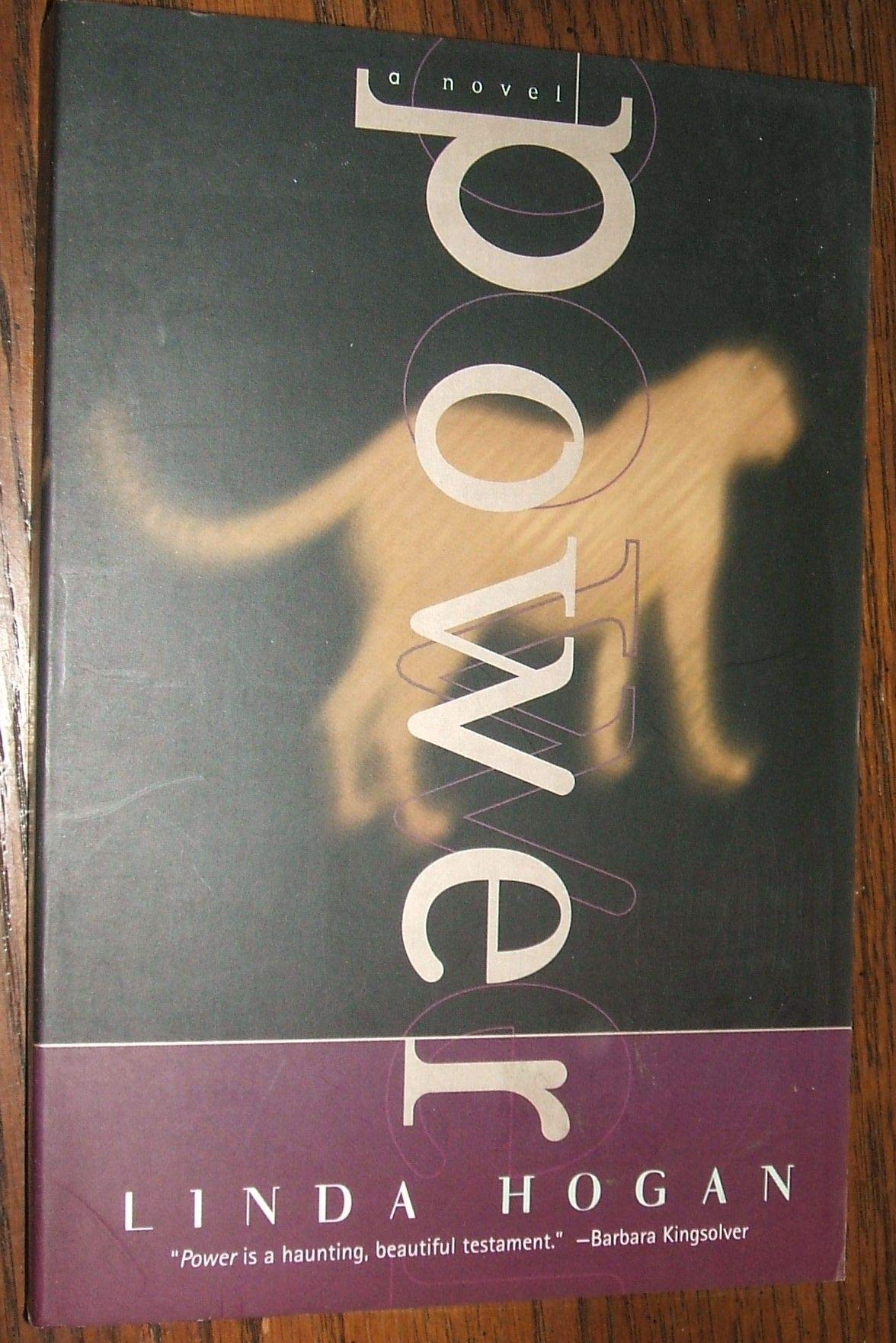



When sixteen-year-old Omishto, a member of the Taiga tribe, witnesses her Aunt Ama kill a panther--an animal considered to be a sacred ancestor of the Taiga people--she becomes caught between the powers of the legal system over the native peoples and the mythic powers of her ancestors. 20,000 first printing. In this coming-of-age story, a 16-year-old Native American girl named Omishito (a Tiaga name meaning One Who Watches) inadvertently witnesses the hunting and killing of her clan's sacred animal, the Florida panther. What makes this especially troubling and complicated for Omishito is that her beloved spiritual mentor, Ama, is the panther's murderer. At first, Omishito cannot fathom why Ama, a tribal elder who still practices the old powers, would commit this sacrilege and risk the wrath of her tribe and country. (Unlike the Tiaga tribe, the Florida panther is considered endangered and therefore federally protected.) Through seamless storytelling and expert scene building, Linda Hogan reveals the many-layered mysteries inherent in this novel (based on a true story) as well as the powerful forces that endanger Native Americans and the survival of their spirituality. --Gail Hudson Hogan has examined the brutal overlay of white society on Native American culture in her previous books, including her last novel, Solar Storms (1995), but none have caught fire as gloriously as this enthralling tale of a young Taiga woman's struggle to come to terms with her heritage. Omishto, the One Who Watches, is 16 when she is drawn into her tribe's seemingly losing battle to survive, a conflict integrally linked to the destruction of the Florida wilderness with which they are so intimately connected. Just one woman, Ama, who is still in possession of the old powers and to whom Omishto is inextricably drawn, overtly combats the forces that have made her people as endangered a species as the panther, the Taiga's sacred ancestor, now under the protection of the government. Her desperate act, the killing of one of these revered creatures, outrages and confounds everyone. As Omishto, her unwitting accomplice, attempts to understand her mentor and cope with the ensuing trial, Hogan, who is absolutely magnificent in one radiantly dramatic scene after another, compels us to consider all the forms power takes and how foolishly we abuse it. Donna Seaman Before her time, a 16-year-old Native American girl is thrust into adult turmoil as the only witness to the shooting by her best friend of an endangered Florida panther, in Hogan's (Solar Storm, 1995, etc.) latest complex exploration of Native ways and the environment at risk. Omishto (a Taiga name meaning ``One Who Watches'') is one of the last of her tribe, and though only an adolescent shes already experienced many horrors: her older brother burning to death, her stepfather's physical abuse and lust, her mother's desperate, self-destructive effort to pass as white. When a hurricane comes along, flattening the land and trapping her outside, she sees deer flying and Methuselah, a tree dating from before the Spanish arrival, uprooted. After the storm, nothing seems the way it was before, so when her friend and protector Ama--like Omishto, a member of the Panther Clan--takes her on a trek through the devastation to find and shoot the panther Ama calls ``Grandmother,'' the hunt seems as unreal as everything else. Reality hits home only when Ama is arrested and tried for the killing, and Omishto is called to testify. Ama is found not guilty, but she then has to face an even more harrowing trial: that of the tribal elders, who accuse her of trying to gain spiritual power by killing a sacred animal. Omishto, who must testify before the elders, finally begins to understand why her friend acted as she didbut shes sworn by Ama not to say why. Because of that, Ama is banished from the tribe. Maintaining a difficult balance between her understanding and her sense of loss, Omishto moves into Ama's house, forsaking her own family, to decide what path her own life should follow. While the narrative often seems an uneasy blend of the visionary and the message-driven, the result is nonetheless an evocative coming-of-age saga. And the portrait of natures elemental power is distinctive and haunting. -- Copyright ©1998, Kirkus Associates, LP. All rights reserved. A haunting, beautiful testament that finally leaves out nothing, including hope. -- Barbara Kingsolver Linda Hogan is a Chickasaw poet, novelist, and essayist. She is a professor at the University of Colorado. Hogan's narrator is so gifted in marrying simple language to complex thought that her internal detours become more important than outside events.