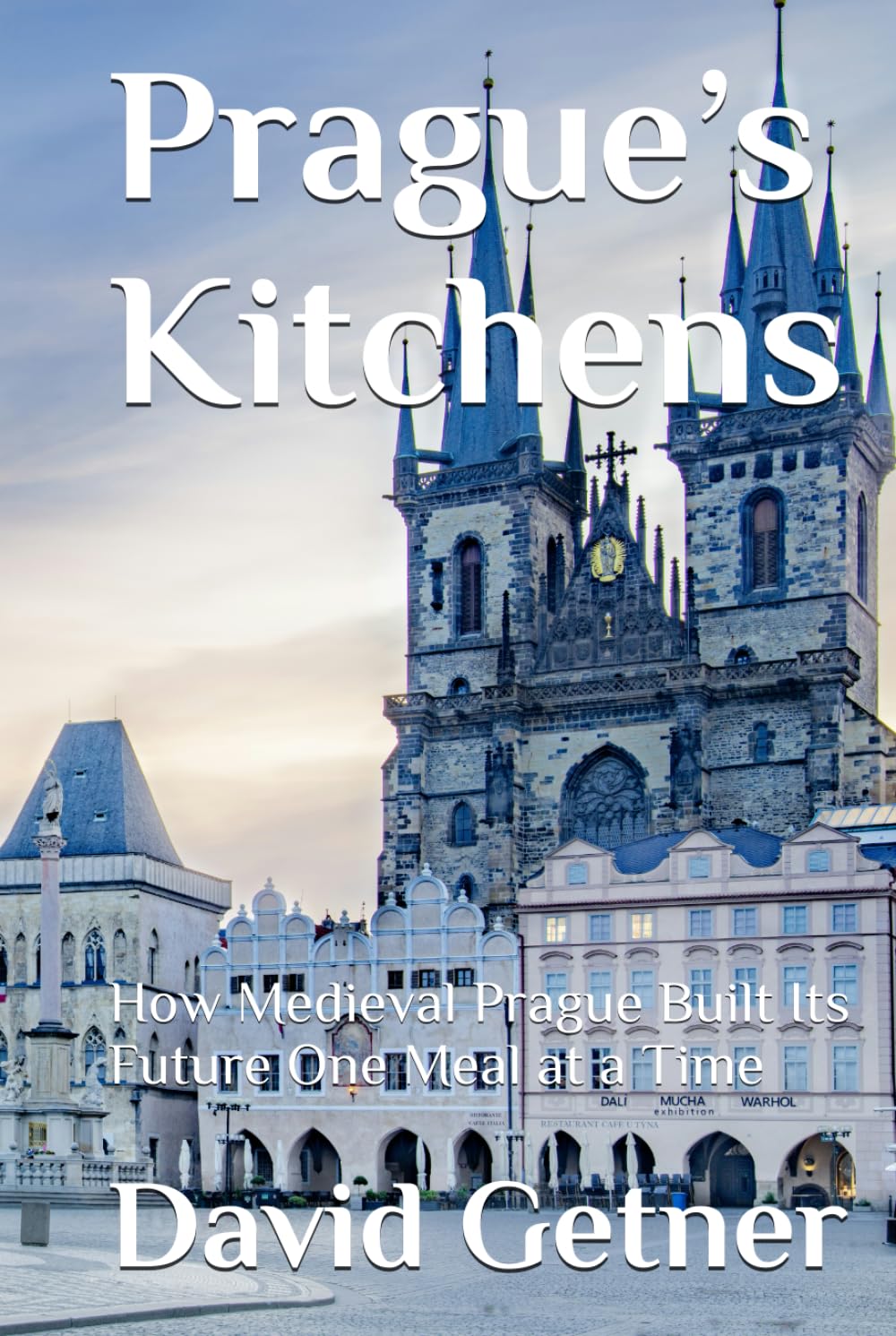
Prague’s Kitchens: How Medieval Prague Built Its Future One Meal at a Time (Tales & Traditions of Old Prague)
$25.72
by David Getner



Prague’s Kitchens: How Medieval Prague Built Its Future One Meal at a Time explores the quiet but powerful role that food played in shaping the rhythms, discipline, and long-term stability of medieval life. Rather than presenting Prague merely through castles, kings, and dramatic events, this book turns its attention toward the kitchens, cellars, markets, bakeries, and taverns where the daily work of survival and continuity unfolded. Within these humble spaces, cooks, brewers, millers, butchers, and herbalists practiced routines that repeated day after day, season after season, creating patterns of life that quietly compounded across generations. Each chapter follows a different figure whose craft sustained the city. The baker rises before dawn to prepare bread that will feed families who depend on the reliability of grain and fire. The brewer measures malt and water in rhythms learned from those before him, producing beer that was often safer to drink than water. The spice merchant introduces rare ingredients brought along distant trade routes, reminding the reader that Prague was connected to a wider world of exchange and influence. The butcher’s apprentice learns that discipline and restraint govern the handling of meat, while the cellar keeper oversees fermentation and storage, understanding that patience is often the most valuable ingredient in the kitchen. Even fasting practices, shaped by religious observance, reveal how restraint and rhythm shaped both body and community. Woven through these stories is a larger philosophical idea: that small repeated decisions build trajectories that extend far beyond a single moment. The medieval kitchen becomes a metaphor for compounding choices. A handful of grain planted in spring becomes bread months later. A cabbage salted and pressed into a barrel transforms slowly into fermented nourishment that sustains a household through winter. A pot of soup, stretched with barley or peas, teaches the wisdom of sufficiency rather than excess. These acts may appear ordinary, but together they form systems of stability that allowed communities to survive difficult winters, economic hardship, and the uncertainty of medieval life. The book also reflects the enduring fascination that Prague holds for those who walk its streets today. The same Old Town Square where merchants once traded grain and spices still fills with people waiting for the Astronomical Clock to strike the hour. The Charles Bridge, lined with statues and worn stone, once carried carts of flour, barrels of beer, and baskets of herbs toward the city's markets. To bring these historical rhythms closer to the modern reader, each chapter concludes with a historically inspired recipe adapted for contemporary kitchens. These recipes are not simply instructions for cooking. They represent preserved knowledge, methods that once carried households through scarcity and abundance alike. Bread, pottage, fermented cabbage, herbal broths, and other foundational dishes reveal how simplicity often supported resilience more effectively than luxury. Ultimately, Prague’s Kitchens is not merely a book about food. It is a reflection on how civilizations endure through the quiet discipline of daily life. The cooks, brewers, millers, and herbalists of medieval Prague were not writing philosophy or building monuments. Yet their habits created a culture of continuity that allowed the city to thrive. By examining these small acts of preparation, patience, and stewardship, the book reveals how the kitchen became one of the most important places where the future of Prague was slowly and steadily built, one meal at a time.