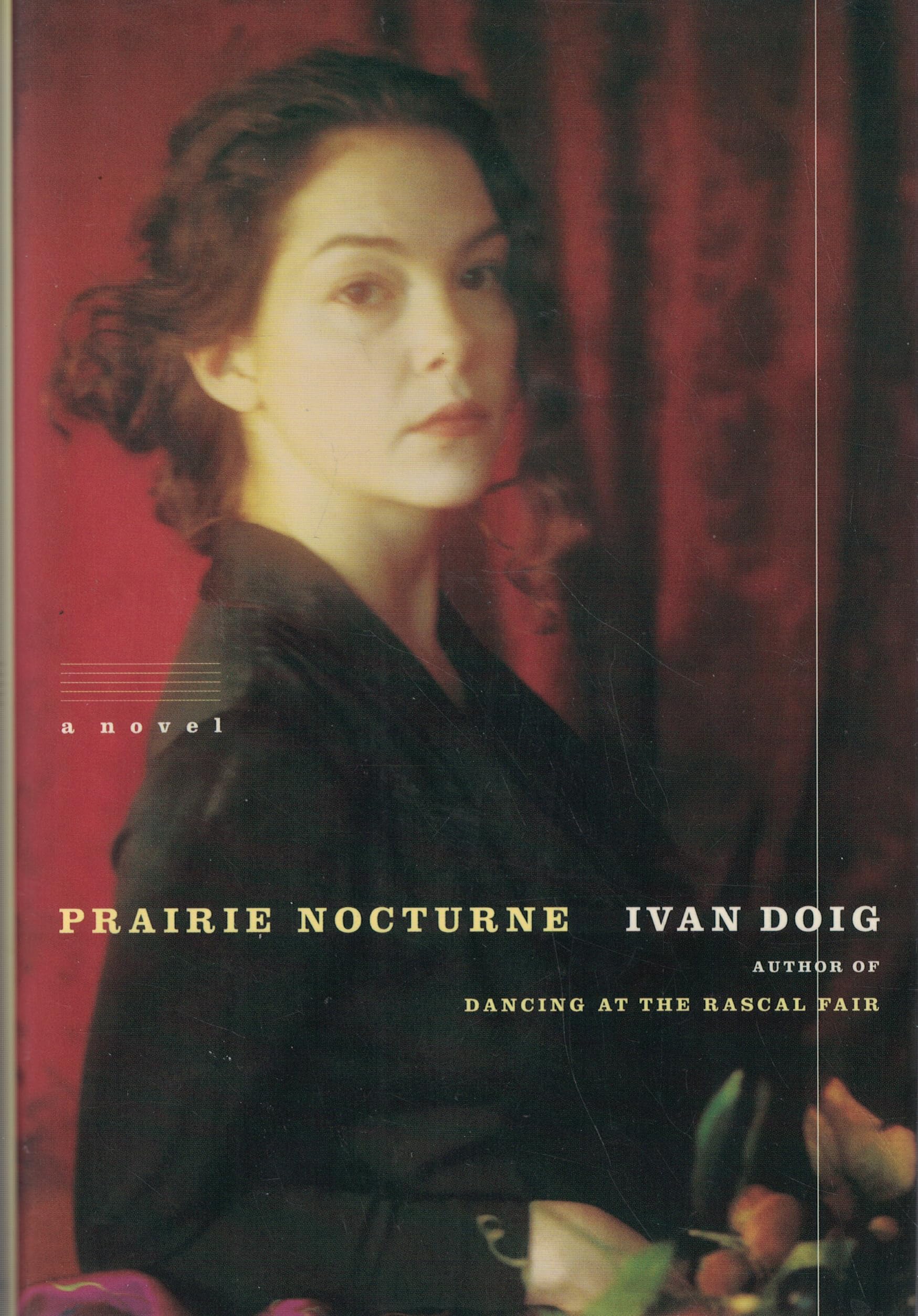



Susan Duff - the bossy, indomitable schoolgirl with a silver voice from the pages of Doig's most popular work, Dancing at the Rascal Fair - has reached middle age alone, teaching voice lessons to the progeny of Helena's high society. Wesley Williamson - business scion of a cattle-empire family - has fallen from the heights of gubernatorial aspirations, forced out of a public career by political foes who uncovered his love affair with Susan. Years later, Susan is taken off guard when Wes arrives at her door with an unusual request: to train his chauffeur, Monty, in the ways of voice and performance. Prairie Nocturne is the saga of these three people and their interlocked destinies. Monty is distantly known to Susan from their childhoods in the Two Medicine country, yet an enforced stranger because of the racial divide. When she realizes he possesses a singing voice of rare splendor, Susan joins Wes's Pygmalion-like project to launch Monty on a performing career - only to find the full force of the Ku Klux Klan in their way. As Monty and Susan overcome treacherous obstacles, Wes's mysterious motives unsettle everyone, including himself, and the trio's crossed fates form a deeply longitudinal novel that raises everlasting questions of allegiance, the grip of the past, and the costs of career and passion. Doig returns to several of the characters from his much-loved Dancing at the Rascal Fair (1987) in this gripping story set not only in Montana's Two Medicine country, the landscape indelibly associated with the author, but also in New York during the Harlem Renaissance. It's 1924, and Susan Duff, the headstrong schoolgirl from Rascal Fair , is now a middle-aged voice teacher in Helena, resigned to spinsterhood after her affair with gubernatorial candidate Wes Williamson cost him the election. Then Wes seeks her out with a proposition: teach his black chauffeur, Monty, to sing. Returning to Two Medicine country, Susan does just that, as the narrative twists and turns its way back into the pasts of the three principal characters and ahead into their shared futures in New York: Monty on the concert stage and Susan and Wes, their relationship still tumultuous, in the wings. As always, Doig incorporates a vast amount of fascinating historical material into his personal drama: the story of the "Buffalo soldiers" of the tenth cavalry in the late nineteenth century; the saga of the Ku Klux Klan's incursion into Montana; and, of course, the Harlem Renaissance itself. The heart of the matter, though, is the three-sided relationship among Susan, Wes, and Monty; skirting the melodrama into which this triptych might easily have tumbled, Doig tightens the reins on his sometimes mannered prose and constructs a subtle, highly textured love story, nicely balancing period detail and well-modulated emotion. Bill Ott Copyright © American Library Association. All rights reserved Kirkus Reviews (starred) Doig does his usual splendid job of interweaving several time frames to bring alive American history and to chart the evolving relationships of thorny, independent people who love fiercely but never go easy on one another or themselves....It all combines to create a compelling story that ends too soon. -- Review Ivan Doig grew up in a family of Montana ranch hands in the 1940s and 1950s. His books include Mountain Time, Bucking the Sun, and the highly acclaimed Montana Trilogy -- English Creek, Dancing at the Rascal Fair, and Ride with Me, Mariah Montana. He lives in Seattle with his wife, Carol. Chapter One: Amended Star 1924 "The evening, the evening, The evening brings all home." The last ringleted girl had finished off the ballad on a hopeful note -- she would have given her ears for a praising word from Miss Duff -- and night and quiet came again to the house on Highland Street. Regular as the curtain of nightfall was Susan Duff's routine in closing away her teaching day. Shoulders back, her tall frame straightening expectantly even though there was no one in the house to meet for the evening but herself, she shuffled sheet music into its rightful order, tallied the hours of lessons in the secondhand mercantile ledger she kept handy atop the piano, and cast an eye over the schedule of impending pupils, then the balky old doors of the music parlor were slid shut. Next a freshening of her face with a rinse of cold water; one adjusting glance into the mirror, never two; hairpins taken out, and her chestnut hair shaken down. Onward to her stovetop supper, which she raced through as though still making up for her father's interminable graces over expiring food. Now, with a pat to the kitchen and a cursory locking of doors and windows, she was ready to ascend. As fixed as a star, the telltale glow of her gable window appeared over Helena at the last of dusk and burned on past respectable bedtime. You might think a woman of her early climb in life, singled out by her father's God for a soaring voice to lift