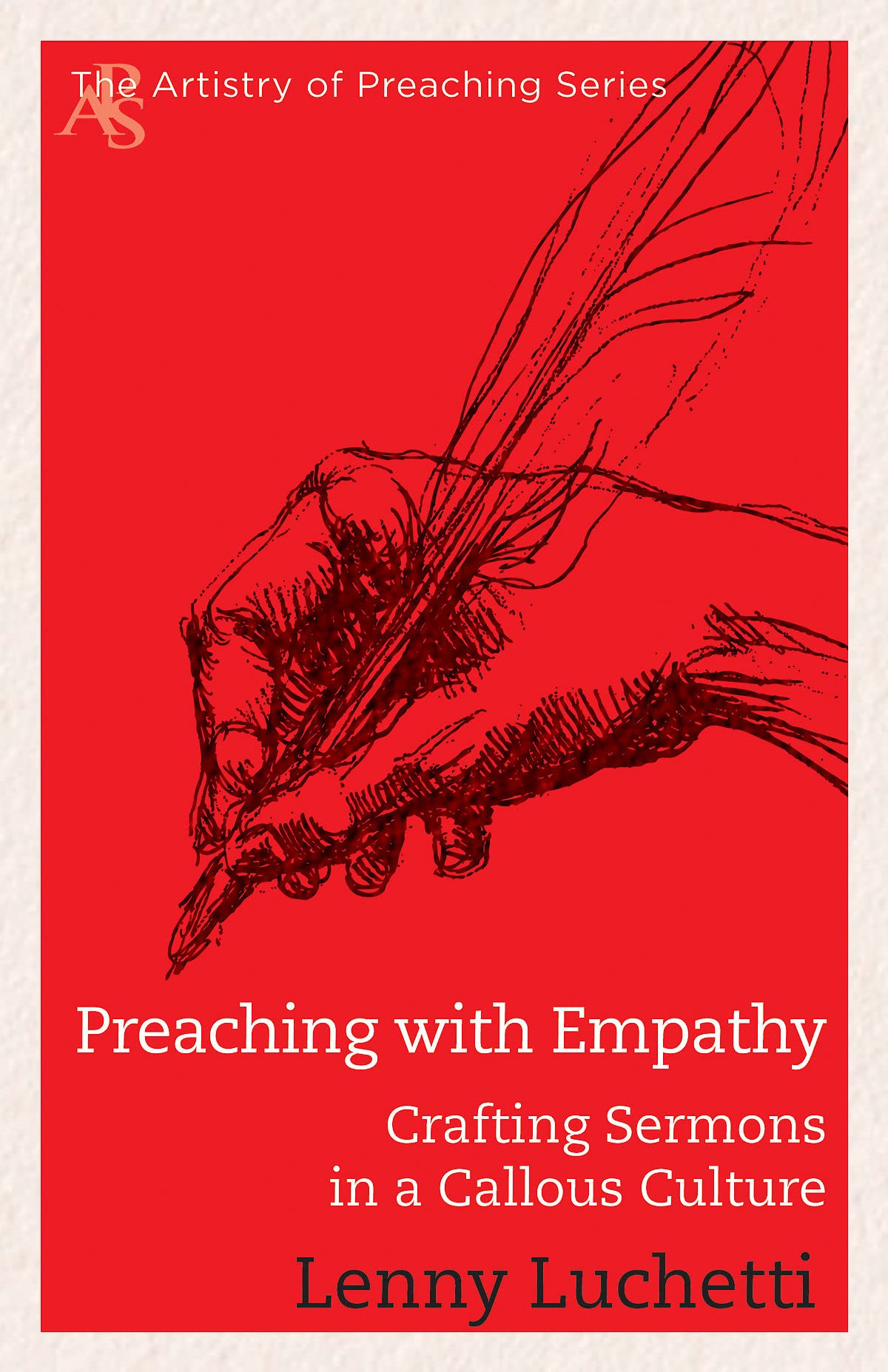
Preaching with Empathy: Crafting Sermons in a Callous Culture (Artistry of Preaching)
$19.19
by Lenny Luchetti



Preachers can find help from many resources to get the text right, the structure right, and the delivery right. Preaching with Empathy aims to help preachers and homiletics students learn to deeply understand and love their listeners, in order to get preaching right. Preachers who profess a love for God, Scripture, and preaching, but who lack loving empathy for the listener, betray their three professed loves and limit their fruitfulness in ministry. This book teaches how to practice preaching in new ways, incorporating a heightened awareness and empathy for the people in the preacher’s community. Author Lenny Luchetti provides immediately useful tools, all based on the foundations of scripture, theology, history, and social awareness. Readers will learn to embody Christ for their congregations, as they empathically love God and humanity. This book is part of the successful Artistry in Preaching series, edited by Paul Scott Wilson. Other books in the series include Preaching as Poetry: Beauty, Goodness and Truth in Every Sermon , by Paul Scott Wilson; Actuality: Real Life Stories for Sermons that Matter, by Scott Hoezee; and Preaching in Pictures: Using Images for Sermons that Connect , by Peter Jonker. Understand and love your listeners, to get preaching right. Dr. Lenny Luchetti is Professor of Proclamation and Christian Ministry at Wesley Seminary of Indiana Wesleyan University. He is responsible primarily for the development and teaching of the preaching courses the seminary offers. He is the author of several books, and is ordained in The Wesleyan Church with degrees from Houghton College and Asbury Theological Seminary. Preaching with Empathy Crafting Sermons in a Callous Culture By Lenny Luchetti Abingdon Press Copyright © 2018 Abingdon Press All rights reserved. ISBN: 978-1-5018-4172-9 Contents Series Preface, Acknowledgments, Introduction, Part I: Surveying the Land, Chapter 1: A Culture of Apathy, Chapter 2: A Case for Homiletic Empathy, Part II: Pouring the Foundation, Chapter 3: Empathic God, Chapter 4: Exemplars of Empathic Preaching, Part III: Framing the House, Chapter 5: Practices for Cultivating Empathy in Preachers, Chapter 6: Practices for Infusing Empathy in Preaching, Conclusion, Notes, CHAPTER 1 A Culture of Apathy Apathy Abounds Apathetic disengagement has become normative in Western society. The human capacity for empathic understanding, feeling, and responding appears to be diminishing. Societal apathy has been mounting for decades and, according to research, is at its peak. In 1964 at 3 a.m., Kitty Genovese was stabbed to death while returning to her apartment in Queens, New York. According to the New York Times journalist covering the story, as many as thirty-eight witnesses saw or heard the attack as it occurred over a thirty-minute span. They did nothing to help the victim. This disturbing event led to the popularizing of the term bystander apathy by social psychologists. Allegedly, "Americans became concerned about their lack of concern" after this tragic depiction of apathy at its worst. Another well-known study, conducted by sociologists at Princeton University in 1973, illustrates the troubling drift toward apathy. Dozens of students training for vocational ministry at Princeton Theological Seminary were the subjects of this study. Some of these students were read the parable of the good Samaritan, told by Jesus in Luke 10:29-37. In this parable, Jesus compared the apathy of a Jewish priest and Levite with the empathy of a Samaritan man. The priest, Levite, and Samaritan took separate journeys along the same road. They each encountered the same person in need of help. Only the Samaritan man possessed the empathy to stop and help the man in need. This empathy, shining brightly compared to the darkness of the priest and Levite's apathetic bypassing, made the Samaritan "good." The students who heard the parable were sent to another building to give a talk, a sort of mini-sermon, about the parable. Another group of students in the study did not hear the parable and were directed to give a talk on a different topic. As both groups of students journeyed to a building to give their talk, they encountered a man lying on the ground in obvious need of assistance. He was an actor staged in that location. Here's the punch line. Researchers who led the study noted that there was no significant difference between the two groups of students when it came to helping or ignoring the victim. The students who contemplated and prepared to speak about the parable of the good Samaritan were, with a few exceptions, in too much of a hurry to stop and help the person in need of care. "Thinking about the Good Samaritan did not increase helping behavior." In several cases, students who heard the parable literally stepped over the victim to enter the building in which they were giving the talk about the parable. The Kitty Genovese tragedy and the