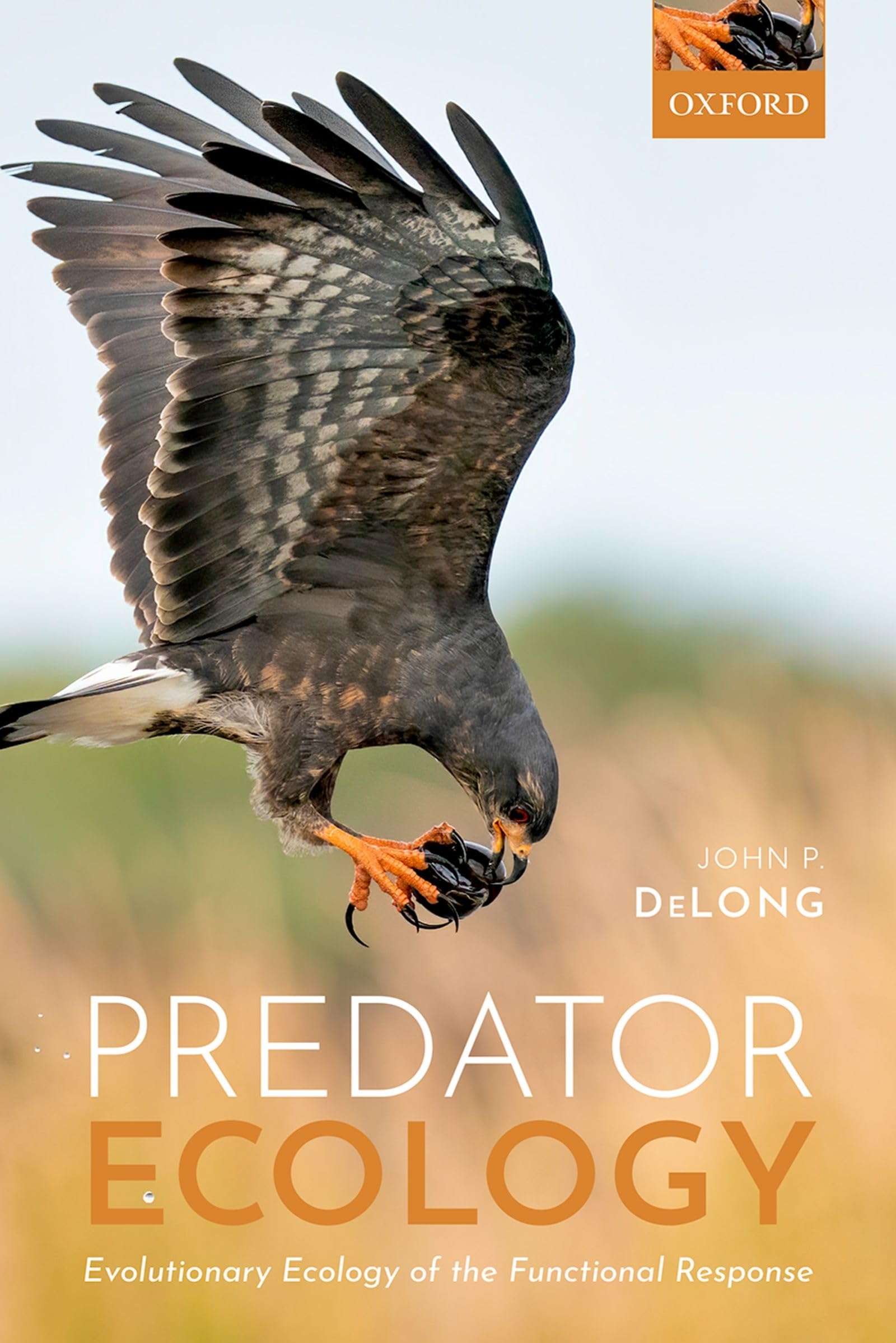
Predator Ecology: Evolutionary Ecology of the Functional Response
$110.87
by John P. DeLong



Predator-prey interactions are ubiquitous, govern the flow of energy up trophic levels, and strongly influence the structure of ecological systems. They are typically quantified using the functional response - the relationship between a predator's foraging rate and the availability of food. As such, the functional response is central to how all ecological communities function - since all communities contain foragers - and a principal driver of the abundance, diversity, and dynamics of ecological communities. The functional response also reflects all the behaviors, traits, and strategies that predators use to hunt prey and that prey use to evade predation. It is thus both a clear reflection of past evolution, including predator-prey arms races, and a major force driving the future evolution of both predator and prey. Despite their importance, there have been remarkably few attempts to synthesize or even briefly review functional responses. This novel and accessible book fills this gap, clearly demonstrating their crucial role as the link between individuals, evolution, and community properties, representing a highly-integrated and measurable aspect of ecological function. It provides a clear entry point for students, a refresher for more advanced researchers, and a motivator for future research. Predator Ecology is an advanced textbook suitable for graduate students and researchers in ecology and evolutionary biology seeking a broad, up-to-date, and authoritative coverage of the field. It will also be of relevance and use to mathematical ecologists, wildlife biologists, and anyone interested in predator-prey interactions. "This textbook provides a comprehensive review of the topic and explains the key equations and concepts. It will be a welcome resource for new and experienced researchers of a topic in which, despite its regular appearance in textbooks and decades of scientific debate decades, it remains difficult to reconcile theory with field ecology." -- Conservation Biology "The book will be a welcome resource for new and experienced researchers of a topic in which, despite its regular appearance in textbooks and decades of scientific debate decades, it remains difficult to reconcile theory with field ecology." -- Conservation Biology "This textbook provides a comprehensive review of the topic and explains the key equations and concepts. The book will be a welcome resource for new and experienced researchers of a topic in which, despite its regular appearance in textbooks and decades of scientific debate decades, it remains difficult to reconcile theory with field ecology." -- Journal of Conservation Biology "The book is very much worth reading and should belong into the library of any Ecology & Evolution department or person interested in feeding ecology, trophic interactions, and consumer-resource dynamics." -- Arne Schröder, Basic and Applied Ecology "The book is very much worth reading and should belong into the library of any Ecology & Evolution department or person interested in feeding ecology, trophic interactions, and consumer-resource dynamics." -- Arne Schröder, Basic and Applied Ecology John P. DeLong, Professor of Biology and Director, Cedar Point Biological Station, University of Nebraska-Lincoln and Cedar Point Biological Station, USA John P. DeLong is Associate Professor of Biology at the University of Nebraska-Lincoln and the Director of Cedar Point Biological Station. He got his start in predator biology working with migratory raptors in New Mexico, going on to spend 14 years in migration research. Eventually he began studying predatory protists, copepods, mammalian carnivores, and spiders as well. The author has taught a course on Predator Ecology annually since 2013, using the functional response as the core concept of the course. The course provides valuable opportunities for students to estimate functional responses and conduct, in many cases, their first real research. He has published nearly 100 peer-reviewed articles, many involving predators of some kind.