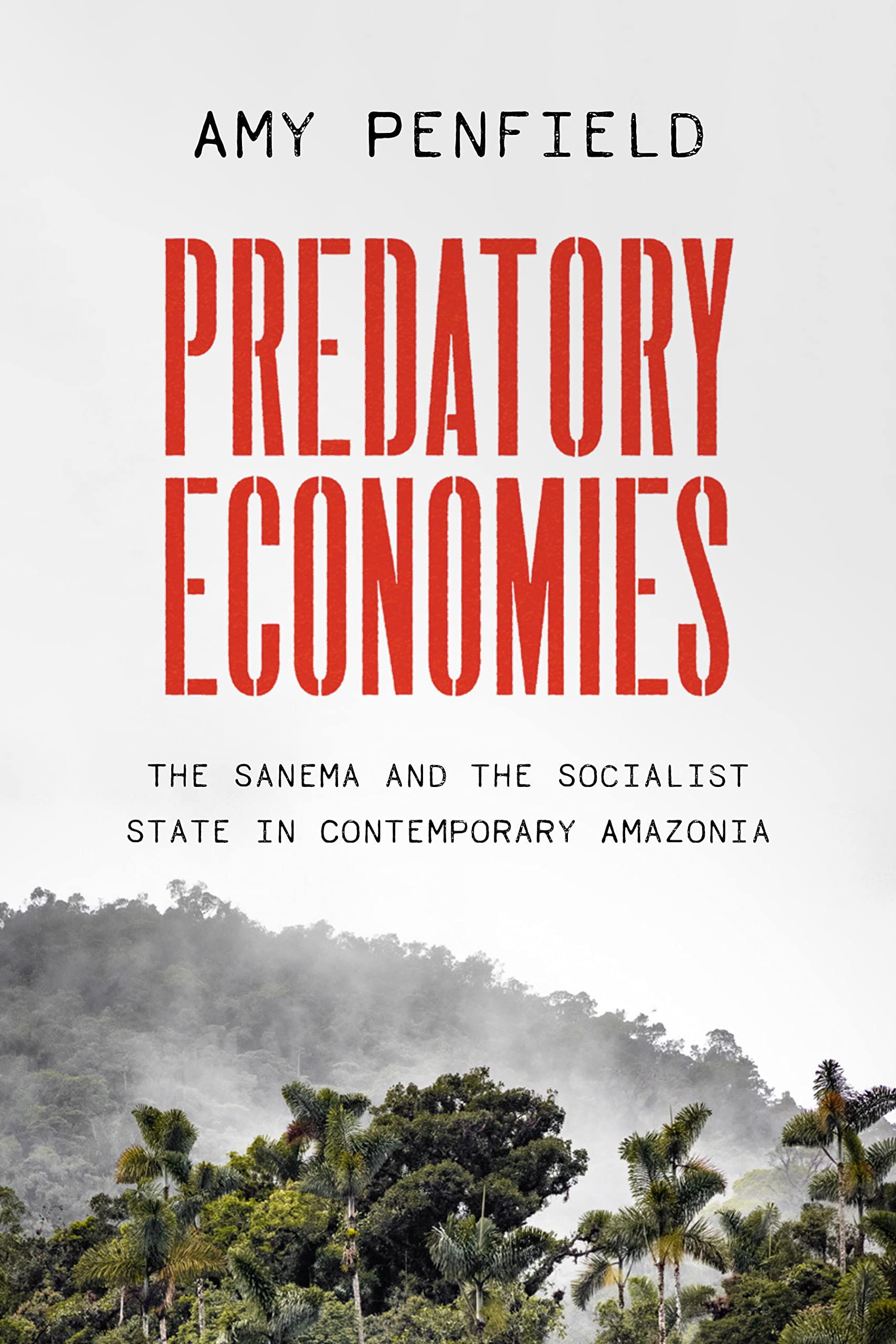
Predatory Economies: The Sanema and the Socialist State in Contemporary Amazonia (Joe R. and Teresa Long Series in Latin American and Latino Art and
$29.95
by Amy Penfield



2024 Honorable Mention, Fernando Coronil Prize, Latin American Studies Association, Section on Venezuelan Studies A study of the modes of predation used by and against the Sanema people of Venezuela. Predation is central to the cosmology and lifeways of the Sanema-speaking Indigenous people of Venezuelan Amazonia, but it also marks their experience of modernity under the socialist “Bolivarian” regime and its immense oil wealth. Yet predation is not simply violence and plunder. For Sanema people, it means a great deal more: enticement, seduction, persuasion. It suggests an imminent threat but also opportunity and even sanctuary. Amy Penfield spent two and a half years in the field, living with and learning from Sanema communities. She discovered that while predation is what we think it is—invading enemies, incursions by gold miners, and unscrupulous state interventions—Sanema are not merely prey. Predation, or appropriation without reciprocity, is essential to their own activities. They use predatory techniques of trickery in hunting and shamanism activities, while at the same time, they employ tactics of manipulation to obtain resources from neighbors and from the state. A richly detailed ethnography, Predatory Economies looks beyond well-worn tropes of activism and resistance to tell a new story of agency from an Indigenous perspective. Penfield’s work demonstrates the value of conducting holistic, interethnic-focused, and system-based anthropological work in grasping the difficulties and necessities of state-based citizenship acts, many of which resist the machinery of capitalism while falling prey to some of the same strategies they utilize. ― CHOICE Published On: 2023-09-06 Predatory Economies masterfully walks a difficult line between the specificity of Indigenous ideas and the entwinement of Amazonia with the wider world...Clearly written in a language that suits advanced undergraduate students and those further along in their studies, Predatory Economies will be of interest to a wide range of academics keen to learn more about how cosmologies of both capitalism and the forest overlap. ― Economic Anthropology Published On: 2023-10-31 Predatory Economies is an unusual and valuable addition to the ethnography of Indigenous Amazonia. The material on Sanema efforts to exploit state resources and the setting in socialist Venezuela will be of great interest to specialists in the region. The intriguing case studies and lively ethnography make the book accessible to general readers. The book could easily be assigned in both undergraduate and graduate classes. ― Journal of Anthropological Research Published On: 2023-12-19 A great read that goes beyond well-rehearsed ideas about Amazonian cosmology to explain why concepts such as predation are integral to the means by which Amazonian people engage with their neighbors, the state, and extractive economies. Rather than simply dwelling on differences between Penfield’s Sanema informants and other Venezuelans, her detailed and textured ethnography shows how the state and its promises are imbricated in people’s lives, hopes, frustrations, and failures. This is exactly the kind of book that helps contextualize and give substance to key concepts that have emerged in regional scholarship in recent years. Its clear and engaging presentation, along with its depiction of Amazonian people living at the margins of wider Latin American political and economic processes, guarantees this book’s importance beyond the field of Amazonian ethnography. I very much look forward to using it in my courses. -- Casey High, University of Edinburgh, author of Victims and Warriors: Violence, History, and Memory in Amazonia Penfield’s work demonstrates the value of conducting holistic, interethnic-focused, and system-based anthropological work in grasping the difficulties and necessities of state-based citizenship acts, many of which resist the machinery of capitalism while falling prey to some of the same strategies they utilize. ― CHOICE Published On: 2023-09-06 Predatory Economies masterfully walks a difficult line between the specificity of Indigenous ideas and the entwinement of Amazonia with the wider world...Clearly written in a language that suits advanced undergraduate students and those further along in their studies, Predatory Economies will be of interest to a wide range of academics keen to learn more about how cosmologies of both capitalism and the forest overlap. ― Economic Anthropology Published On: 2023-10-31 Predatory Economies is an unusual and valuable addition to the ethnography of Indigenous Amazonia. The material on Sanema efforts to exploit state resources and the setting in socialist Venezuela will be of great interest to specialists in the region. The intriguing case studies and lively ethnography make the book accessible to general readers. The book could easily be assigned in both undergraduate and graduate classes. ― Journal o