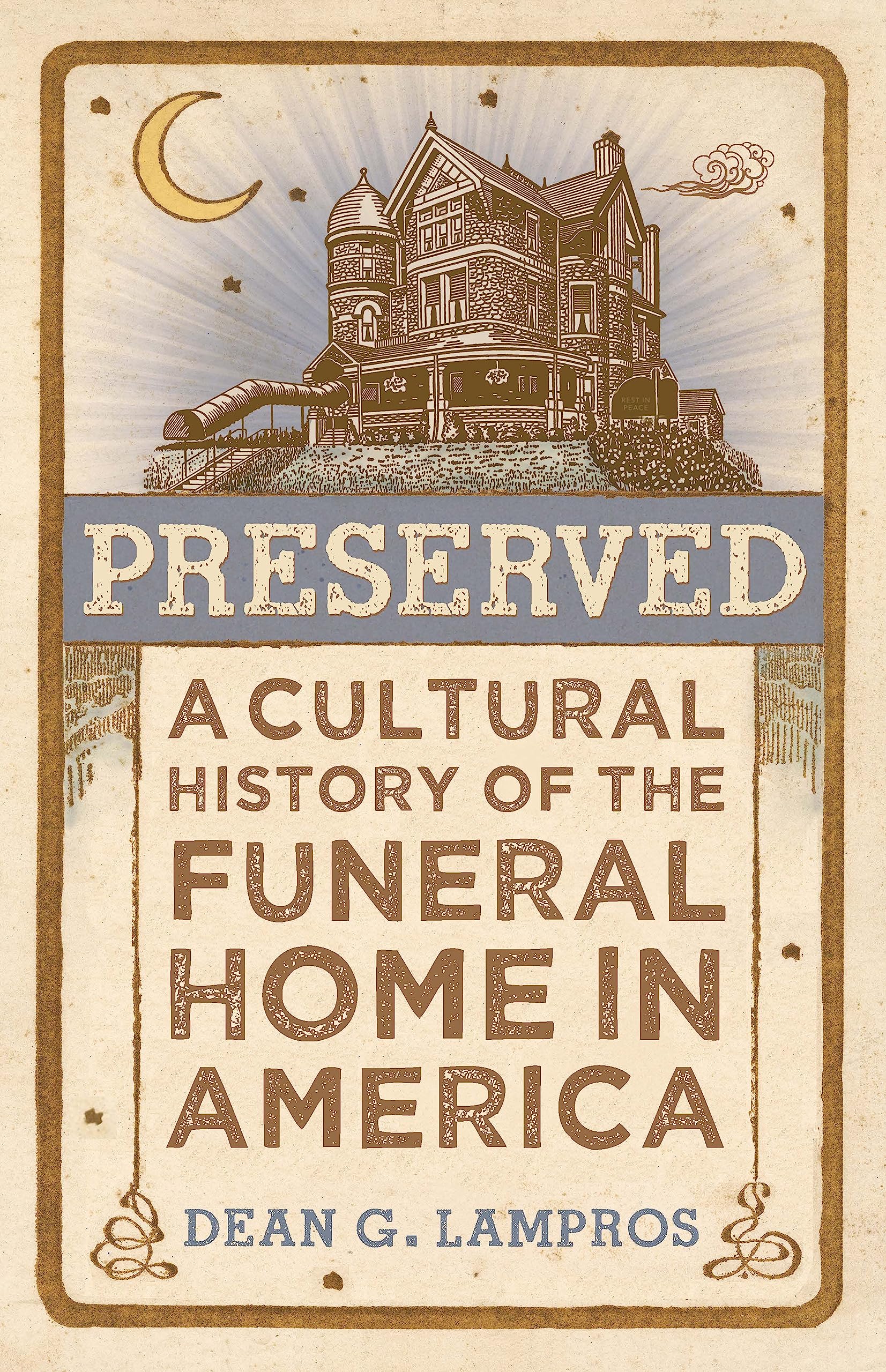



A spirited look at how funeral homes impacted American consumerism, the built environment, and national identities. Funeral homes―those grand, aging mansions repurposed into spaces for embalming, merchandising, funeral services, and housing for the funeral director and their family―are immediately recognizable features of the American landscape, and yet the history of how these spaces emerged remains largely untold. In Preserved , Dean Lampros uses the history of this uniquely American architectural icon to explore the twentieth century's expanding consumer landscape and reveal how buildings can help construct identities. Across the United States, Lampros traces the funeral industry's early twentieth-century exodus from gloomy downtown undertaking parlors to outmoded Victorian houses in residential districts. As savvy retailers and accidental preservationists, funeral directors refashioned the interiors into sumptuous retail settings that stimulated consumer demand for luxury burial goods. These spaces allowed for more privacy and more parking, and they helped turn Americans away from traditional home funerals toward funeral homes instead. Moreover, by moving into neighborhoods that were once the domain of white elites, African American funeral directors uplifted their industry and altered the landscape of white supremacy. The funeral home has tracked major changes in American culture, including an increased reliance on the automobile and the rise of consumer culture. Preserved offers an in-depth cultural history of a space that is both instantly familiar and largely misunderstood. Drawing on previously unexamined sources, Preserved offers startling insights on the history of American deathcare, city planning, and adapted Victorian mansions. A compelling analysis of ubiquitous but under-scrutinized buildings, this meticulously researched American studies volume will appeal to students, preservationists, scholars, and the general public. ―William Moore, Boston University, author of Shaker Fever: America's Twentieth-Century Fascination with a Communitarian, Celibate Sect Hiding in plain sight, the mansion adaptively used as a funeral home is a building typology that has been overlooked and understudied. With a sense of seriousness and a touch of humor, Dean Lampros studies these buildings to explain their role within the funeral industry, the historic preservation movement, and racial integration. ―Keith Morgan, Professor Emeritus, Boston University Having just lived among the funeral directors and the nuns, I drank these words like a tonic. ―Dan Piepenbring, Harper's Magazine Lampros's meticulous research never presents as dry but rather invigorates America's way of life (and death) via the previously overlooked institution of the funeral home as "American funeral directors truly were―and in many ways still are―the unsung heroes of historic preservation." ― Amerikastudien / American Studies A spirited look at how funeral homes impacted American consumerism, the built environment, and national identities. Dean G. Lampros is a historian of the built environment, consumer culture, and identity construction. He teaches cultural history and American studies at the Rhode Island School of Design, the Massachusetts College of Art and Design, and Roger Williams University.