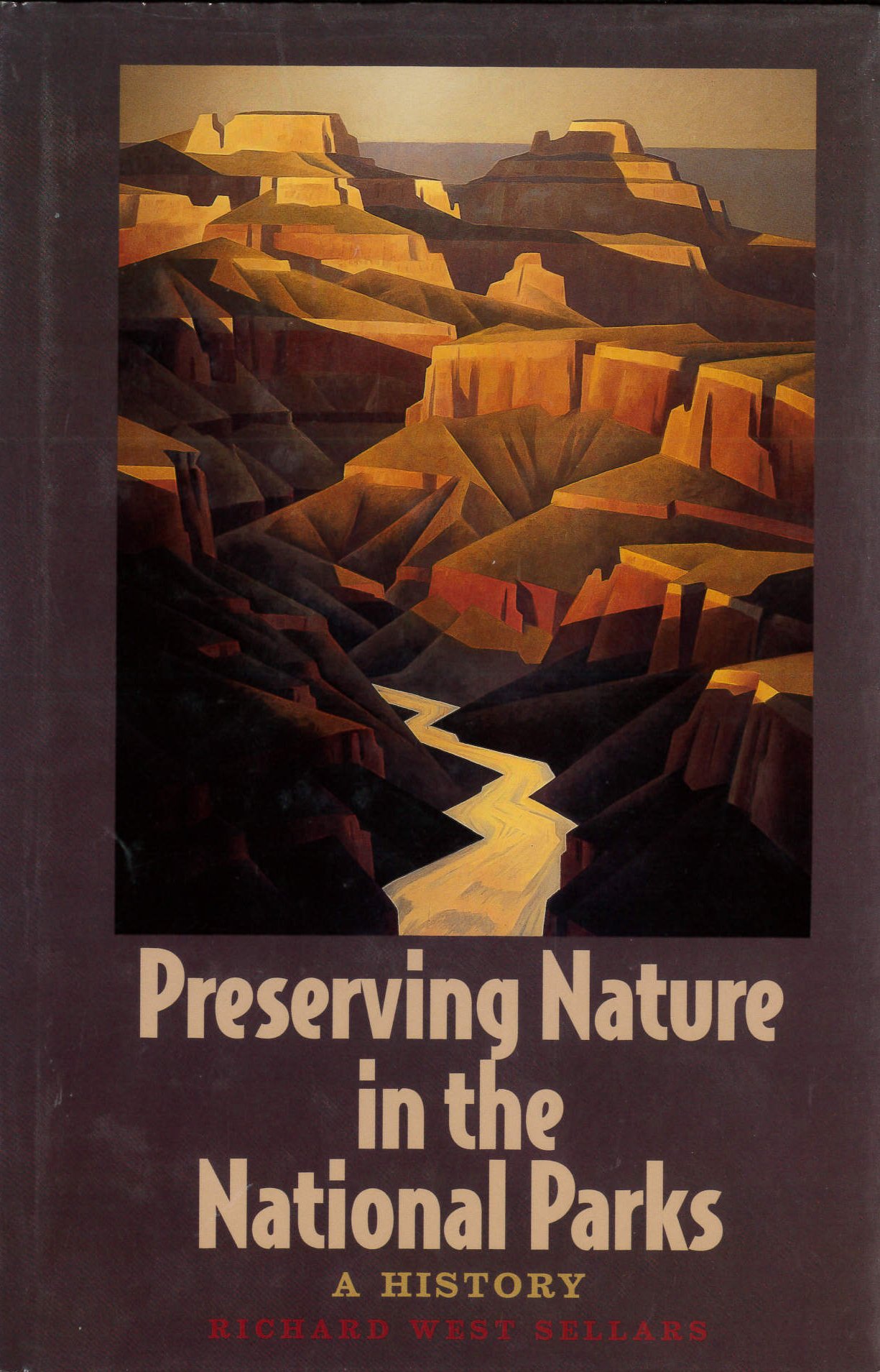



A historian with the National Park Service traces the clash of values between traditional scenery management for tourists and environmental concerns from the creation of Yellowstone National Parks in 1872 to the present. Drawing largely on original documents, he analyzes the management of fires, predators, elk, bear, and other natural phenomena in such parks as the Grand Canyon, Yosemite Valley, the Teton Mountains, and of course Yellowstone itself. Annotation c. by Book News, Inc., Portland, Or. Mandated to preserve and protect our historic and natural treasures, the National Park Service (NPS), Sellars contends, has disregarded a policy of scientific management of park resources from the birth of Yellowstone in 1872 until the present. A historian with the service, Sellars employs his own observations as well as a vast array of sources, including files and conversations with fellow employees and retirees to present a history of the NPS's policy conundrum between traditional tourism management and growing ecological concerns. He describes how in the early days a bureau of landscape architects and engineers maintained a natural facade of beauty obedient to a philosophy of recreational tourism inculcated by initial directors Horace Albright and Stephen Mather. In recent years, a host of scientists have fought their way into the ranks of decision makers and have stimulated a management ethic based on research, which, as Sellars skillfully points out, the NPS has not yet institutionalized. This book complements such general histories of the conservation movement as Roderick Nash's Wilderness & the American Mind (1982. 3d ed.). Highly recommended for academic and larger public libraries.?Patricia Owens, Wabash Valley Coll., Mt. Carmel, Ill. Copyright 1997 Reed Business Information, Inc. A dry but useful academic study of misguided federal resource management and ecological experimentation. ``Nature preservation--especially that requiring a thorough scientific understanding of the resources intended for preservation--is an aspect of park operations in which the [National Park] Service has advanced in a reluctant, vacillating way,'' writes Sellars, a historian with the Park Service. More directly put, his study shows how the Park Service has throughout its existence allowed the preservation of endangered species and habitats to be governed by changes in administrations and political styles. Charged with the divided mission of maximizing ``recreational tourism and public enjoyment of majestic landscapes'' on the one hand, and keeping undisturbed large sections of wild land on the other, the service has generally favored the first, putting science in the backseat. Among Sellars's cases in point is a scientific survey in Yellowstone National Park that involved marking grizzly bears' ears with colored tags, a survey halted in part because tourists complained about the bears' odd appearance. He goes on to charge that as the Park Service grows in size, its ranks are increasingly filled with part-timers and ``technicians,'' not with dedicated scientists who can train the government's resources on analyzing the ecosystems under its charge. Regrettably, many of his most interesting observations are buried in his endnotes, in which he tells, among other tidbits, the story of the Park Service's transferring a mountain in Colorado to the Forest Service after a rock slide altered its face and, presumably, obliterated its scenic grandeur. Sellars does not make the reader's task an easy or pleasant one--a shame, because he has much to say to those interested in the way national resources are managed. -- Copyright ©1997, Kirkus Associates, LP. All rights reserved. "One of the most important books ever written on the realities of biological conservation. . . . [F]ull of important insights and lessons and should be required reading for anyone interested in national parks . . . and the values they are expected to protect."-David J. Parsons, Aldo Leopold Wilderness Research Institute, USDA Forest Service (David J. Parsons Aldo Leopold Wilderness Research Institute )