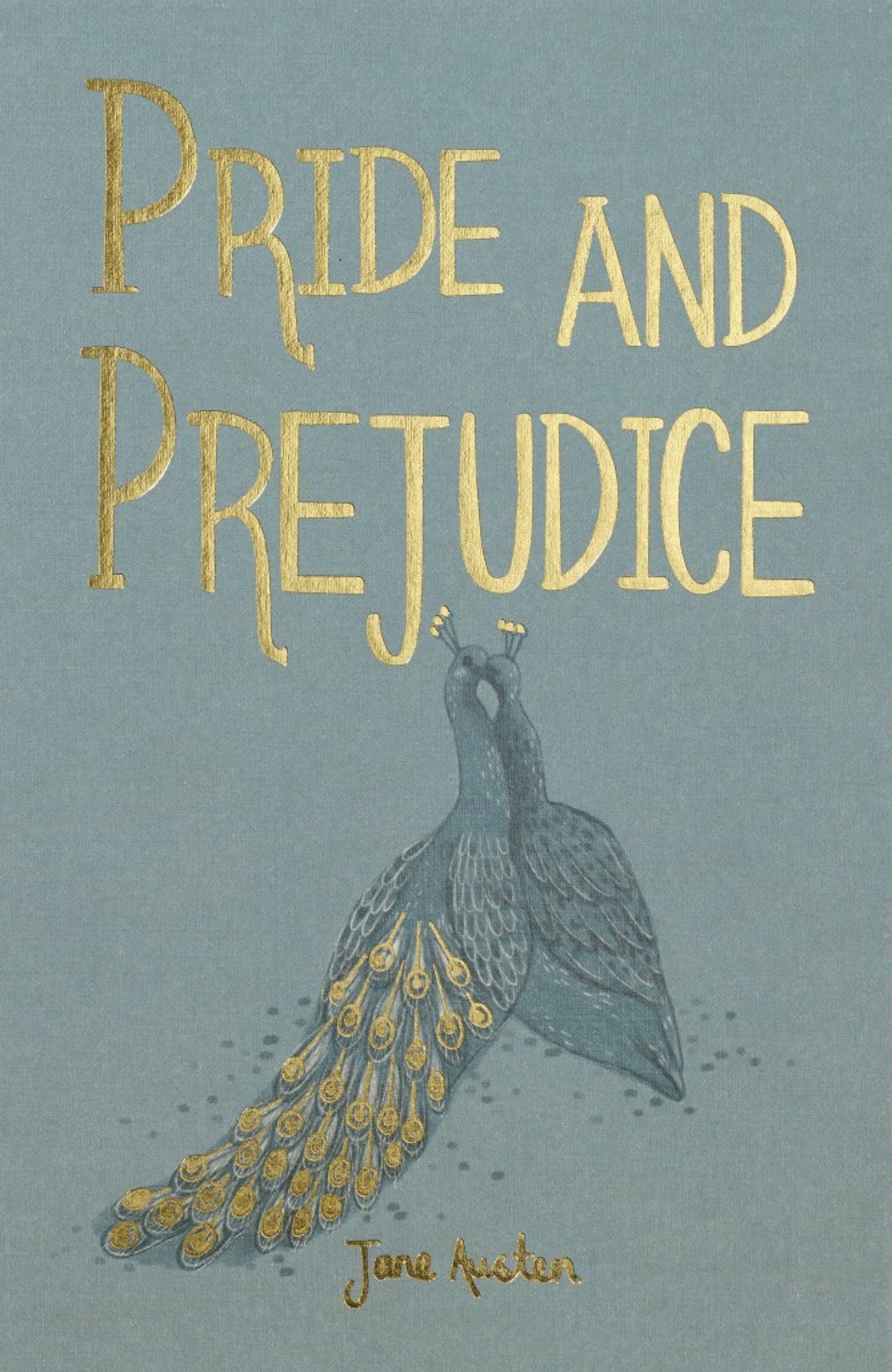



Pride and Prejudice by Jane Austen is the unforgettable story of Elizabeth Bennet and Mr. Darcy. Nominated as one of America's best-loved novels by PBS's The Great American Read. Pride and Prejudice is a novel of manners by Jane Austen, first published in 1813. The story follows the main character, Elizabeth Bennet, as she deals with issues of manners, upbringing, morality, education, and marriage in the society of the landed gentry of the British Regency. Elizabeth is the second of five daughters of a country gentleman living near the fictional town of Meryton in Hertfordshire, near London. Page 2 of a letter from Jane Austen to her sister Cassandra (11 June 1799) in which she first mentions Pride and Prejudice, using its working title First Impressions. Set in England in the early 19th century, Pride and Prejudice tells the story of Mr and Mrs Bennet's five unmarried daughters after the rich and eligible Mr Bingley and his status-conscious friend, Mr Darcy, have moved into their neighbourhood. While Bingley takes an immediate liking to the eldest Bennet daughter, Jane, Darcy has difficulty adapting to local society and repeatedly clashes with the second-eldest Bennet daughter, Elizabeth. Though Austen set the story at the turn of the 19th century, it retains a fascination for modern readers, continuing near the top of lists of most loved books. It has become one of the most popular novels in English literature, selling over 20 million copies, and receives considerable attention from literary scholars. Modern interest in the book has resulted in a number of dramatic adaptations and an abundance of novels and stories imitating Austen's memorable characters or themes. A True Classic that Belongs on Every Bookshelf! Jane Austen was born at home, as was common practice, on December 16th 1775, to the Reverend George and Cassandra (Leigh) Austen, in the Rectory at Steventon, Hampshire, where Mr. Austen had the living. Jane was their seventh child, preceded by five brothers and her sister Cassandra, three years her senior, who was to become her closest friend, ally and admirer. A last son was born four years after Jane, in 1779. Her father, as well as performing his clerical and pastoral duties, ran a small farm, and together with his wife, took in boy pupils, who lived in the house; the older boys of the family were at this stage educated alongside them. Jane was thus born into a large and busy household. In 1783, Jane (then seven), along with Cassandra (ten), went away to school, first in Oxford, and then in Southampton, with Mrs. Cawley. However, in Southampton, illness hit their school and the sisters were brought back home to recuperate. By this time their brother Edward had been adopted by Mr and Mrs Thomas Knight (Mr. Knight being a distant cousin of Revd. Austen); George, who is usually and rather vaguely described as not developing normally, was being cared for away from home; and James had already matriculated from St. John s College, Oxford. Jane and Cassandra had a year at home, before being sent to the Abbey School, Reading, in 1785. They left in December 1786 and at that point their formal schooling ended. In 1787, Jane began writing the first of her Juvenilia. Another of the Austen family relationships should be mentioned at this point. Jane s Aunt Philadelphia her father s sister had in 1751 travelled to India and shortly thereafter married Tysoe Hancock, an employee of the East India Company. In 1759 the couple became friends with Warren Hastings, who would eventually become Governor of India (and then be tried for his misdemeanours in that role). In 1759, his wife and baby daughter had just died, and his young son George was to be sent back to England for health reasons. (It fell to George and Cassandra Austen in the early months of their marriage to look after this son in the last few months of his life; he died in their care.) Meanwhile, Philadelphia, having been childless in her marriage to Hancock for eight years, became pregnant in 1861 and her daughter Eliza was born in December of that year. At least one of Austen s biographers, Claire Tomalin, raises the possibility that this child might have been fathered by Hastings, and she offers strong but circumstantial evidence for this. Lord Clive (he of India) warned his wife against associating with Philadelphia because of her involvement with Hastings. Hastings was the child s godfather; he travelled back to England with the Hancocks and Eliza in 1765; in both 1772 and 1775 Hastings settled sums of £5,000 on Eliza; Eliza s own first son was christened Hastings. The facts are unknowable as is whether anyone beyond Philadelphia herself knew them. But aside from that issue, Cousin Eliza played a significant role in Jane s life. She married a French aristocrat, turned up from time to time, an older, glamorous relation, and left behind a series of letters which, in the absence of written evidence about Jane herself, has become significant. She also