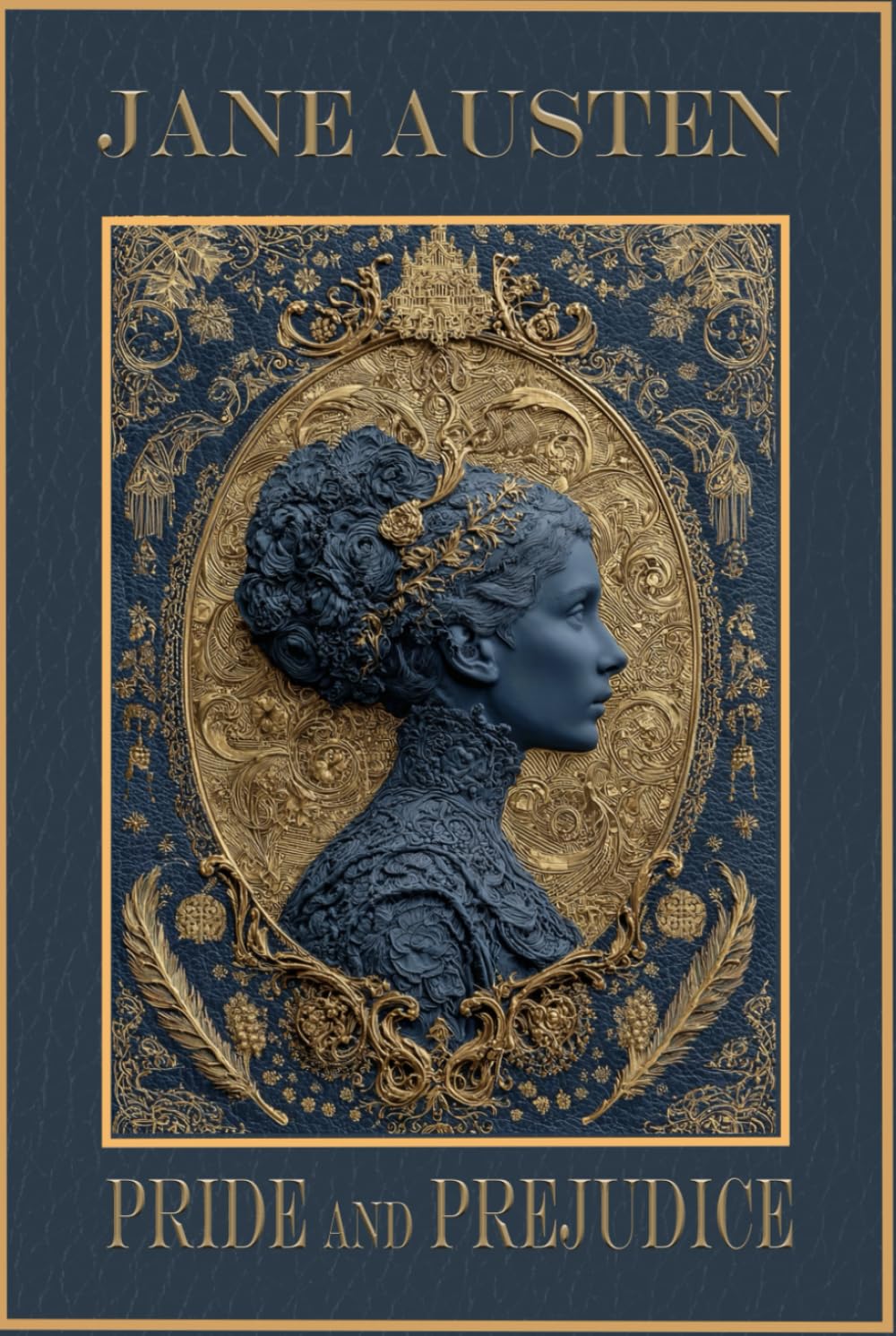
Pride and Prejudice: Rebirth Collectors' Edition | The Original 1813 Text | Annotated
$20.95
by Jane Austen



Pride and Prejudice by Jane Austen In the genteel countryside of Regency England, where reputation means everything and marriage determines a woman's fate, Elizabeth Bennet stands apart. Spirited, intelligent, and unafraid to speak her mind, she navigates a world of strict social hierarchies with uncommon wit and moral clarity. When the wealthy and enigmatic Mr. Darcy enters her orbit, their explosive first encounter sets in motion one of literature's most captivating journeys from misunderstanding to love. "It is a truth universally acknowledged, that a single man in possession of a good fortune, must be in want of a wife." With this ironic observation, Jane Austen opens her masterpiece of romantic tension and social observation. Published in 1813, "Pride and Prejudice" has enthralled generations of readers with its perfect balance of sparkling comedy and psychological depth. Behind the novel's glittering surface—the balls and dinner parties, the witty repartee and country house visits—lies Austen's razor-sharp examination of human nature. Through Elizabeth's eyes, we witness the follies and virtues of Georgian society, from her mother's histrionic matchmaking to the quiet dignity of her elder sister Jane, from the obsequious Mr. Collins to the charming but dangerous Mr. Wickham. Each character springs to life with such vivid particularity that they feel like people we have actually known. At its heart, this is a story of two individuals overcoming their own flaws to find each other. Elizabeth must recognize how her quick judgments have led her astray, while Darcy must temper his aristocratic pride with humility. Their mutual education creates a romance founded not merely on attraction but on genuine understanding and respect—a revolutionary concept in an era when marriage was primarily an economic arrangement. Austen's prose—elegant, economical, and wickedly precise—transforms what might have been merely a period romance into a timeless exploration of how we judge and misjudge one another. Her pioneering narrative techniques create an intimate connection with her heroine while maintaining the ironic perspective that gives the novel its characteristic blend of warmth and detachment. Two centuries after its publication, "Pride and Prejudice" remains startlingly fresh. Its insights into human psychology, its subtle feminist perspective, and its celebration of intelligence and moral growth continue to resonate with contemporary readers. Whether you're discovering Austen for the first time or returning to a beloved classic, this definitive edition invites you into a world where societal constraints and passionate hearts collide, producing one of literature's most satisfying love stories and one of its most enduring heroines. This Special Annotated Edition Includes: An Illuminating Foreword Exploring: The Georgian and Regency historical context that shaped Austen's masterpiece - Austen's quiet but remarkable life in Hampshire and her literary development - The novel's revolutionary narrative techniques and their influence on modern fiction - How "Pride and Prejudice" transformed the English novel through psychological realism A Thoughtful Afterword Examining: The architectural precision of Austen's plot structure and character development - How the novel transcends the conventional marriage plot to offer deeper social commentary - Austen's surprising modernity in psychology, feminism, and narrative innovation - The novel's remarkable adaptability across different media and cultures - Reading approaches that balance historical context with recognition of universal themes