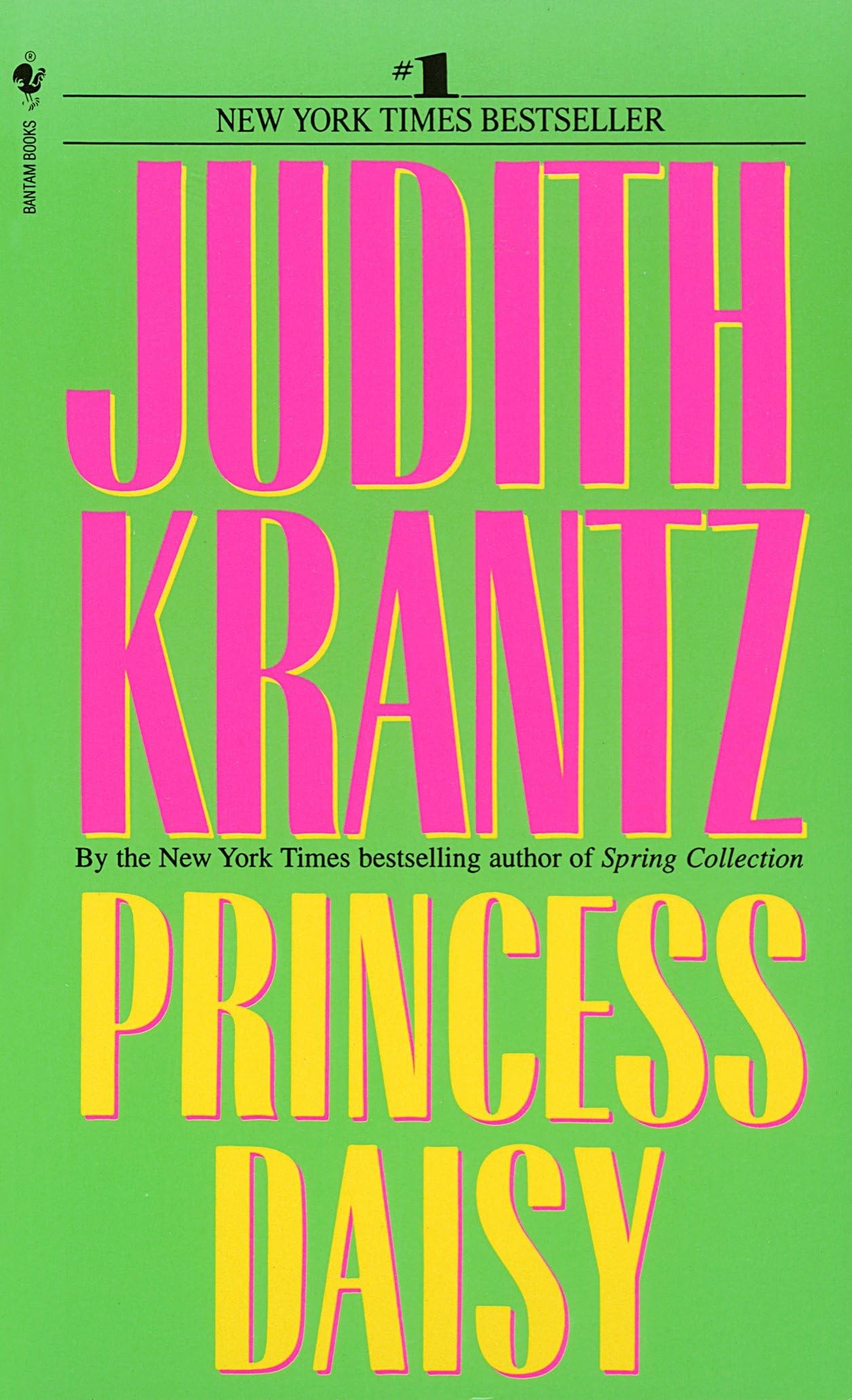



“With unfailing panache and a style that swoops from crisply cynical to downright voluptuous, Princess Daisy is a guaranteed winner.”— Cosmopolitan She was born Princess Marguerite Alexandrovna Valensky. But everyone called her Daisy. She was a blonde beauty living in a world of aristocrats and countless wealthy. Her father was a prince, a Russian nobleman. Her mother was an American movie goddess. Men desired her. Women envied her. Daisy's life was a fairy tale filled with parties and balls, priceless jewels, money and love. Then, suddenly, the fairy tale ended. And Princess Daisy had to start again, with nothing—except the secret she guarded from the day she was born. Praise for Princess Daisy “This page-turner is a champion.” — People “Judith Krantz has written the glamour novel of the year if not of the decade. Princess Daisy has the same storytelling assets as Scruples, only more of them. Glamour, glamour is everywhere.” — John Barkham Reviews “A positively gorgeous reading experience.” —Shirley Eder, Detroit Free Press “ Princess Daisy soars to the heights of escapist entertainment. . . . It is delicious.” —Jill Gerson, Philadelphia Inquirer “In true saga style, this blockbuster weaves its spell across an international landscape. A breathless spin of romance.” —Kitty Kelley, Hollywood Reporter “Elegantly written, with verve and panache . . . a glamorous, extremely adult Cinderella story to delight millions of readers who relish nonstop entertainment. Rollicking wit, high drama, haute couture, and a fascinating cast of characters, who gallop from one sumptuous setting to the next.” — Ft. Worth Chronicle She was born Princess Marguerite Alexandrovna Valensky. But everyone called her Daisy. She was a blonde beauty living in a world of aristocrats and countless wealthy. Her father was a prince, a Russian nobleman. Her mother was an American movie goddess. Men desired her. Women envied her. Daisy's life was a fairy tale filled with parties and balls, priceless jewels, money and love. Then, suddenly, the fairy tale ended. And Princess Daisy had to start again, with nothing--except the secret she guarded from the day she was born. Princess Marguerite Alexandrovna Valensky. But everyone called her Daisy. She was a blonde beauty living in a world of aristocrats and countless wealthy. Her father was a prince, a Russian nobleman. Her mother was an American movie goddess. Men desired her. Women envied her. Daisy's life was a fairy tale filled with parties and balls, priceless jewels, money and love. Then, suddenly, the fairy tale ended. And Princess Daisy had to start again, with nothing--except the secret she guarded from the day she was born. Princess Marguerite Alexandrovna Valensky. But everyone called her Daisy. She was a blonde beauty living in a world of aristocrats and countless wealthy. Her father was a prince, a Russian nobleman. Her mother was an American movie goddess. Men desired her. Women envied her. Daisy's life was a fairy tale filled with parties and balls, priceless jewels, money and love. Then, suddenly, the fairy tale ended. And Princess Daisy had to start again, with nothing--except the secret she guarded from the day she was born. Judith Krantz began her career as a fashion editor and magazine article writer. Her first novel, Scruples, was an immediate top bestseller, as were all her subsequent novels— Princess Daisy, Mistral’s Daughter, I’ll Take Manhattan, Till We Meet Again, Dazzle, Scruples Two, Lovers, Spring Collection, and The Jewels of Tessa Kent . She died in 2019. We could always shoot this on top of the RCA Building,” Daisy said, walking past the parapet, above which rose a high, metal railing designed to forestall would-be suicides. “They’re not nearly as paranoid as you Empire State people.” She gestured scornfully at the ledge behind her. “But, Mr. Jones, if it’s not the view from precisely here, the message just won’t be New York.” The man in uniform watched, motionless in surprise, as Daisy suddenly leapt high and held on to a rung of the railing with one strong hand. With her other hand she took off the sailor hat under which she had tucked her hair and let it blow free. The silver-gilt tumble was caught by the breeze that separated it into a million brave and dazzling threads. “Come down, Miss,” the man in charge of the Observation Deck begged. “I told you it’s just not allowed.” “Look, I’m trying to show you what we’re after,” Daisy persisted. “It’s a hairspray commercial, and artistically, what’s a hairspray commercial without wind blowing in the hair—can you tell me that? Just hanks of hair, all chunky and boring—wind is essential, Mr. Jones.” The uniformed official looked up at Daisy with perplexed admiration and dismay. He didn’t understand anything about her. She was young and more beautiful than anyone he’d ever seen but she wore a man’s moldy baseball jacket which bore the now mournful legend BROOKLYN DOD