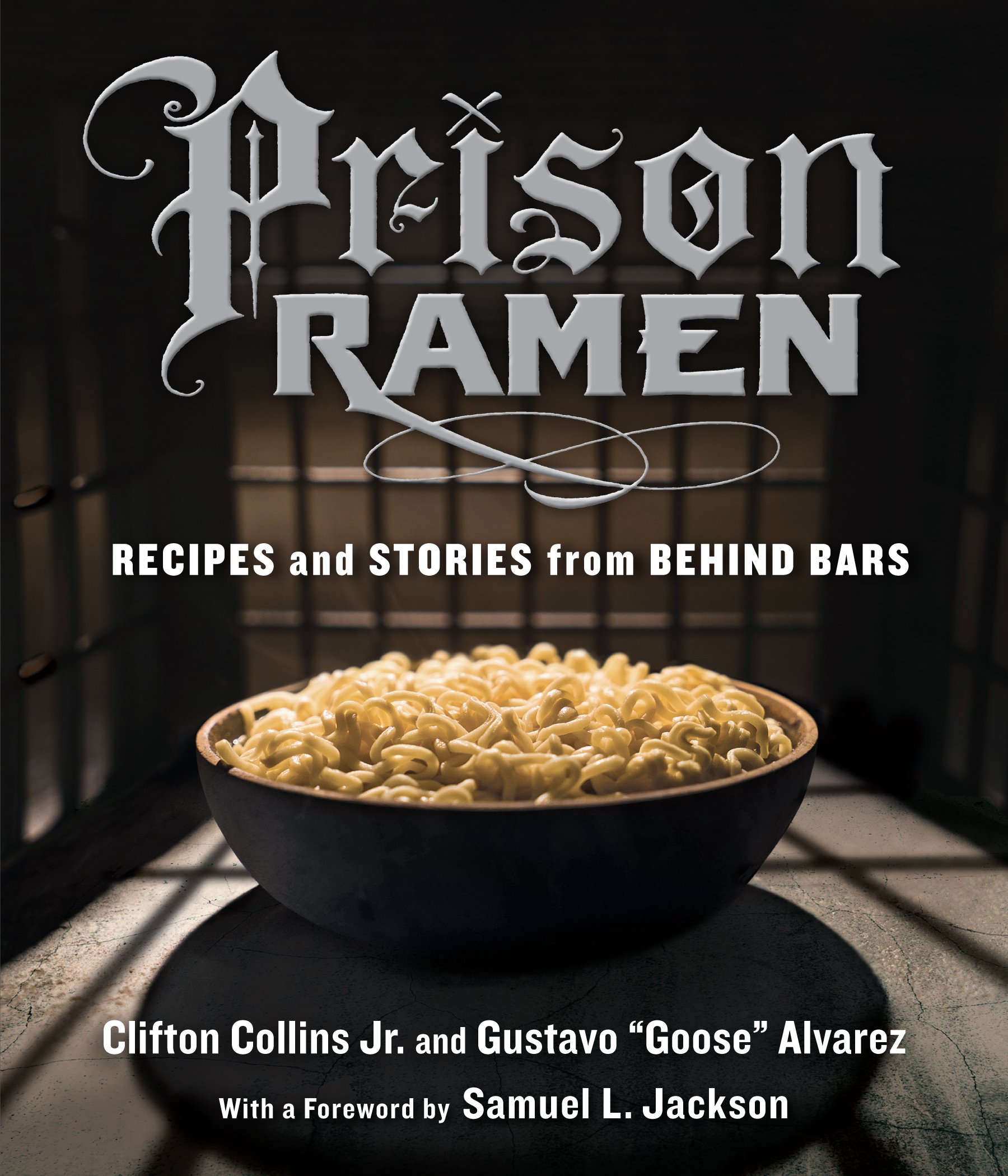



“These recipes make me smile and laugh out loud with joy, memory, and awe at their total culinary genius. All born from a bond of pure hunger?”—Samuel L. Jackson, from the Foreword When you’re in prison, a little money in the commissary can mean the difference between a life of flavorless misery and the pleasure of re-creating a taste of childhood. And it starts with Ramen. Filled with contributions from anonymous inmates as well as names you’ll recognize, such as guitarist Slash and actors Danny Trejo, Taryn Manning, and Shia LaBeouf, Prison Ramen is an original collection of inspired Ramen hacks: Hit Man Burritos. Sloppy Ramen Joe. Onion Tortilla Ramen Soup. Shawshank Spread. And Orange Porkies: Chile ramen + white rice + 1 bag pork skins + orange-flavored punch. Firsthand stories of life in prison, told by each of the contributors, go a long way to explaining the joy of doctoring a bag of Ramen. A joy you can now re-create in the freedom of your own kitchen. Clifton Collins Jr. is an actor who’s appeared in Pacific Rim, Transcendence, Traffic , and other films, including the upcoming Triple Nine . Gustavo “Goose” Alvarez is a former California inmate who now resides in Mexico. Samuel L. Jackson, who wrote the Foreword, is the award-winning actor who has appeared in more than 100 films, including Pulp Fiction and The Avengers . Introduction One hot day in August, there was a prison riot at the California Institution for Men in Chino. I was halfway through a six-year sentence, the father of young children, and I wanted nothing to do with extending my time in that hellhole. But the race riot that unfolded that night was inescapable. I was with a group of Southern California Hispanics, outnumbered and trapped in the last surviving dorm. Fires raged all around us. More than one hundred angry men were doing everything possible to break down a secured door. Their only desire was to maim or preferably kill us. We were pretty much doomed—we knew it, they knew it. The only thing I had left in that shithole worth fighting for were the pictures of my kids taped to my locker shelf. So we prepared ourselves for the massacre, lacing up and wrapping towels around our necks to protect our jugulars. There were two Christian brothers in our dorm just praying. It was pretty grim. And then, as the door began to give way and the rioting inmates were just about to storm in, two older guys ran to our aid. They were OGs—Original Gang members of the Crips—and they stood between us and the bloodthirsty attackers. They must have argued for two hours, until finally the rioting inmates backed down. The lines of race and gang affiliation are deeper in prison than anywhere else, so the fact that these African American guys defended us—Hispanics—against their own brothers is practically unheard of. Since fires were still raging, and the door to our dorm was now jammed, we and our “enemies” were both trapped. They were outside in the prison yard, freezing and huddled up. I noticed one of the OG men passing them the little bit of food he had, from his locker. At that moment I felt it only right to try to return a small portion of a big favor. I gathered all the homies and we began to cook all our Ramen and commissary. We made huge spreads, jugs of coffee, and snacks. We shoved all the blankets and mattresses we could fit through the door they had once attempted to break down to kill us. Most of them were just kids, barely in their twenties, living and following the same lies we were. Shortly after this, I received a visit from my childhood friend Clifton. Growing up in the mean streets of West L.A., who would have thought that many years later we’d still be friends? We came from the same housing projects, but grew up in different worlds. Cliff was never deep in the game like many others, but he was always in the mix. Squabbling, getting shot at, holding his own in street fights like the rest of us. Then he’d bounce the spot and go to an audition. I’d get snatched from the spot and go to juvenile hall. This went on for many years—casting calls for him, county jails for me; movie deals for him, state and federal prisons for me. Through it all, we maintained our friendship through letters, phone calls, and visits, always holding the dream that one day we’d collaborate on something. I pitched this idea to Cliff when he visited me after the riot and now it’s a book in your hands. Take it from someone who knows what he’s talking about—you can change your life from wherever you are right now. —Gustavo “Goose” Alvarez On August 8, 2009, I was in Iowa finishing up a heavy scene for a film I was doing with Adrian Brody and Forrest Whitaker called The Experiment . It’s loosely based on Philip Zimbardo’s Stanford prison experiment of 1971, in which regular citizens were assigned the roles of guards and prisoners for a psychological study—to disastrous effect. This particular night was the scene of the big uprising, the conv