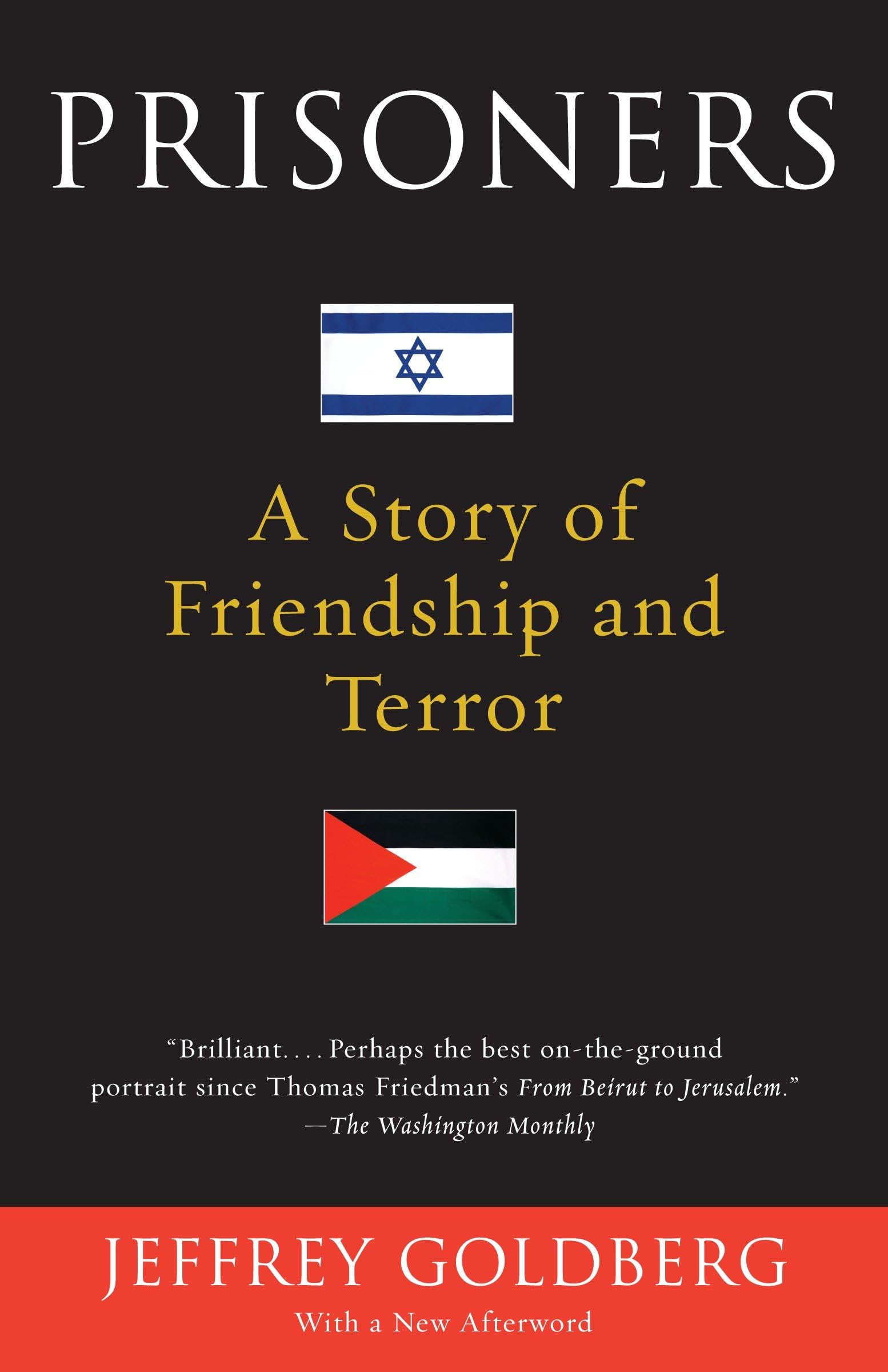



During the first Palestinian uprising in 1990, Jeffrey Goldberg – an American Jew – served as a guard at the largest prison camp in Israel. One of his prisoners was Rafiq, a rising leader in the PLO. Overcoming their fears and prejudices, the two men began a dialogue that, over more than a decade, grew into a remarkable friendship. Now an award-winning journalist, Goldberg describes their relationship and their confrontations over religious, cultural, and political differences; through these discussions, he attempts to make sense of the conflicts in this embattled region, revealing the truths that lie buried within the animosities of the Middle East. “Revelatory.” — The New York Times “Fascinating, hilarious, terrifying. . . . The journey is riveting and well-wrought in a book that makes clear the confusing mess that is the Palestinian-Israeli conflict.”— The Chicago Tribune “Sensitive, forthright and perceptive . . . . A forceful reminder of how rewarding, and how difficult, discourse between Israelis and Palestinians can be.”— The Washington Post “Sharply observed and beautifully written. . . . A bracingly clear-eyed, deeply emotional and often humorous account. . . . Prisoners offers no easy answers but manages to inspire the rarest of commodities in the Middle East: hope.” — Los Angeles Times Jeffrey Goldberg is the Washington correspondent of The New Yorker; he was Middle East correspondent from 2000-2005. Previously he covered the Middle East for The New York Times Magazine. He has also written for The Forward, The Jerusalem Post, and The Washington Post. His awards include a National Magazine Award in Reporting, an Overseas Press Club Award for Human Rights Reporting, and selection as International Investigative Journalist of the Year by the International Consortium of Investigative Journalists. He served as a Public Policy Scholar at the Woodrow Wilson International Center for Scholars in Washington. He is married and has three children. Chapter One THE THIEF OF MERCY On the morning of the fine spring day, full of sunshine, that ended with my arrest in Gaza, I woke early from an uneven sleep, dressed, and pushed back to its proper place the desk meant to barricade the door of my hotel room. I unknotted the bedsheets I had tied together into an emergency escape ladder. Then I hid the knife I kept under my pillow, cleaned the dust from my shoes, and carefully unbolted the door. I searched the dark hall. There were no signs of imminent peril. Most people wouldn’t be so cautious, but I had my reasons, and not all of them were rooted in self-flattering paranoia. I was staying at the al-Deira hotel, a fine hotel, one of Gaza’s main charms. On hot nights, which are most nights, it brimmed over with members of haute Palestine, that small clique of Gazans who earned more than negligible incomes. The men smoked apple-flavored tobacco from water pipes; the women, their heads covered, drank strong coffee and kept quiet. By day the hotel was mostly empty. The hotels of Gaza had been full in the 1990s, during the long moment of false grace manufactured by the Oslo peace process. In 1993, Yitzhak Rabin and Yasser Arafat shook hands on the White House lawn, and it seemed as if the hate would melt away like wax. At that moment, even a pessimist could envision an orderly close to the one-hundred-year-long war between Arab and Jew. But this was now the spring of 2001, and we were six months inside the Palestinian Uprising, the Intifada, the second Intifada, this one far more grim than the last. The land between the Mediterranean Sea and the River Jordan was once again steeped in blood: Arabs were killing Jews, and Jews were killing Arabs, and hope seemed to be in permanent eclipse. Optimists, and I included myself in this category, felt as if we had spent the previous decade as clueless Catherines, gazing dumbly from our carriages at the Potemkin village of Oslo. So the Deira did negligible business, except after a noteworthy killing or a particularly sanguinary riot, which is the specialty of the heaving, thirsty demi-state of Gaza. Then, the press corps would colonize the Deira; reporters would come to catalogue the dead, and slot the deaths into whatever cleanly explicable narrative was in current favor. The hallway was dim, and empty. I went downstairs to a veranda overlooking the Mediterranean, which shimmered in the early sunlight. Arab fishing boats spread their nets across the smooth water. An Israeli gunboat cast a more distant shadow. My breakfast companion was waiting for me. He rose, and we kissed on both cheeks. His nom de guerre was Abu Iyad, and he was an unhappy terrorist who I hoped would share with me illuminating gossip about Hamas—of which he was a member—and Palestine Islamic Jihad, two fundamentalist Muslim groups whose institutional focus is the murder of Jews. I bought him a plate of hummus and cucumbers. Abu Iyad was a thin man, his face hollow and creased. His nai