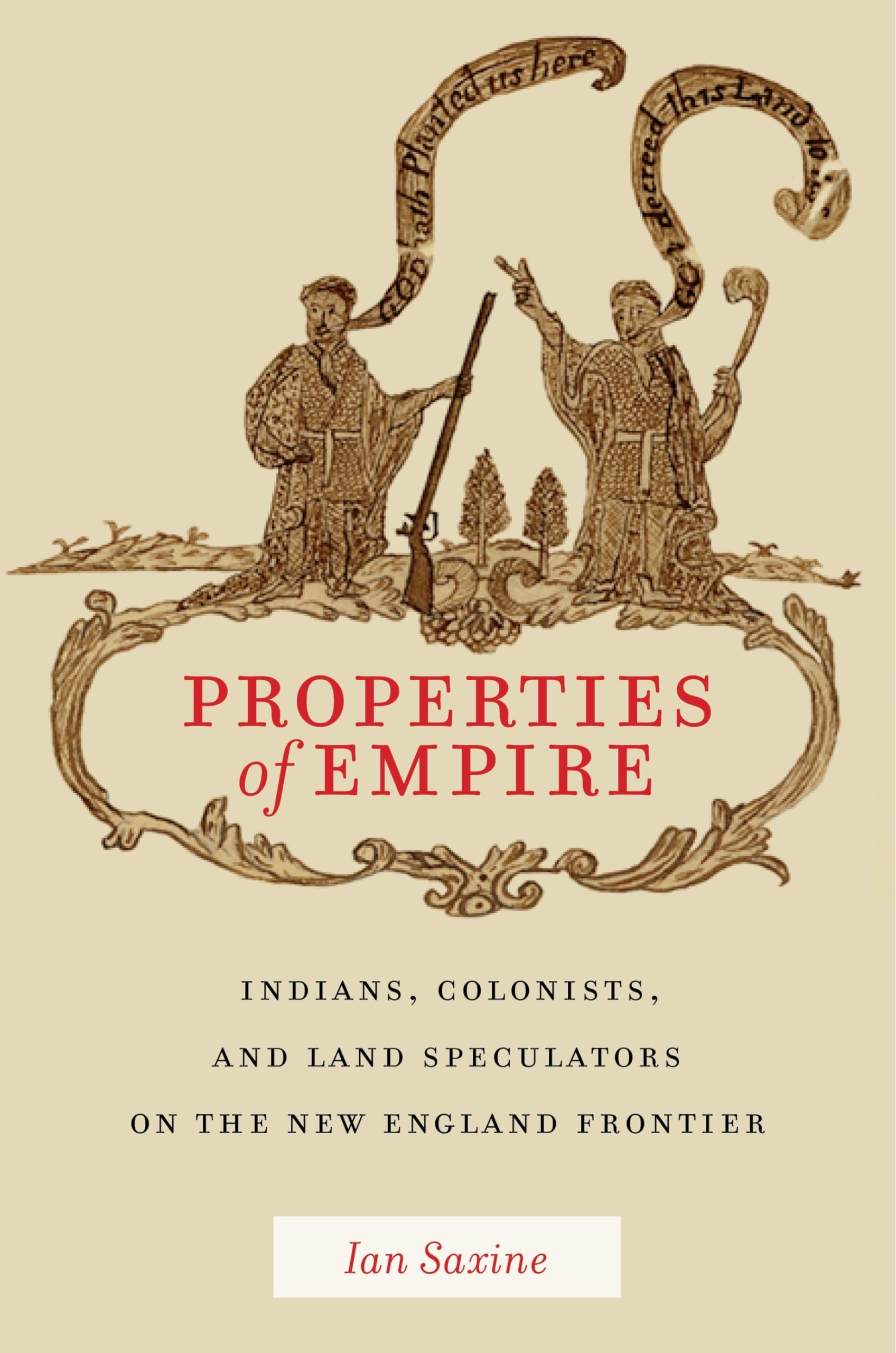
Properties of Empire: Indians, Colonists, and Land Speculators on the New England Frontier (Early American Places, 9)
$33.49
by Ian Saxine



A fascinating history of a contested frontier, where struggles over landownership brought Native Americans and English colonists together Properties of Empire shows the dynamic relationship between Native and English systems of property on the turbulent edge of Britain’s empire, and how so many colonists came to believe their prosperity depended on acknowledging Indigenous land rights. As absentee land speculators and hardscrabble colonists squabbled over conflicting visions for the frontier, Wabanaki Indians’ unity allowed them to forcefully project their own interpretations of often poorly remembered old land deeds and treaties. The result was the creation of a system of property in Maine that defied English law, and preserved Native power and territory. Eventually, ordinary colonists, dissident speculators, and grasping officials succeeded in undermining and finally destroying this arrangement, a process that took place in councils and courtrooms, in taverns and treaties, and on battlefields. Properties of Empire challenges assumptions about the relationship between Indigenous and imperial property creation in early America, as well as the fixed nature of Indian “sales” of land, revealing the existence of a prolonged struggle to re-interpret seventeenth-century land transactions and treaties well into the eighteenth century. The ongoing struggle to construct a commonly agreed-upon culture of landownership shaped diplomacy, imperial administration, and matters of colonial law in powerful ways, and its legacy remains with us today. " Properties of Empire makes an impressive contribution to this corpus in its attention to the intricacies of colonial land grabbing in northern New England and its appreciation of Wabanaki savviness in weathering and channeling the storm." ― William and Mary Quarterly "Documents a general settler colonialist occupation of indigenous space, but again one impeded by complex intercultural and interracial entanglements. In specific, he addresses the transition of the “Dawnland”―the frontier of what is now central Maine― from Wabanaki to British colonial possession from the late seventeenth century through the first half of the eighteenth." ― Early American Literature " Properties of Empire is a fine-grained cross-cultural study of trying “to bring order to a turbulent world.” The process, as Saxine conceptualizes it, was a multifaceted “conversation frequently marked by misunderstanding, deception, and even violence.” The book’s framework takes Wabanaki actors seriously as coproducers of legal and property regimes, rather than situating them as more passive respondents to colonial forces and ideologies; and it productively complicates what the “colonial” dimension entailed, highlighting dissonances within Anglo-American society and power structures." -- Christine DeLucia ― Enterprise & Society "Saxine is an admirably careful historian, attuned to the complexities and contingencies of historic conditions and human decisions… Properties of Empire is an inventive and important contribution to the dauntingly rich literature on early New England, and a fascinating case study to add to larger discussions of property formation and land ownership across North America." ― Reviews in American History "A much needed and long overdue corrective ... greatly adding to our understanding of the complex interplay of forces where Native Americans and Europeans interacted in borderlands ... Properties of Empire should be the standard work on land issues in Maine in the seventeenth and eighteenth centuries." ― History: Reviews of New Books "An intriguing, thought provoking, and important [book] that recognizes the importance of land issues in Indian Country today through close historical work on the ideologies that surround land ownership in previous centuries." ― Christopher Bilodeau, Dickinson College " Properties of Empire clearly reflects the authors deep immersionandstrong understanding of Wabanaki and Anglo-American social, and cultural patterns. Asignificant contribution to the field of Native-colonial relations." ― Daniel Mandell, Truman State University "It is precisely his focus on local circumstances that gives Saxine’s work its value. Paying close attention to the intricate web of arrangements that determined the possession of territory on the Anglo-Wabanaki frontier, he puts to rest the notion that the colonial conquest of the land was inevitable or uncontested. Scholars of other borderland regions in North America would do well to follow his example." ― Social History "Ian Saxine provides readers with an excellent history of the Indians, colonists, and land speculators on the New England frontier … Properties of Empire is a valuable resource for persons interested in early New England history and for persons involved in the ongoing movement, both within the United States and internationally, to repudiate the doctrine of discovery based on European power