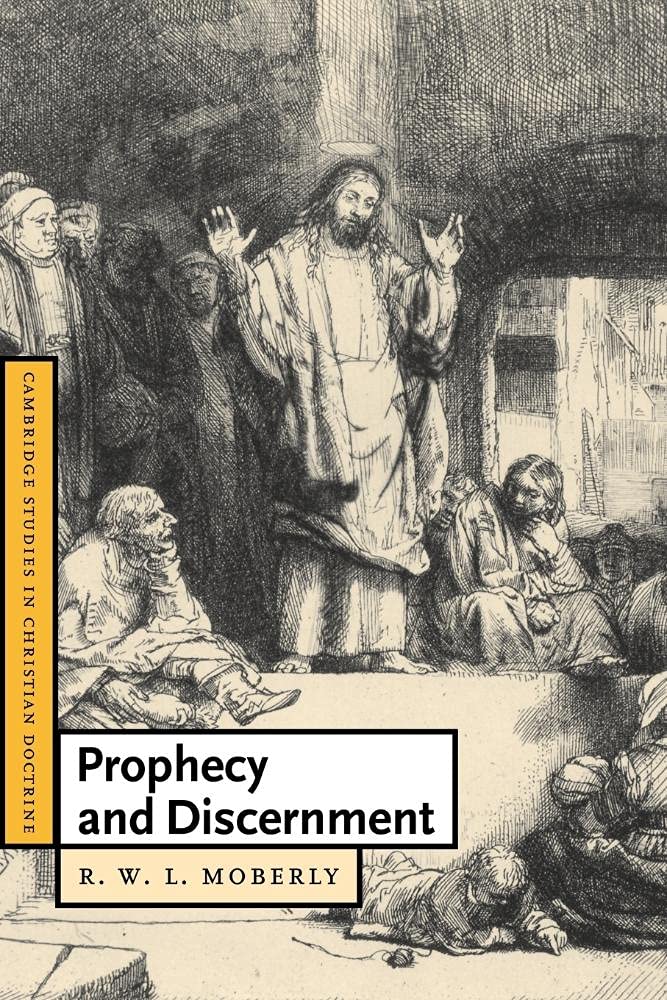
Prophecy and Discernment (Cambridge Studies in Christian Doctrine, Series Number 14)
$48.59
by R. W. L. Moberly



If people claim to speak for God, what enables us to know when to credit or discredit the claim? This book analyses the criteria for discernment of prophetic authenticity in the Old Testament, and for discernment of apostolic authenticity in the New Testament; and also considers their validity and viability in a contemporary context. After explaining the biblical concept of prophetic and apostolic speech on God's behalf, Moberly offers close readings of the biblical text so as to bring to life the distinctive voices, especially those of Jeremiah and St Paul, which speak of critical discernment. He addresses contemporary difficulties with the whole idea that humans might speak for God and analyses the nature of authentic spirituality. Throughout the discussion the premise is that the biblical treatment of discernment illuminates the fundamental human issue of the need to know who may be trusted and why. "The book demonstrates many strengths, particularly M.'s gift for theological interpretation that nonetheless attends scrupulously to technical questions. He writes and comments fluently on both the OT and the NT, with soundly firm theological judgment - a rare, commendable combination!...Moberly has...advanced the discourse of theological interpretation significantly with this book, both by exemplifying an elegantly sensitive reading of Scripture and by elucidating a constructive framework for assessing theological interpretation." A.K.M. Adam , The Catholic Biblical Quarterly This book examines the criteria for discernment of prophetic and apostolic authenticity in the Bible and contemporary contexts. Dr R. W. L. Moberly is Reader in Theology at the University of Durham. He is author of The Bible, Theology and Faith: A Study of Abraham and Jesus (2000), the fifth volume in the Cambridge Studies in Christian Doctrine series.