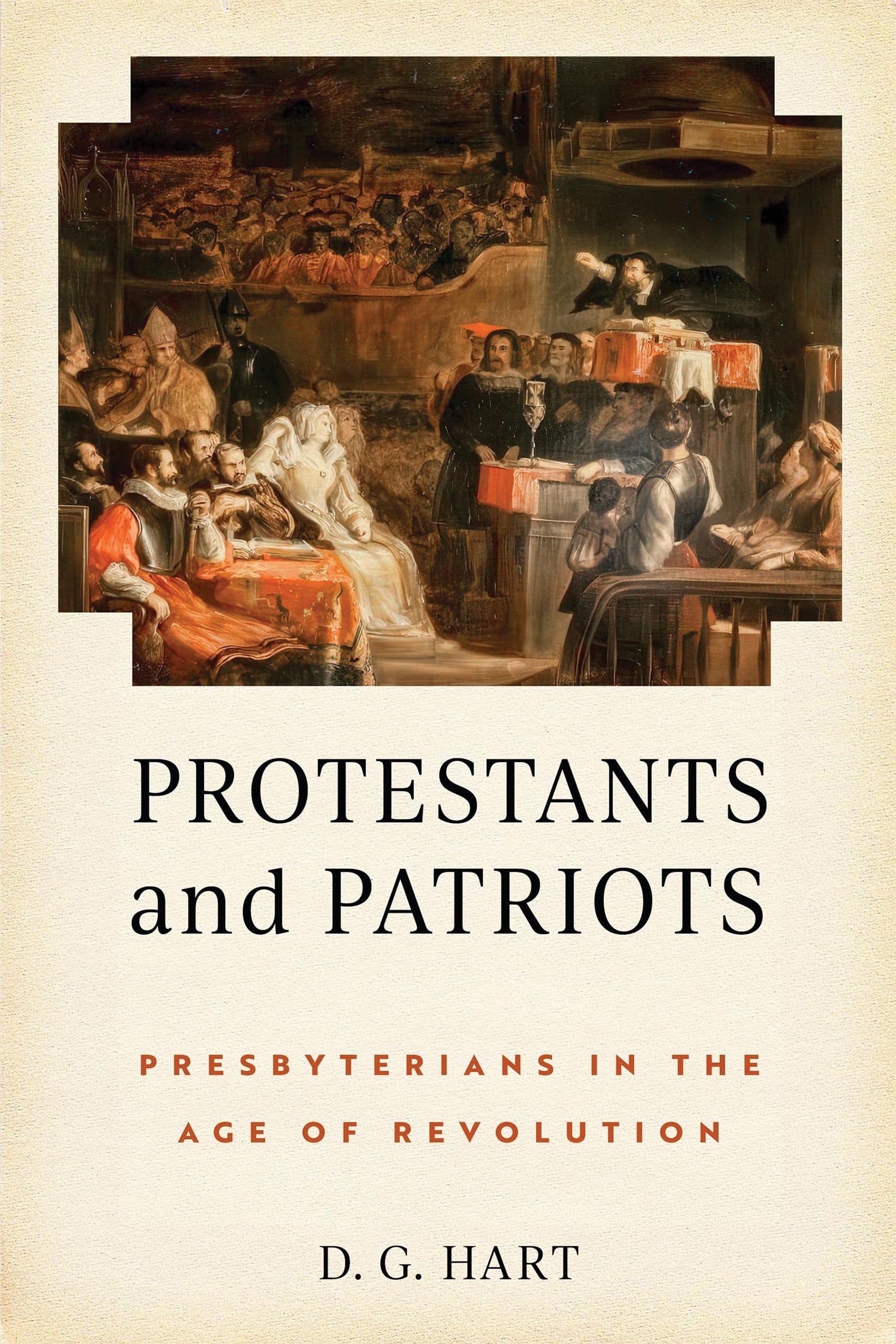



D. G. Hart chronicles the transatlantic history of Presbyterianism as a political movement from the sixteenth to the nineteenth centuries, tracing its evolution into a modern, liberal religion. Historians have often described Presbyterianism as a political orientation that leads to rebellion and revolution. D. G. Hart interrogates this assumption, presenting instead a complex narrative of Presbyterian understanding of political authority and the role of the church in society. Synthesizing Presbyterian developments in England, Scotland, Ireland, the United States, and Canada from 1560 to 1870, Hart compellingly explains first why Presbyterianism was politically disruptive in Britain for 150 years and then how these Protestants adjusted to liberal democracy. The truly revolutionary side of Presbyterianism took place during the religious and parliamentary wars of Scotland and England during the 1630s and 1640s―almost 150 years before the American Revolution. After 1640, Presbyterians remained politically assertive, but switched from state churches and covenanted monarchs to civil and religious liberties and republican government. Even so, fallout from the age of revolution extended to Presbyterian involvement in the American Founding and the formation of the Dominion of Canada. Ultimately, as a rigorous faith that refused political compromise, Presbyterianism unintentionally laid the groundwork for religious disestablishment and religious freedom. In so doing, Presbyterians became unlikely defenders of liberal democracy. “Protestants in early modern England and Scotland and their heirs in the United States and Canada wrestled with the relationship between church and state in ways that spilled over into civil politics. D. G. Hart has given us the fullest history of these episodes and, as well, an intriguing emphasis on ‘Presbyterians’ as fomenters of the American Revolution.” ―David D. Hall, author of The Puritans “ Protestants and Patriots opens up a fascinating history of Presbyterianism. This book is comparative religious and political history at its best.” ―Mark A. Noll, author of America’s Book D. G. Hart is professor of history at Hillsdale College. He is the author of many books, including, most recently, Benjamin Franklin: Cultural Protestant . For most Presbyterians, the road to church government by elders and assemblies rather than bishops, ran through Geneva. This was an odd circumstance for English and Scottish Protestants since Geneva was a republic with no real analogy to monarchy. Church reform in Geneva, like most of the Protestant world, came at the behest of civil magistrates who had various motives―some devout, some earthly―for having a church free from Rome’s oversight. But civil government in Geneva was through a city council, a political body that has little hold in the West’s political imagination compared to the glories of the Palace of Versailles, Buckingham Palace, the Hofburg, or even the White House. Rarely do members of city councils emerge as national leaders or empire builders. In Geneva’s case, Ami Perrin (1500-1561), who functioned as the city’s mayor and had a thorny relationship with John Calvin, colored within the lines of urban politics. One of his notable interventions in international affairs came in 1546 when fears that Charles V would invade the city because of an influx of Protestant refugees. Perrin called on a French garrison to secure Geneva’s integrity. That act of foreign policy landed Perrin in a trial for treason. The courts acquitted the mayor. But the incident was part of a larger struggle between Calvin’s ideals for a reformed church and native Genevans’ preference for less strict norms in personal and civic righteousness, a position nicknamed “libertine” by the devout. Friction between church and civil government, Calvin and Perrin, may have resembled remotely what transpired in England and Scotland between Presbyterians and Tudor and Stuart monarchs, but pastors taking mayors to court was not the lesson that Scottish and English Protestant exiles learned in Geneva. John Knox sojourned in the city twice and led to his often quoted observation about Geneva’s reformed church and godly society, which came during his second stay. His first visit had occurred in 1554, when Knox was forty years old, during a time when many English Protestants were in exile thanks to Mary Tudor’s religious policies. Knox was not there long since a group of English Protestants in Frankfurt called him to be their pastor. There amidst antagonisms over liturgy among English-speaking Protestants, Knox was in the rare position of conciliator. After a return to Scotland for church reform, in 1556 he received a call to Geneva from a congregation of English-speaking exiles. He was pastor at that church with Calvin’s blessing for three years before his final return to Scotland and the official start of the Scottish Reformation. In Geneva Knox paid more attention to texts and orders of