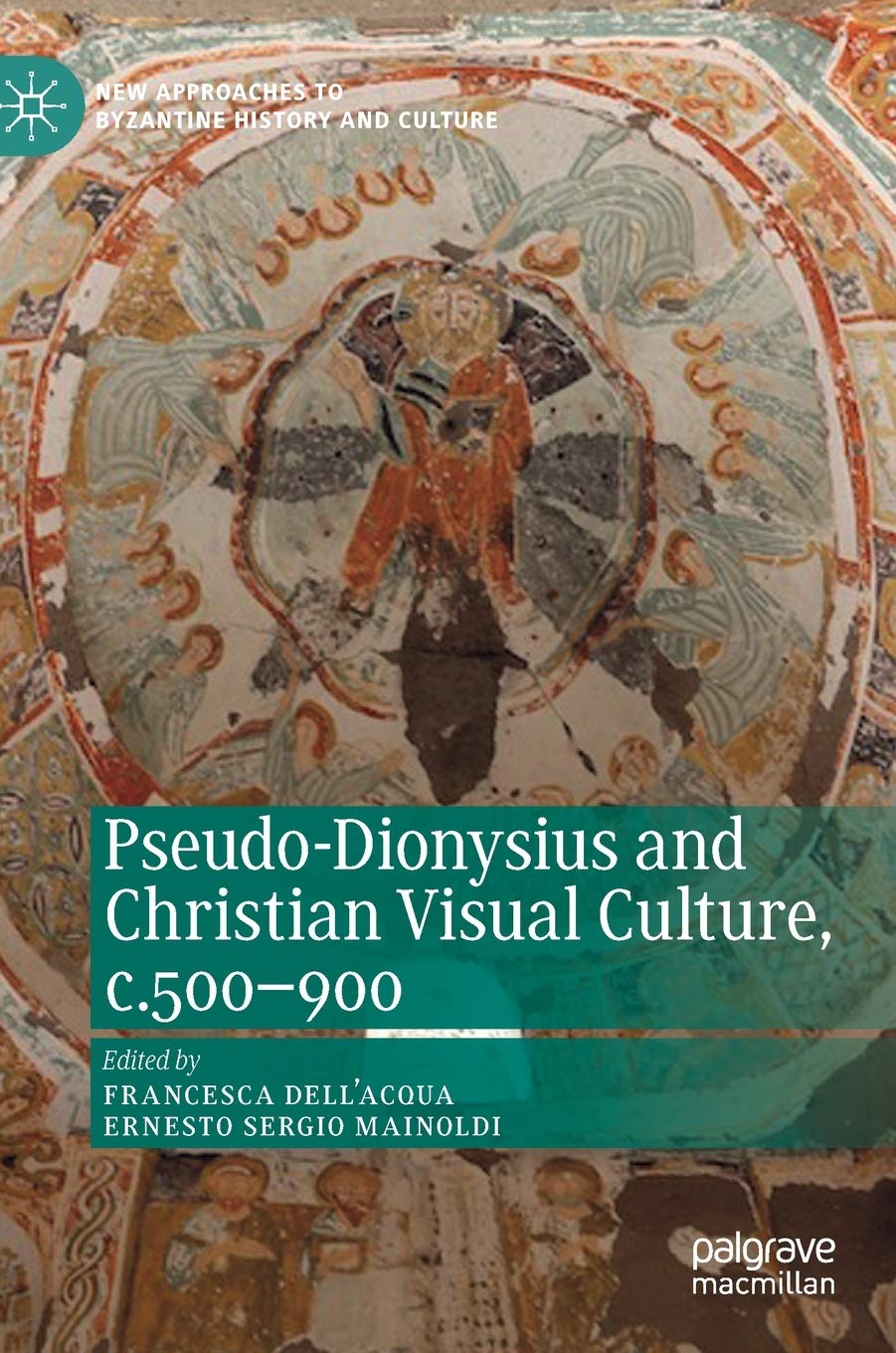
Pseudo-Dionysius and Christian Visual Culture, c.500–900 (New Approaches to Byzantine History and Culture)
$131.57
by Francesca Dell’Acqua



This book uses Pseudo-Dionysius and his mystic theology to explore attitudes and beliefs about images in the early medieval West and Byzantium. Composed in the early sixth century, the Corpus Dionysiacum, the collection of texts transmitted under the name of Dionysius the Areopagite, developed a number of themes which have a predominantly visual and spatial dimension. Pseudo-Dionysius’ contribution to the development of Christian visual culture, visual thinking and figural art-making are examined in this book to systematically investigate his long-lasting legacy and influence. The contributors embrace religious studies, philosophy, theology, art, and architectural history, to c onsider the depth of the interaction between the Corpus Dionysiacum and various aspects of contemporary Byzantine and western cultures, including ecclesiastical and lay power, politics, religion, and art. “This highly sophisticated collection of essays reveals the intricacies and relevance of (Pseudo-) Dionysius’ thoughts for the church, understood both as a community of the faithful and a place of worship. Interdisciplinary but focused, these erudite essays confirm the semantic and visual complexities of Dionysius’ concepts.” - Jelena Bogdanović, Associate Professor, Iowa State University, USA “This important study of the writings of Pseudo-Dionysius demonstrates for the first time the visual thinking at the core of his theology and how it decisively shaped the art and architecture of Late Antiquity. By putting the visual dimension at the foreground, this compelling book builds a bridge that connects our present culture of the image to the past.” - Bissera V. Pentcheva, Professor of Art History, Stanford University, USA “ This book is a welcome addition to the study of the Areopagite’s influence onChristian iconography and aesthetics. Across various media and discourses, Dionysius’s unique contribution to the Byzantine theology of the image is presented in a series of richly perceptive and constructive readings.” - Fr Maximos Constas, Senior Research Scholar, Holy Cross School of Theology, USA This book uses Pseudo-Dionysius and his mystic theology to explore attitudes and beliefs about images in the early medieval West and Byzantium. Composed in the early sixth century, the Corpus Dionysiacum, the collection of texts transmitted under the name of Dionysius the Areopagite, developed a number of themes which have a predominantly visual and spatial dimension. Pseudo-Dionysius’ contribution to the development of Christian visual culture, visual thinking and figural art-making are examined in this book to systematically investigate his long-lasting legacy and influence. The contributors embrace religious studies, philosophy, theology,art, and architectural history, to c onsider the depth of the interaction between the Corpus Dionysiacum and various aspects of contemporary Byzantine and western cultures, including ecclesiastical and lay power, politics, religion, and art. Francesca Dell’Acqua is Assistant Professor of the History of Medieval Art at the University of Salerno, Italy, and holds the Habilitation to Associate Professorship in the History of Medieval Art (ASN 2012). Ernesto Sergio Mainoldi is Senior Research Associate of the History of Philosophy at the University of Salerno, Italy, and holds the Habilitation to Associate Professorship in the History of Medieval Philosophy and Medieval Latin Literature and Philology (ASN 2018).