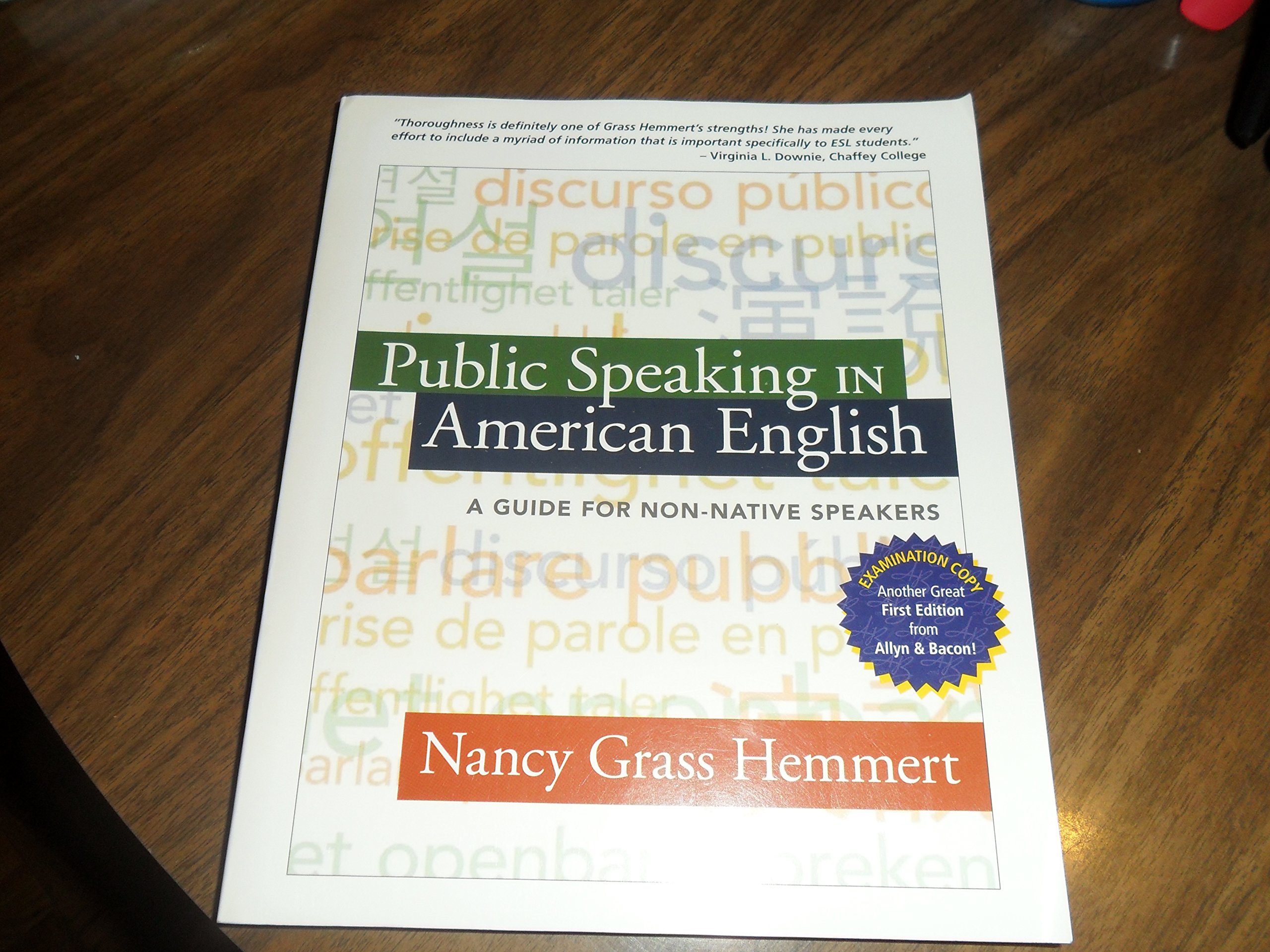
Public Speaking in American English: A Guide for Non-Native Speakers
$166.65
by Nancy Grass Hemmert



Through discussion of culture, language and diversity, Public Speaking in American English: A Guide for Non-native Speakers offers real world advice about overcoming the most pressing, relevant, and stress-provoking speaking issues non-native public speakers face. Designed specifically for non-native English speakers, this book follows the traditional public speaking textbook format, but also offers students a sense of the larger community of non-native English speakers, LEP, and ESL students who face the same struggles, challenges, and concerns. Every chapter is infused with discussion about the relevant cultural and linguistic issues the students are likely to face as well as concrete suggestions on how to address, compensate for and/or overcome these difficulties. Specific exercises and activities (both within the chapter and at the end of each chapter) allow readers to work on their own or in a group to improve their skills set. Additionally, the writing style, though easy to read, challenges the non-native English speaker without frustrating the reader. Public Speaking in American English: A Guide for Non-Native Speakers , 1/e Nancy Grass Hemmert, Santa Monica College Through discussion of culture, language, and diversity, Public Speaking in American English: A Guide for Non-Native Speakers offers real world advice about overcoming the most pressing, relevant, and stress-provoking speaking issues non-native students face. Designed specifically for non-native English speakers, this book follows the traditional public speaking textbook format, but also offers students a sense of the larger community of non-native English speakers, such as LEPand ESL students, who face the same struggles, challenges, and concerns. Every chapter is infused with discussion about the relevant cultural and linguistic issues students are likely to face as well as concrete suggestions on how to address, compensate for, and/or overcome these difficulties. Specific exercises and activities (both within the chapter and at the end of each chapter) allow students to work on their own or in a class to improve their skills set. Additionally, the writing style, though easy to read, challenges the non-native English speaker without frustrating the reader. Features: “Considering Culture” boxes in every chapter investigate the similarities and differences in public speaking within various U.S. co-cultures and other cultures around the world,helpingstudents find connections that go beyond language and aid in their understanding of public speaking. - “Considering Language” marginal notes explore the connections between public speaking topics and other languages , enabling students to weave together their understanding of their native language with public speaking. - “What Others Say” feature offers anecdotes, stories, quotations and quips from non-native public speaking students , expressing the distinctive challenges and experiences that affect the non-native English speaker and enabling students to see that they are a part of a unique community of speakers. - “Hint” features within every chapter reveal quick tips for planning, preparing, putting together, and practicing speeches. - “Try This” boxes in each chapter provide quick exercises and activities to reinforce the new content and allow students to put what they have learned into practice immediately. “Considering Culture” boxes in every chapter investigate the similarities and differences among public speaking within various U.S. co-cultures and other cultures around the world. These boxes will help students find connections that go beyond language and aid in their understanding of public speaking. “Considering Language” boxes explore the connections between public speaking topics and other languages. By learning about the etymologies of speech topics and/or translating speech topics from other languages students will learn how to weave together their understanding of their native language with public speaking. “What Others Say” offers anecdotes, stories, quotations and quips from former non-native English public speaking students, expressing the distinctive challenges and experiences that affect the non-English speaker and enabling students to see that they are a part of a unique community of speakers. “Hint” boxes within every chapter reveal quick tips for planning, preparing, putting together, and practicing speeches, making some of the steps to good speech writing and delivery easier for students to accomplish by offering short cuts to make the speech process more fun. “Click Here” sections in each chapter suggest Web based research links for further inquiry on public speaking, language and relevant cultural issues. Students will find the links useful for finding support and additional references to relevant topics, pronunciation guides, writing tips, etc. “Try This” sections in each chapter provide quick exercises and activities to reinforce the new content and