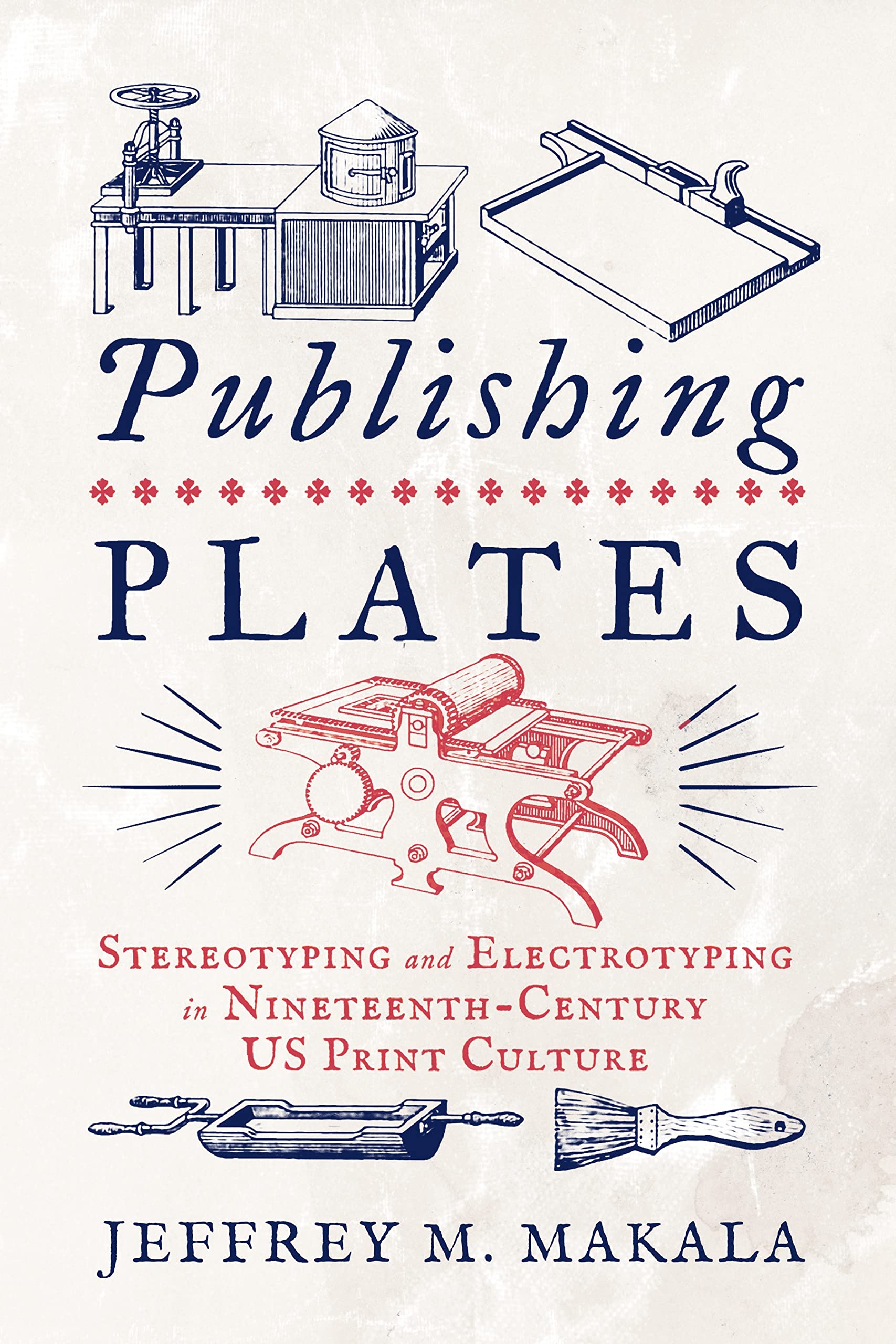
Publishing Plates: Stereotyping and Electrotyping in Nineteenth-Century US Print Culture (Penn State Series in the History of the Book)
$29.66
by Jeffrey M. Makala



First realized commercially in the late eighteenth century, stereotyping―the creation of solid printing plates cast from moveable type―fundamentally changed the way in which books were printed. Publishing Plates chronicles the technological and cultural shifts that resulted from the introduction of this technology in the United States. The commissioning of plates altered shop practices, distribution methods, and even the author-publisher relationship. Drawing on archival records, Jeffrey M. Makala traces the first uses of stereotyping in Philadelphia in 1812, its adoption by printers in New York and Philadelphia, and its effects on the trade. He looks closely at the printers, typefounders, authors, and publishers who watched small, regional, artisan-based printing traditions rapidly evolve, clearing the way for the industrialized publishing industry that would emerge in the United States at midcentury. Through case studies of the publisher Mathew Carey and the American Bible Society, one of the first publishers of cheap Bibles, Makala explores the origins of the American publishing industry and American mass media. In addition, Makala examines changes in the notion of authorship, copyright, and language and their effects on writers and literary circles, giving examples from the works and lives of Herman Melville, Sojourner Truth, Edgar Allan Poe, Henry David Thoreau, and Walt Whitman, among others. Incorporating perspectives from the fields of book history, the history of technology, material culture studies, and American studies, this book presents a rich, detailed history of an innovation that transformed American culture. “An impressive contribution to the history of the book in the United States.” ―Lucas Dietrich Journal of the Early Republic “The study examines sources that will be familiar to historians of the topic, yet it finds in them some things not often noticed, thereby offering a rousing example of what can happen when a scholar retests taken-for-granted histories with rigor, patience, creativity, and care.” ―Jordan Alexander Stein Journal of American History “ Publishing Plates makes an essential contribution to book historical, bibliographic, and literary historical scholarship. The book centers a transformative publishing technology that has been too often overlooked or under analyzed, convincingly demonstrating how that technology not only changed production practices but also reconceptualized core ideas about literary value and intellectual property. Makala’s book will be, I suspect, a touchstone for future work in nineteenth-century studies, particularly work that seeks to correlate shifts in media technology with cultural change, as well as critical bibliographic work in other periods that seeks to do the same.” ―Ryan Cordell Early American Literature “An important, interesting, and thorough contribution to our knowledge of stereotyping and electrotyping and the history of their industrial implementation and economic impact in America. Publishing Plates contains extensive references to original sources, comprehensive narrative histories of the Carey company and the American Bible Society, and fascinating anecdotes that flesh out the importance of stereotyping and electrotyping.” ―Peter Shillingsburg, author of Textuality and Knowledge: Essays A comprehensive exploration of the technology that transformed the world of publishing in the time of Herman Melville, Sojourner Truth, and Walt Whitman. Jeffrey M. Makala is Associate Director for Special Collections and University Archivist at Furman University. He is the coeditor of In Dogs We Trust: An Anthology of American Dog Literature .