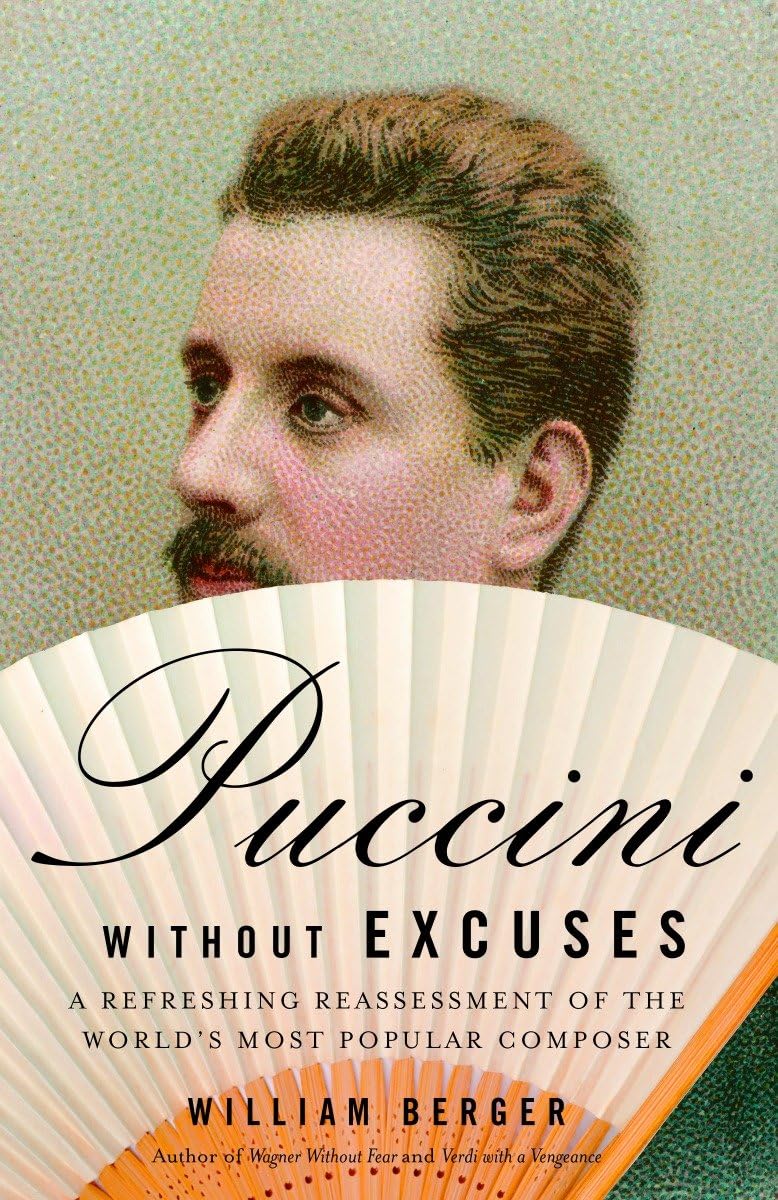
Puccini Without Excuses: A Refreshing Reassessment of the World's Most Popular Composer
$12.75
by William Berger



Puccini is the most beloved composer of opera in the world: one quarter of all opera performances in the U.S. are of his operas, his music pervades movie soundtracks, and his plots have infiltrated our popular culture. But, although Puccini’s art still captivates audiences and the popularity of such works as Tosca, La Bohéme, and Madama Butterfly has never waned, he has long been a victim of critical snobbery and cultural marginalization. In this witty and informative guide for beginners and fans alike, William Berger sets the record straight, reclaiming Puccini as a serious artist. Combining his trademark irreverent humor with passionate enthusiasm, Berger strikes just the right balance of introductory information and thought-provoking analysis. He includes a biography, discussions of each opera, a glossary, fun facts and anecdotes, and above all keen insight into Puccini’s enduring power. For anyone who loves Puccini and for anyone who just wonders what all the fuss is about, Puccini Without Excuses is funny, challenging, and always a pleasure to read. INCLUDES: • Why Puccini’s art and its message of hope is crucial to our world today • How Anglo audiences often miss the mythic significance of his operas • The use of his music as shorthand in films, from A Room with a View to Fatal Attraction • A scene-by scene analysis of each opera • A guide to the wealth of available recordings, books, and videos William Berger was born in California and studied Romance languages and music at the University of California at Santa Cruz. He worked for five years at the San Francisco Opera Company, where he acquired for the company’s recorded music collection. He is the author of Wagner Without Fear: Learning to Love—and Even Enjoy—Opera’s Most Demanding Genius and Verdi With a Vengeance: An Energetic Guide to the Life and Complete Works of the King of Opera. He is a frequent lecturer and radio commentator and has recently been a regular host for New York Public Radio’s Overnight Music. He has written libretti, performance pieces, and articles on a wide variety of topics including architecture, religion, and, of course, music. He is a music host for WNYC radio and lives in New York. Part One the case of puccini Why Puccini? Why Now? An Introduction Without Puccini, there is no opera; without opera, the world is an even drearier place than the evening news would have us think. This book is aimed, firstly, at people who would have trouble agreeing with either part of that sentence. To begin with, there is the issue of opera in general. I do not hold with those who believe that opera is a dying art form. The same things have been said about opera almost since its invention. Opera was said to be doomed when the castrati disappeared in the eighteenth century, when the Napoleonic Wars shut down the conservatories in the early nineteenth century, when tonality was redefined in the twentieth century, and so on. Movies, television, radio, and the Internet were each supposed to nail the coffin lid shut, and all of those media have become part of the opera story. If opera were mortal, it would have died by now. Yet opera has been neatly contained in an obscure corner, thought to be only for, ahem, "certain" people, and this riles me. I believe opera is the most important art form. It is not the most important because, as is always said, it subsumes every other art form (which happens to be true), but because at its best it has the ability to probe deeper into the human experience than any other art form. There are never any easy answers in opera, and it promotes critical thinking. This is why fans are always said to be so passionate. While I can celebrate the high profile of opera in America today, I wish it were even higher-much higher. There are, however, impediments to raising this profile. Opera will always be considered a foreign art form, and we see all our national neuroses about things foreign in our approach to opera. It will always be marginalized to some degree. Opera continues to attract the elitist label. That there are rich people who support and attend the opera is beyond question, but I must wonder why it is that opera remains the single great signifier of the effete elite. You have all seen the images on television: overdressed, ancient, white audiences wielding lorgnettes while overfed woman onstage hits earsplitting high note. It doesn't matter that this image has little basis in reality-it exists and is with us forever. Had there never been this "opera house of the imagination," it would have been necessary to invent it. And the image continues to keep opera, and all its considerable power, away from many, many people. Conversely, the arts marketing people have been working overtime for a generation or so to combat this idea, and in doing so have perhaps overstepped their bounds. Opera is not elite, they have maintained. It's fun, and (worst of all), it's good for you, like cultu