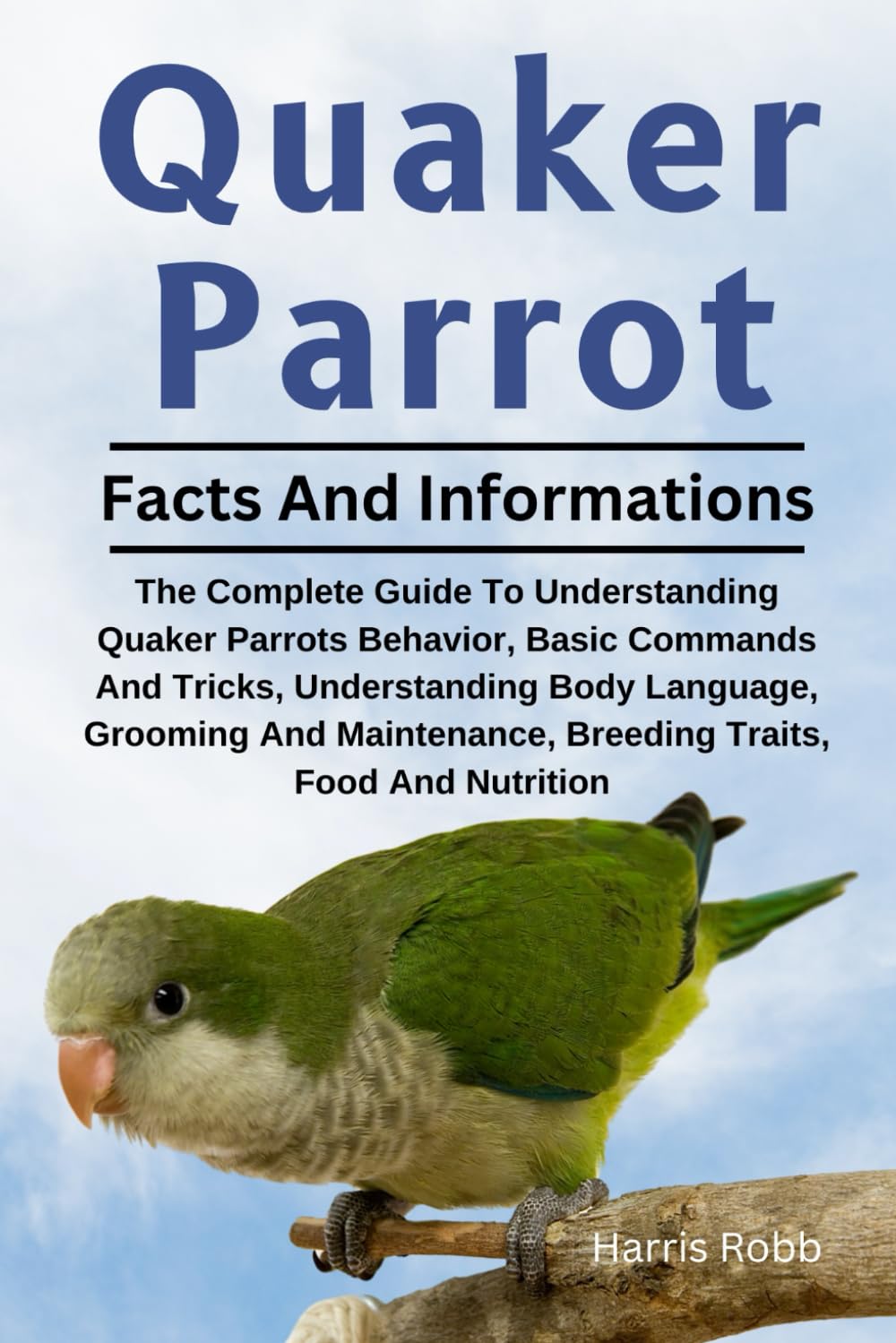
QUAKER PARROT: The Complete Guide To Understanding Quaker Parrots Behavior, Basic Commands And Tricks, Understanding Body Language, Grooming And
$13.99
by Harris Robb



Quaker parrots, also known as monk parakeets (Myiopsitta monachus), are small to medium-sized parrots known for their intelligence, vibrant personalities, and striking green and gray plumage. Native to South America, these birds have captured the hearts of pet owners worldwide, making them one of the most popular parrot species for companionship. Below, we explore their history, unique traits, and why they are an excellent choice for a pet. History and Origin Quaker parrots are native to the subtropical and temperate regions of South America, specifically in Argentina, Brazil, Paraguay, Uruguay, and Bolivia. They thrive in woodlands and savannas, often building their nests in tall trees or on man-made structures. Unlike most parrots, Quakers are unique in that they construct large, elaborate communal nests from sticks, resembling apartment complexes. These nests can house multiple pairs and are a defining characteristic of the species. The birds earned the name "Quaker" or "monk" due to the grayish feathers on their chest and face, which resemble the draped robes of monks. In the wild, their sociable nature and adaptability have allowed them to establish feral colonies in other countries, including the United States, Europe, and Asia. These colonies often develop around urban or suburban areas, where food and shelter are readily available. The export of Quaker parrots to the United States began in the mid-20th century, and they quickly became a favored pet due to their manageable size, affordability, and engaging personalities. However, their ability to form feral colonies led to bans or restrictions on ownership in some areas, as escaped or released birds were considered a potential agricultural threat. Unique Characteristics Quaker parrots stand out among parrot species for several reasons: Intelligence and Problem-Solving Skills Quakers are incredibly smart and curious. They are quick learners, capable of mimicking human speech and sounds, performing tricks, and even solving puzzles. Their intelligence makes them entertaining companions but also requires consistent mental stimulation to prevent boredom and behavioral issues. Social and Affectionate Nature These parrots thrive on social interaction and can form strong bonds with their human caretakers. They often seek attention and enjoy being involved in daily activities, making them a joy to have around. However, their attachment can also lead to possessiveness, requiring careful training and boundaries. Unique Nest-Building Behavior Unlike most parrots, Quakers are natural engineers, constructing large, intricate nests in the wild. Even as pets, they often display nest-building instincts by rearranging toys or shredding materials in their cages. Vocal Abilities Quakers are excellent mimics and can develop extensive vocabularies. They often replicate words and phrases with remarkable clarity, making them a favorite for bird enthusiasts who enjoy interactive pets. Resilience and Adaptability In the wild, Quakers can adapt to various climates and environments, including urban areas. As pets, this adaptability translates to a bird that is relatively hardy and easy to care for compared to other parrot species.