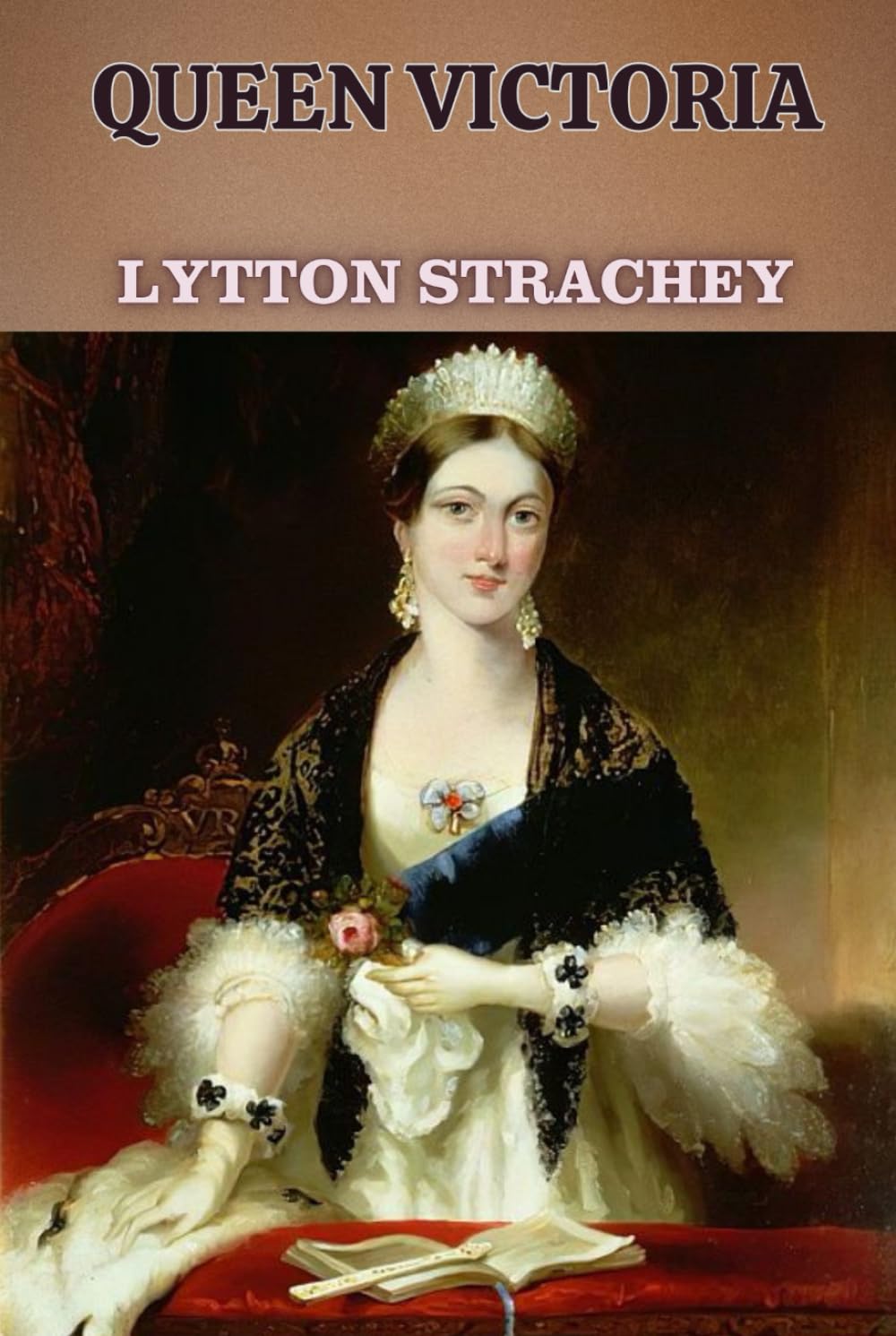



"Queen Victoria" by Lytton Strachey , published in 1921 , is a biographical work that explores the life and reign of one of Britain's most iconic monarchs, Queen Victoria . Strachey, a prominent member of the Bloomsbury Group and a pioneer of the modern biography, brings his characteristic wit, psychological insight, and critical perspective to the subject, offering a fresh and unconventional portrayal of the queen. Overview Strachey's "Queen Victoria" covers Victoria's life from her early childhood and accession to the throne at the age of 18, through her long reign of over 63 years, and ending with her death in 1901. The biography traces the personal and political events that shaped her character and her role as the symbolic figurehead of the British Empire during a period of immense social, economic, and political change. The book is divided into several chapters that chronologically examine different phases of Victoria's life, including her marriage to Prince Albert , her complex relationships with her prime ministers (such as Lord Melbourne , Benjamin Disraeli , and William Gladstone ), and her life as a widow following Albert's death in 1861. Themes and Focus The Human Side of Royalty : Strachey’s biography moves away from traditional hagiographic portraits of monarchs and instead delves into Queen Victoria’s emotional and psychological complexities. He portrays her not just as a powerful figure but as a woman with personal challenges, emotions, and contradictions. Her passionate love for Prince Albert, her domineering nature, and her deep attachment to her role as queen are all presented with nuance. - Victoria's Relationship with Prince Albert : One of the central themes of the book is the dynamic between Victoria and Prince Albert , her beloved consort. Strachey depicts Albert as the intellectual, moral force behind the throne, shaping Victoria's views and actions. Their marriage is portrayed as a deep emotional partnership, but also one in which Victoria was heavily influenced by Albert's ideals and vision for the monarchy. - The Evolution of Victoria’s Role : Strachey emphasizes how Victoria evolved from a politically involved and assertive young queen to a more reticent , symbolically significant figurehead after Albert's death. The biography explores how Victoria’s influence changed throughout her reign, especially in her relationships with the many prime ministers who served under her. - The Victorian Era : Strachey provides a rich backdrop of the Victorian era , a time of great transformation in Britain and the world. He touches upon the expansion of the British Empire, the Industrial Revolution, and significant political reforms, all of which occurred during Victoria's reign. While the queen is often seen as the embodiment of the era’s values—duty, moral propriety, and stability—Strachey presents her as a figure sometimes at odds with the forces of change. - Psychological Portrait : Strachey uses his sharp psychological insight to dissect Queen Victoria's character. He presents her as both stubborn and vulnerable , devoted yet possessive , imperious yet deeply emotional . Strachey’s analysis humanizes Victoria and makes her a more relatable and complex figure than the stiff, formal image often associated with her. "Queen Victoria" by Lytton Strachey is an engaging, sharp, and humanizing portrayal of one of Britain’s most influential monarchs. Through his psychological approach and critical perspective, Strachey offers readers a unique window into the personal life of Queen Victoria while also painting a broader picture of the social and political landscape of 19th-century Britain.