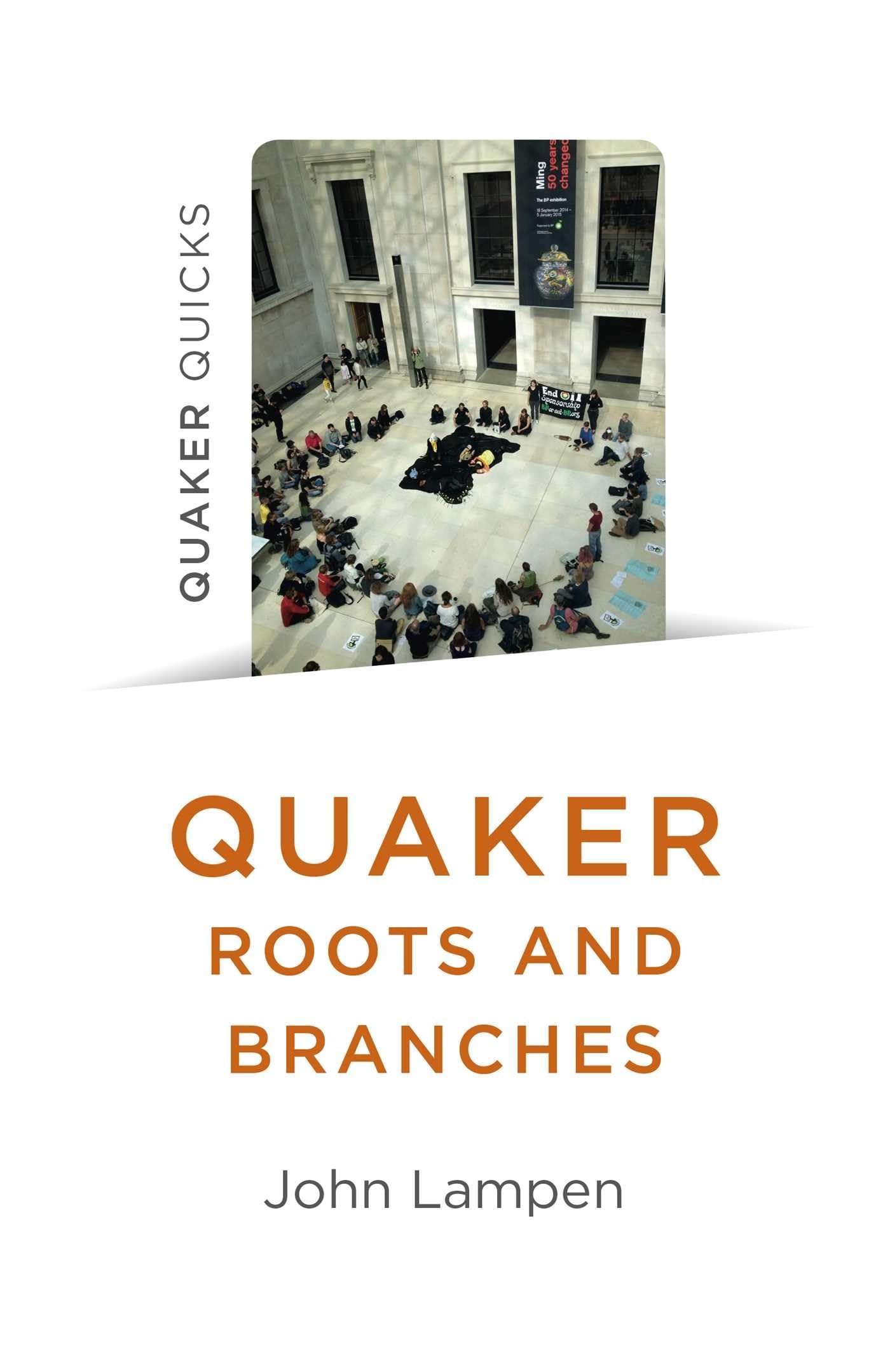



Quaker Roots and Branches explores what Quakers call their “testimonies” - the interaction of inspiration, faith and action to bring change in the world. It looks at Quaker concerns around the sustainability of the planet, peace and war, punishment, and music and the arts in the past and today. It stresses the continuity of their witness over three hundred and sixty-five years as well as their openness to change and development. John Lampen is a Quaker author with experience of peacebuilding in Northern Ireland, South Africa, former Soviet Union, former Yugoslavia and elsewhere. He is the author of Twenty Questions about Jesus, Mending Hurts and The Peace Kit. Quaker Roots and Branches By John Lampen John Hunt Publishing Ltd. Copyright © 2017 John Lampen All rights reserved. ISBN: 978-1-78535-834-0 Contents Introduction, 1, The Environment, 3, War and Peace, 15, Punishment, 24, The Arts, Especially Music, 38, Experience, Belief and Theology, 48, Glossary, 61, CHAPTER 1 The Environment In 2011 Quakers in Britain made a commitment to become a low-carbon, sustainable community, living out this promise in their personal lives and as a faith community. They began campaigning for climate and energy justice, and to build a fairer economy which is not powered by fossil fuels. We tend to think of this as a recent concern*, but much of it goes back to our origins. It is something like a jigsaw, for which earlier generations fashioned the pieces. Now modern science has documented the connections between things which we used to address separately. We can see a larger picture as the pieces are put together. The Natural World George Fox, the founder of the Quaker movement, says that as a child of eleven he realised "that I might not eat and drink to make myself wanton but for health, using the [animal and vegetable] creatures ... as servants in their places, to the glory of him who hath created them." Later mystical experiences convinced him that he was a part of the whole natural world. He sensed he was given an intuitive knowledge of the nature and virtues of plants, and wondered if he was destined to take up medicine. Later, when Quakers began to found schools, he asked for them to have herb gardens, to instruct the boys and girls in "whatsoever things were civil and useful in the creation." This sense of unity with the creation was part of the original Quaker vision, shared by many of his comrades. They saw it as part of God's bounty to humanity and were deeply concerned that we should not abuse it. George Fox criticised the rich as "madmen that destroy the creation and the creatures of God upon your lusts!" And William Penn wrote: "The world represents a rare and sumptuous palace, mankind the great family in it ... the heavens adorned with so many glorious luminaries; and the earth with groves, plains, valleys, hills, fountains, ponds, lakes and rivers; and a variety of fruits and creatures for food, pleasure and profit. In short, how noble a house [God] keeps, and the plenty and variety and excellency of his table: his order and seasons, and suitableness of every time and thing. But we must be as sensible ... what careless and idle servants we are, and how short and disproportionate our behaviour is to his bounty and goodness." A century later in America John Woolman reverenced nature, working in his orchard and urging us not to "lessen that sweetness of life in the animal creation, which the great Creator intends for them under our government." Nature's balance demonstrated God's intention for us. Perhaps he had learnt from the Native Americans he met that if we take from nature what we need, it renews itself; but if we take more, we destroy it, and that is a theft from our descendants. He showed how the economics of greed distorted the human environment too by diverting the efforts of poorer men into producing unnecessary and indeed harmful goods, which they could not afford to enjoy themselves. He urged a moral solution: to open ourselves to the love which had provided such bounty and intended it for all. "Divine love imposeth no rigorous or unreasonable commands, but graciously points out the spirit of brotherhood and way to happiness." This can only be found when "we go forth out of all that is selfish." One of the things which struck Thomas Clarkson, the British hero of the anti-slavery movement and a sympathetic observer of Quakers, was their kindness to their own animals. He mentions their aversion to hunting, hawking and shooting because of the cruelty involved. At a time when such ideas were almost unknown, "Quakers are of opinion that rights and duties have sprung up — rights on behalf of animals and duties on the part of men — and that breach of these duties, however often or however thoughtlessly it takes place, is a breach of a moral law." Quaker Science: Medicine Arthur Raistrick wrote that in the 17th century, "Alongside the religious questings and searchin