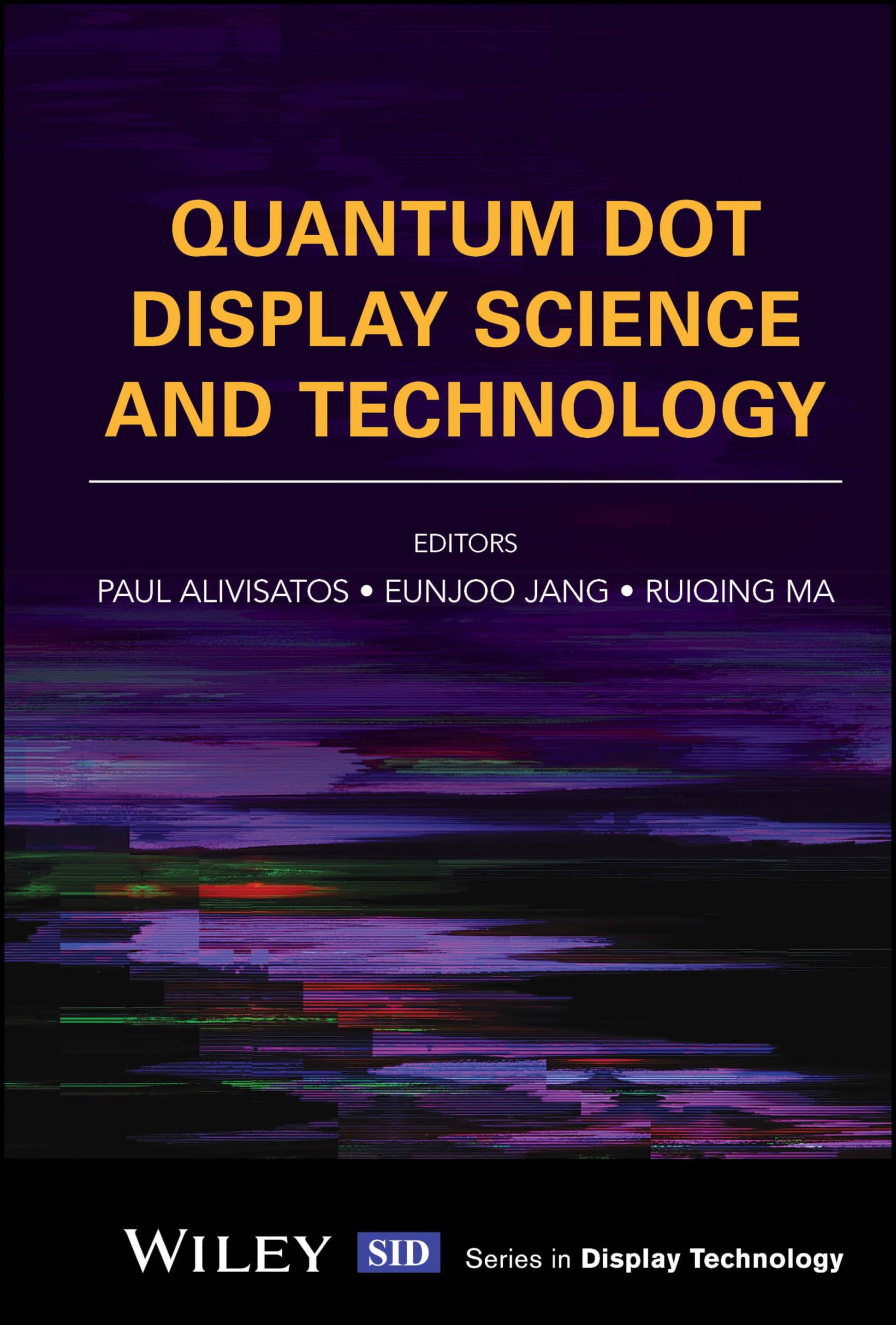
Quantum Dot Display Science and Technology (Wiley Series in Display Technology)
$140.00
by Paul Alivisatos



COMPREHENSIVE REFERENCE PRESENTING ALL ASPECTS OF QUANTUM DOT-BASED DISPLAY TECHNOLOGIES IN FOUR PARTS, SUPPORTED WITH PEDAGOGICAL FEATURES Quantum Dot Display Science and Technology presents all aspects of quantum dot (QD) based display technologies, divided into four general topic areas: the basic science of quantum dots, QD photoluminescent technologies, QD electroluminescent technologies, and other display related QD technologies. Composed of 14 chapters, this book includes a list of pedagogical features such as tables, illustrations, process flow charts, and more to provide active learning for the reader. This book also includes information on future quantum dot displays and the major milestones in the field. Quantum Dot Display Science and Technology discusses topics including: The basic physics and photophysics of QD, explaining why QD can offer better color and higher brightness - QD material systems and compositional families as well as principles and practices of QD synthesis - Quantum dot enhancement film and quantum dot color conversion for LCDs, OLEDs, and μLEDs - Quantum dot electroluminescent displays and QD-LED panel processes based on ink-jet printing and lithography - QD for lighting and photodetector applications - Future outlook for QD displays Published in partnership with the Society for Information Display (SID), Quantum Dot Display Science and Technology is the perfect resource for updated information on quantum dots and their applications for professionals working in displays, consumer electronics, and product design and development. COMPREHENSIVE REFERENCE PRESENTING ALL ASPECTS OF QUANTUM DOT-BASED DISPLAY TECHNOLOGIES IN FOUR PARTS, SUPPORTED WITH PEDAGOGICAL FEATURES Quantum Dot Display Science and Technology presents all aspects of quantum dot (QD) based display technologies, divided into four general topic areas: the basic science of quantum dots, QD photoluminescent technologies, QD electroluminescent technologies, and other display related QD technologies. Composed of 14 chapters, this book includes a list of pedagogical features such as tables, illustrations, process flow charts, and more to provide active learning for the reader. This book also includes information on future quantum dot displays and the major milestones in the field. Quantum Dot Display Science and Technology discusses topics including: The basic physics and photophysics of QD, explaining why QD can offer better color and higher brightness - QD material systems and compositional families as well as principles and practices of QD synthesis - Quantum dot enhancement film and quantum dot color conversion for LCDs, OLEDs, and μLEDs - Quantum dot electroluminescent displays and QD-LED panel processes based on ink-jet printing and lithography - QD for lighting and photodetector applications - Future outlook for QD displays Published in partnership with the Society for Information Display (SID), Quantum Dot Display Science and Technology is the perfect resource for updated information on quantum dots and their applications for professionals working in displays, consumer electronics, and product design and development. PAUL ALIVISATOS is the 14th President of the University of Chicago, USA, where he also holds a faculty appointment as the John D. MacArthur Distinguished Service Professor in the Department of Chemistry, the Pritzker School of Molecular Engineering, and the College. EUNJOO JANG is a Professor of Sungkyunkwan University, South Korea. She received her Ph.D. in 1998 from the Chemical Engineering Department at Pohang University of Science and Technology (POSTECH). She joined Samsung in 2000 and has been developing various QD materials and optoelectronic devices since 2023. RUIQING MA is a Fellow of Society for Information Display (SID). He received his Ph.D. in Chemical Physics in 2000 from the Liquid Crystal Institute at Kent State University, USA. Before joining Meta in 2022, he was the Senior Director of R&D at Nanosys.